


FLASH NEWS
Europe's largest port is turning into a fortress/ Soldiers, weapons and warships in Rotterdam

2025-07-09 18:46:42 / BOTA
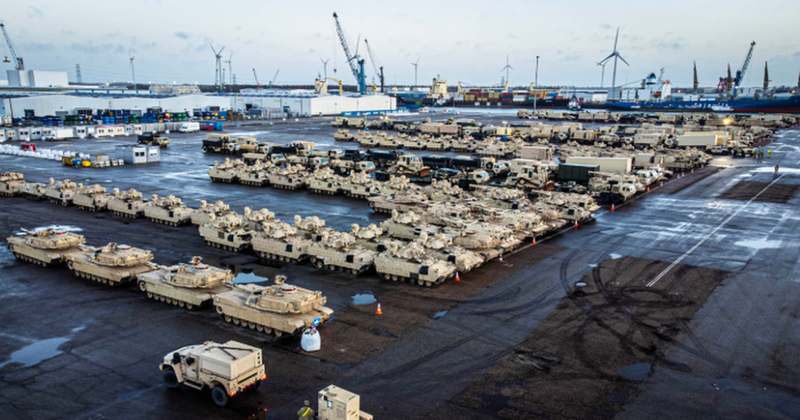
Europe's largest port is preparing for a potential conflict with Russia, reserving space for ships carrying military supplies and planning where cargo could be diverted if war breaks out.
Boudewijn Siemons, Executive Director of the Port of Rotterdam Authority, told the Financial Times that they are coordinating with the neighboring port of Antwerp in case British, American and Canadian military vehicles and supplies arrive at the port.
"Not every terminal is suitable for handling military cargo. If large quantities of military equipment had to be transported, we would rely on Antwerp or other ports to take over some of the capacity. We are increasingly seeing each other as competitors. Of course, we compete where we need to, but we cooperate wherever we can," Siemons said.
The Dutch port handles around 436 million tonnes of cargo per year, welcoming 28,000 seagoing vessels and 91,000 river vessels from Germany and the European hinterland. Antwerp already handles 240 million tonnes of cargo per year, making it the second largest port in the EU.
The Rotterdam measures are part of a wave of war preparations underway across Europe. The European Union is drawing up an arms plan worth up to 800 billion euros, aimed at making the union more independent in defense, in response to demands from US President Donald Trump, but also to deter Russian aggression.
The Netherlands, along with its NATO allies, has pledged to increase defense spending to 5 percent of GDP. In May, the Dutch Defense Ministry announced that Rotterdam would have to provide space to accommodate more ships carrying military cargo, at NATO's request.
Siemons said one or more ships will remain tied up for several weeks, four to five times a year, although the location may change. The Rotterdam container terminal is the only place in the port where it is possible to safely transfer ammunition from ship to ship.
Military exercises will also be held several times a year. The port had experience with military equipment, but even during the Cold War it did not have a pier dedicated to such purposes.
Antwerp, on the other hand, regularly receives supplies for US troops stationed in Europe. NATO Secretary-General Mark Rutte warned alliance members in June that Russia could attack one of them by 2030.
The port of Rotterdam lost about 8 percent of its trade flow after the EU imposed sanctions on Russia, which Siemons calls "another lesson," while calling on European countries to stockpile key commodities, as they already do with oil.
"We need to do the same with copper, lithium, graphite and some other key raw materials. We have it for oil, but not yet for gas. Of course, we have some gas fields in Europe that can partially cover this, but we need to look more broadly at strategic sustainability. How resilient is society? This becomes increasingly important as the world becomes more unstable," Siemons said.
He added that the areas around the port, due to developed distribution networks, would be suitable for such supplies. Part of the Dutch strategic oil reserve is already located in Rotterdam.
On Tuesday, the European Union is to present a "stockpiling strategy" that will include food and water, medical supplies, key raw materials, energy equipment and shelter, the Financial Times reports.
Happening now...






America may withdraw from Europe, but not from SPAK
Nga Gentian Gaba
ideas


top


Alfa recipes



TRENDING 




services
- POLICE129
- STREET POLICE126
- AMBULANCE112
- FIREFIGHTER128