


FLASH NEWS
Why did Israel attack Syria, who are the Druze that the Jewish state is protecting?

2025-07-16 17:04:17 / BOTA
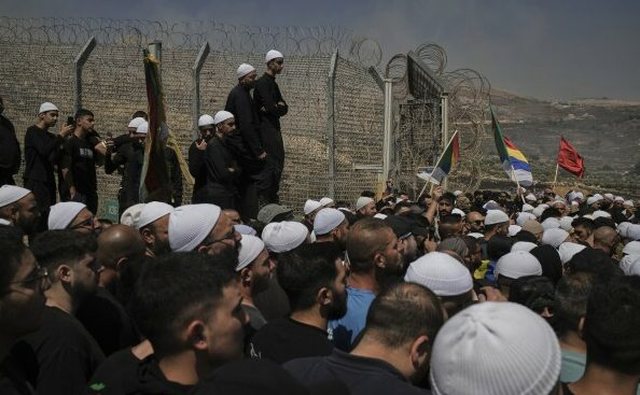
At first, Israel only struck at the border with Syria, and in the last few hours, it also struck Damascus. But why is Israel doing this?
According to international media reports, the Syrian army initially intervened to stop clashes between Bedouin and Druze tribes, but this led to airstrikes by Israel, which says it is protecting the Druze community.
It is now reported that, in addition to the attacks on Sweida, Israel has also attacked the Presidential Palace in Damascus, as well as the offices of the Ministry of Defense. Israel has warned that it will intensify its attacks if the Syrian army does not withdraw from the city.
The Druze are an Arab sect of about 1 million believers, concentrated in Syria, Lebanon and Israel. They practice a distinct form of Islam that does not allow conversions or intermarriage. In Syria, most of them live in Sweida and the nearby Golan Heights – a strategic area annexed by Israel in 1981. Over 20,000 Druze are known to live in the Golan, most of whom are of Syrian identity.
Why are they clashing with the Syrian army?
After the overthrow of Bashar al-Assad in December 2024, new President Ahmed al-Sharaa promised inclusion and protection for minorities. But Islamist forces supporting the government have targeted minority communities, including the Alawites and Druze. The Druze refuse to disarm and integrate into the new army and are unhappy with their representation in the government.
Israel says it is intervening in the fighting to protect the Druze in Syria, due to historical and family ties with the estimated 130,000 Druze who live in Israel and serve in the army. Tel Aviv has declared a demilitarized zone in southern Syria, but the Syrian government has rejected it as a violation of its sovereignty.
Since Assad’s overthrow, Israel has continued its attacks in Syria and seized more territory, despite U.S. efforts to bring Syria closer to the Abraham Accords. In May, President Trump met with Syrian President al-Sharaa in Riyadh and announced the lifting of U.S. sanctions on Syria—a step toward normalizing international relations.
Israel is also known to have held direct and indirect talks with the new Syrian government since the fall of the Assad regime. But Israel's repeated attacks on Syrian territory and expanded military presence in the country risk complicating these ambitions.
In May, al-Sharaa stated that indirect talks with Israel were intended to end the attacks. But that has not happened.
Netanyahu has previously called the new government in Damascus an “extremist Islamic regime” and a threat to the state of Israel. The Israeli attacks on Syria also complicate al-Sharaa’s attempt to consolidate authority in the country and present a potential normalization deal as a victory for Syria’s sovereignty and its people.


Happening now...
















America may withdraw from Europe, but not from SPAK
Nga Gentian Gaba
ideas



top



Alfa recipes




TRENDING 




services
- POLICE129
- STREET POLICE126
- AMBULANCE112
- FIREFIGHTER128