


FLASH NEWS
US Senate blocks proposal to limit Trump's authority in war with Iran

2026-03-05 09:55:45 / BOTA
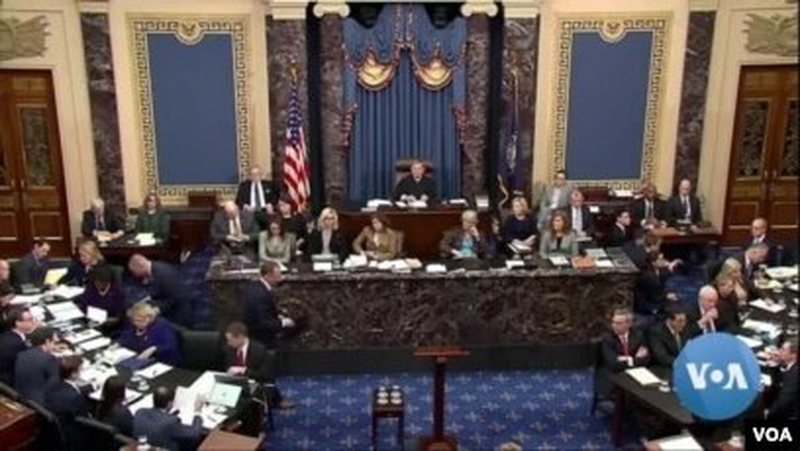
US and Israeli forces have continued to attack Iran, as the US Senate has rejected a proposal that would limit US President Donald Trump's authority to continue military action against the Middle Eastern country without congressional approval.
Trump said on March 4 that any Iranian official aiming for top positions to replace the slain leaders "will end up dead," and vowed that the United States and Israel would continue the military campaign against Iran.
"We are in a very powerful position right now, and their leadership is leaving quickly. Anyone who wants to be a leader is going to end up dead," Trump said at a meeting with technology sector leaders at the White House on March 4.
"We're doing well on the war front, to put it mildly. Someone asked me, out of a 10, how would I rate it? I would say 15," Trump said.
The president has vowed not to back down from the joint military campaign with Israel, which has left Iran's supreme leader, Ali Khamenei, and many other security, military and political officials dead.
Trump has said that Tehran's ballistic missile arsenal is "rapidly disappearing."
The US president has said he ordered the attack to prevent the country from developing nuclear weapons, but has said he wants Tehran to stop developing a ballistic missile program and to end the violence against anti-government protesters, thousands of whom have been killed in a brutal state crackdown in recent weeks.
Seeking to allay concerns about the presence of US military troops on Iranian soil, the White House said on March 4 that the commitment of ground troops in Iran "is not part of the operation at this time."
Meanwhile, the office of Israeli Prime Minister Benjamin Netanyahu said the two allies had made "historic achievements" in their war - which has entered its sixth day - against Iran.
A spokesman for the US said the strikes on Iran were necessary because Tehran had been rebuilding its nuclear weapons program in "underground bunkers" and that there were indications that it planned to attack "Israel and US forces in the region", but did not provide further details.
Republicans oppose restrictions on war powers
A proposal presented to the US Senate would require any further military attack to be authorized by Congress.
But most Republicans opposed it, arguing that the president, as commander-in-chief of the armed forces, has the authority to direct military operations.
Democrats said the vote was a test of constitutional order. New York Senator Chuck Schumer said lawmakers must decide whether to put Americans' "sons and daughters" in danger.
Republican leaders defended President Trump. South Dakota Senator John Thune said Trump was acting to protect American forces, while South Carolina Senator Lindsey Graham called the proposal unconstitutional.
Happening now...














Germany, the "curse" of Rama and Berisha
Nga Bato Kosova
ideas



top



Alfa recipes



TRENDING 




services
- POLICE129
- STREET POLICE126
- AMBULANCE112
- FIREFIGHTER128