


FLASH NEWS
Food imports increase by 23%, commodity prices only get more expensive

2026-01-27 21:24:49 / EKONOMI&SOCIALE
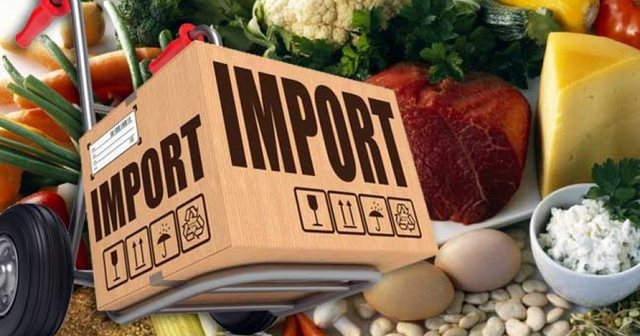
Year after year, our country is increasing its dependence on imported foods as a result of decreasing domestic production and higher consumption needs from tourists.
In 2025, 1,347,550 tons of food were imported, with an annual growth of 4.3 percent, according to official INSTAT data. The value of imports also increased by 3.9 percent.
The data shows that on the one hand, the amount of imported food is growing at a steady pace, while the average price per kilogram of imports is falling, making imported food increasingly cheaper. This does not seem to be reflected in the retail market, where prices for both food and supermarket shelves are only getting more expensive.
In 2020, Albania imported about 1.09 million tons of food and beverages. In 2025, this amount reached 1.35 million tons, an increase of over 250 thousand tons or about 23% more in five years. In recent years, domestic consumption has increasingly relied on foreign markets to cover basic food needs, at a time when demand has also increased from tourism.
At the same time, the total value of imports in lek has increased, but not at the same pace as the quantity. From around 110.9 billion lek in 2020, imports reach over 162 billion lek in 2025. Although Albania is spending more in absolute terms on imported food, each kilogram of imported food is costing less year after year.
The average price per kilogram, which peaked in 2022 at around 146 lek per kg during the global price crisis following the war in Ukraine, has gradually fallen to around 120 lek per kg in 2025, a decrease of around 18% in just three years. The exchange rate has significantly favored importers, as the euro was exchanged for an average of 97 lek in 2025, down from around 140 lek in 2015.
Albania is now buying food cheaper on international markets than at the height of the crisis, but it is buying much more. The fall in unit prices has helped to keep import bills from rising as much as the strong growth in quantities would suggest, cushioning the pressure on domestic prices. This trend also points to an increasing dependence on external supplies for basic foodstuffs, making the economy more vulnerable to future fluctuations in international markets.
Part of the increase in import volume is coming from countries like Turkey, the Balkans, Latin America and other markets where agricultural production is cheaper than in the EU.
The growth of tourism and urban consumption has increased the demand for standardized, industrially packaged, and mass-produced products, which are usually cheaper per unit than artisanal or local products.
Meanwhile, domestic production is not growing at the same pace as demand. The high costs of domestic production make many Albanian products more expensive than imported ones. As a result, traders and processors choose foreign goods, which come cheaper and in larger quantities. /MONITOR
Happening now...
















The revolution is over, Edi Rama continues calmly
Nga Bato Kosova
ideas

Rama, Havel and the Albanians
Nga Neli Demi


Protesta, AntiProtesta dhe Shqipëria Mendonjëse!
Nga Arian Galdini
top






TRENDING 




services
- POLICE129
- STREET POLICE126
- AMBULANCE112
- FIREFIGHTER128