


FLASH NEWS
Gen Z

2026-06-12 12:52:30 / IDE
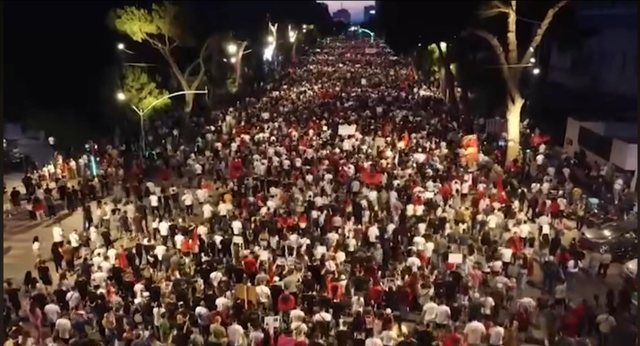
In recent years, I have heard almost every possible criticism of the young Albanian generation. They are lazy. They are distracted. They don't read. They have no ideals. They don't sacrifice. They don't commit. They don't know what they want.
Sometimes they are even spoken of with a disdain that goes beyond criticism and resembles a caricature of an entire generation. Forgetting that we raised them! Every time I hear this, the same question arises in my mind: What if the problem isn't the young generation? What if the problem is the way our generation sees it?
My experience, both in professional life and in public life, has led me to a completely different conclusion. I think that the young Albanian generation is perhaps the most developed, most open-minded, most creative and most articulate generation that this society has ever produced. And yes, it is certainly different from previous generations. But that is precisely where its strength lies.
They have traveled more. They have read more of the world than we did at their age. They have daily contact with ideas, cultures and models that were inaccessible to previous generations. They speak foreign languages with a naturalness that would once have seemed extraordinary to us. They have fewer prejudices. They are more sensitive to injustices. And perhaps most importantly, they have less fear. Less fear of authority. Less fear of stigma. Less fear of power. Less fear of publicly saying what they think. This is precisely what they are showing in the recent protests.
I have seen young people who articulate arguments better than many politicians who hold seats in parliament. I have seen creativity in their slogans, videos and forms of communication. I have seen courage and maturity in facing ridicule, attacks and labels.
This does not mean that they are infallible. Nor that they are always right. But it does mean that at the very least they do not deserve the contempt with which they are often treated.
In fact, I have the impression that the criticisms of them speak more to the fears of the older generations than to the problems of the younger generation. Because every new generation challenges the way the older generation understands the world. And that is always unpleasant.
The new Albanian generation is not perfect. But it is not the apathetic, narcissistic, cynical or lost that is often depicted in public debates. It is freer. Braver. Less willing to accept authority simply because it is authority. And perhaps that is why it bothers some people so much.
If Albania is ever going to change for the better, I do not believe that this will come because the younger generations will become more like us. I believe that it will come because we will learn to see in them what we often fail to acknowledge: that in many things, they are already ahead of us.
I think that the criticism of Gen Z is often a reflection of the anxiety of older generations about losing their monopoly on truth, morality and authority.
Now, something else that I've been thinking about more and more these days of protests. Something that's often forgotten when we talk about protests is that we tend to judge them solely by the political outcome. Did the government fall? Was the project withdrawn? Was the law changed?
But protests also produce another, quieter, longer-lasting effect. They change the people who participate in them. And since we're talking about Gen Z, I've seen a lot of young people at these protests who are perhaps discovering for the first time that citizenship isn't just about complaining on social media. It's about going out, meeting people you don't know, hearing stories different from yours, debating, organizing, taking responsibility, and realizing that public space belongs to you too. For many of them, this may be their first protest. But the experience of being part of something bigger than yourself leaves a mark. It creates memories, connections, identities, and sometimes even life destinations.
Maybe not everyone will continue to be activists and certainly not everyone will get involved in politics. But many of them will remember this moment as the moment when they realized that they are not just spectators of their country's history but are part of its making.
I think this is also very much related to the Albanian experience, since previous generations and ours grew up with a very ambivalent relationship with politics: on the one hand the fear inherited from dictatorship, on the other the cynicism of transition. But these young people are experiencing something different. They are learning that protest is not necessarily just revolution but is mainly participation. Even if the protest does not achieve all its political objectives, it may have produced something very important: a generation that feels less subject and more citizen.
Sometimes protest does not immediately change the system. But it changes the individual's relationship with the system. And this is how big changes begin.
Happening now...





ideas

Cikloni gjeopolitik dhe paktet e fundit të tranzicionit shqiptar
Nga Azgan Haklaj

Gen Z
Nga Neli Demi

top



Alfa recipes



TRENDING 




services
- POLICE129
- STREET POLICE126
- AMBULANCE112
- FIREFIGHTER128