


FLASH NEWS
The truths of the Democratic Party, which do not go outside the headquarters!

2025-11-22 15:33:27 / IDE
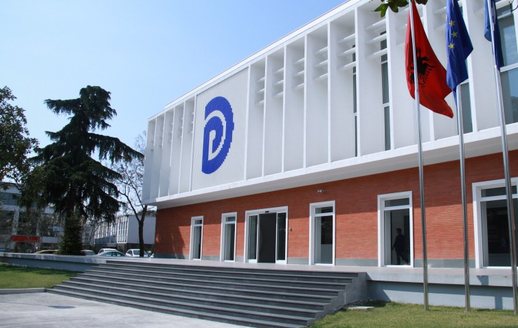
The relationship between the Democratic Party and representatives of the European Union and the United States has long entered a spiral of tension, where each side speaks, but neither listens. In every international report on the elections or reforms, the DP reacts with harsh language and direct accusations, portraying diplomats as biased, uninformed or caught up in the government’s narratives. In this heated climate, Albanian political discourse has transformed into a duel of perceptions, where facts do not carry the weight of a strong statement and rhetoric often takes the place of argument.
While the EU and the US publish assessments based on reports, observations and documents, the DP reacts with its own version of reality, structured more on internal belief than on verifiable evidence. Often, in the DP’s communications, diplomats are accused of “not understanding reality”, “referring to manipulated data” or “being part of government propaganda”. This harsh rhetoric that begins with its legendary leader and descends in chorus to the others creates the idea that the DP has long entered the phase when the angry man no longer speaks to the world, but begins to speak loudly to himself, convincing himself that the truth he hears inside the room is greater, more powerful and the only one worth telling.
On the other hand, the government uses this clash between the DP and the internationals on many occasions to present itself as a "rational party" that follows EU and US standards. This contrast serves the government to justify its own governance problems, high corruption, lack of transparency, centralization of institutions in a few hands, blaming the opposition "for not knowing how to behave", "for boycotting", "for sabotaging", "for being revanchist". In this way, the DP's aggressive behavior serves the government to cover up its own defects. A kind of political paralogy where the government's mistakes are justified through the mistakes of the opposition.
International representatives, meanwhile, remain steadfast in their technical approach. They see procedure, not rhetoric, standards, not emotions, evidence, not assumptions, and geopolitics before the strict parameters of democracy. This steady diplomatic stance further irritates the DP, which interprets it as a lack of attention or a profound misunderstanding of the Albanian political crisis. Like someone who wants to show the world their wound, but finds only a doctor who demands laboratory tests, the DP feels unappreciated and unheard, so it raises its voice even more.
In this terrain, two separate narratives are taking shape. The EU and the US talk about limited progress, about real but measurable problems, about deviations that do not completely change the outcome of the elections. The DP talks about massive manipulation, about a captured state, about a system that collapses overnight. Between these two perspectives, a political and cognitive gap opens that deepens day by day. Analysts see the DP increasingly closed in on itself, circulating its truths like an organism that recycles the air it has inside, losing contact with the oxygen of the outside world.
In this inverted dynamic, the government emerges as the biggest beneficiary. It presents itself as the “trusted partner of the internationals,” while using every incident and extreme statement by the DP to show that the opposition is immature and incapable of taking responsibility. This creates a painful paradox: the DP thinks it is unmasking the government, but in reality it is giving it the strongest instrument to consolidate power.
In the end, the DP's truths remain trapped as in an echo chamber, where words collide with the same walls and return with the same tone. Internationals do not adopt them as positions, the government uses them as an argument against it, and the public remains tired of a rhetoric that produces neither change nor dialogue. Instead of speaking to reality, the DP speaks to itself, and the more it does this, the more the government presents itself as the "only" one preserving stability.
Thus, Albania remains hostage to two extremes: an opposition that explains everything by blaming others and a government that justifies every failure by the opposition's behavior. While the EU and the US demand standards and political prudence, the Albanian scene often produces only noise - a noise that drowns out reason, dialogue and the very possibility of moving forward.
Happening now...









ideas



top





TRENDING 




services
- POLICE129
- STREET POLICE126
- AMBULANCE112
- FIREFIGHTER128