


FLASH NEWS
How did the Second World War start in Albania? From the resistance against Italy and Germany to the liberation of the country on November 29, 1944

2024-04-07 18:15:06 / JETË
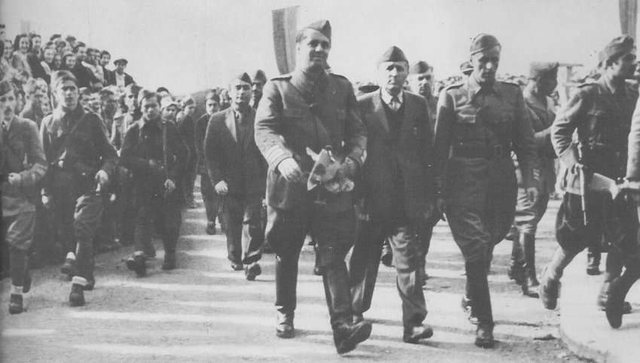
The Albanian resistance during World War II was a movement of mainly communist persuasion directed against the Italian occupation forces (until 1943) and then against the German forces in Albania, a movement which led to the successful liberation of the country on November 29, 1944.
The Civilian Population Relief Center (Geneva) reported that Albania was one of the most devastated countries in Europe. About 60,000 houses were destroyed and about 10% of the population was left homeless.[4]
Albania was attacked by Italy on April 7, 1939 both from the air and from the sea. In October 1940, Bushat forces invaded Albania as a military base to invade Greece, but they were quickly driven back to Albania. After Nazi Germany defeated Greece and Yugoslavia in 1941, the provinces of Kosovo and Chameria were annexed to Albania, thus creating a nationally united Albanian state. The new state lasted until November 1944, when the Germans who had replaced the Italian occupation forces following Italy's surrender withdrew from Albania in 1943. Kosovo was rejoined to the Serbian part of Yugoslavia and Greece.
Meanwhile, the various communist groups that had sprouted in Zog's Albania under the leadership of two emissaries of the Yugoslav Communist Party, merged together to form the Albanian Communist Party and began to fight the invaders as a united resistance force. After a successful battle against the fascists and then against the nationalist and anti-communist front of the National Front and the pro-Bird of Legality, the communists took control of the country on November 28, 1944. Enver Hoxha, elected by the Yugoslav emissaries as the party's general secretary the Albanian communists had led the war against the communist forces. Albania, which before the war had been under the personal dictatorship of King Zog, would fall under the brutal 40-year dictatorship of Enver Hoxha. The country that officially became the People's Republic of Albania in 1946 and in 1976 the People's Socialist Republic of Albania, would fall into a fanatical isolation where they would be shot and imprisoned. Albania was liberated on November 20, 1944 and the political forces were: Balli Kombëtar, The Communist Party and Legality. In October 1942, the main temporary headquarters was created, which in the spring of 1943 was called the main headquarters of the National Liberation Army of Yugoslavia for Kosovo.
Background
Teksa Gjermania aneksoi Austrinë dhe lëvizi kundrejt Çekosllovakisë, Italia u bë një anëtare e dorës së dytë të Aksit. Pasi Hitleri pushtoi Çekosllovakinë pa njoftuar Musolinin që më parë, diktatori italian vendosi që të vazhdonte me aneksimin e tij të Shqipërisë. Mbreti i Italisë Viktor Emanueli III e kritikoi planin për të marrë Shqipërinë si një risk i panevojshëm. Roma, megjithatë, i dërgoi Tiranës një ultimatum më 25 mars 1939, ku kërkonte dakordësi me pushtimin. Mbreti Zog refuzoi të pranonte para në këmbim të pranimit të një pushtimi dhe kolonizimi italian të Shqipërisë. Më 7 prill 1939, trupat e Musolinit, të udhëhequra nga gjenerali Alfredo Guzzoni, pushtuan Shqipërinë[5] duke sulmuar të gjitha portet në të njëjtën kohë. Kishte 65 njësi në Sarandë, 40 në Vlorë, 38 në Durrës, 28 në Shëngjin dhe 8 te Bishti i Pallës. Planet origjinale italiane për pushtimin kërkonin 50,000 burra të mbështetur nga 137 njësi detare dhe 400 avionë. Në fund forca pushtuese u zgjerua në 100,000 burra të mbështetur nga 600 avionë.[6]
Në Durrës, një forcë prej vetëm 360 shqiptarësh, më së shumti xhandarë dhe banorë vendas të udhëhequr nga Abaz Kupi, komandanti i xhandarmërisë së Durrësit, dhe Mujo Ulqinaku, një zyrtar detar, u përpoqën të ndalnin përparimin italian. Të pajisur vetëm me armë të vogla dhe tre mitralozë, ata arritën t'i ndalnin italianët për pak orë derisa një numër i madh tankesh të vegjël u zbritën nga anijet italiane. Pas kësaj, rezistenca filloi të shembej dhe brenda pesë orësh italianët morën qytetin.[6]Nga ora 1:30 paradite të ditës së parë, të gjitha portet shqiptare ishin nën kontrollin e italianëve.
Duke mos dashur që të kthehej në një kukull të italianëve, Mbreti Zog, gruaja e tij, Mbretëresha Geraldinë dhe i biri foshnjor Leka Zogu I u larguan drejt Greqisë dhe më pas në Londër. Në 12 prill, parlamenti shqiptar votoi pro ndaj bashkimit të vendit me Italinë.[5] Në 12 prill, parlamenti shqiptar votoi për të shkarkuar Zogun dhe për ta bashkuar vendin me Italinë në një "bashkim personal" duke ia ofruar kurorën shqiptare Viktor Emanuelit III[7] dhe italianët formuan një qeveri fashiste nën Shefqet Vërlacin dhe shpejt shërbimi ushtarak dhe diplomatik shqiptar u mor nga italianët.[5] Më 15 prill 1939, Shqipëria u tërhoq nga Liga e Kombeve, prej së cilës Italia ishte tërhequr në vitin 1937. Më 3 qershor 1939, Ministria e Jashtme e Shqipërisë u bashkua me atë të Italisë.[5] Ushtria shqiptare u vendos nën komandën e italianëve dhe formalisht u bashkua me ushtrinë italiane në 1940. Këmishëzinjtë italianë formuan katër legjione të Milicisë Shqiptare, fillimisht të rekrutuar nga kolonistë italianë që jetonin në Shqipëri, por më vonë nga shqiptarë etnikë.
Shortly after the invasion, Galeazzo Ciano hoped to reinforce the impression of benevolence with a number of gestures aimed more at public relations than at solving Albania's deep social and economic problems. One of Chiano's first moves was to distribute food and clothing to some of the impoverished areas and to release political prisoners. He personally distributed 190,000 gold francs to the needy in Tirana, Shkodër, Vlorë, Gjirokastër, Sarandë, Korçë and Kukës. Because the money was given to the poor, avoiding the usual bureaucracy, some good was accomplished.[8] The Italians contributed a lot to the infrastructure, agriculture and chrome and hydrocarbon exploration that Albania was rich with. The Italians hoped that extensive investments in Albania would bring economic and political benefits. Despite the weak domestic economy, Mussolini guaranteed Albanians 22 million pounds over five years for economic development, several times more than the 8.2 million that Rome had spent since the 1920s. Initial reports of Italian activity were favorable. Ruth Mitchell commented in late April 1939: "What a great improvement has been made in the condition of the people already. The whole atmosphere had become livelier; now at least there is hope." Even the German minister Eberhard von Pannwitz, who was constantly critical of the Italians, commented positively on the Italian pace, which he compared to the pace in Austria after the Anschluss. New construction projects brought in large amounts of capital and employed many Albanians.[9] The government began to allow Italians to take positions in the Albanian civil service and also began to allow Italian colonizers to enter Albania. This greatly influenced the behavior of the Albanians towards the Italian invaders and the locals greeted them with more respect and liking./ Alfapress.al
Happening now...

Sali Llapa
Nga Bato Kosova
ideas
Republic of Thieves!
Nga Gjergji Nika

Albania, this ship stuck in the business of theft!
Nga Edison Ypi
top
Alfa recipes




services
- POLICE129
- STREET POLICE126
- AMBULANCE112
- FIREFIGHTER128