


FLASH NEWS
"It was the right decision"/ The American pilot talks about the NATO bombing of Serbia

2024-03-24 20:09:32 / KOSOVA
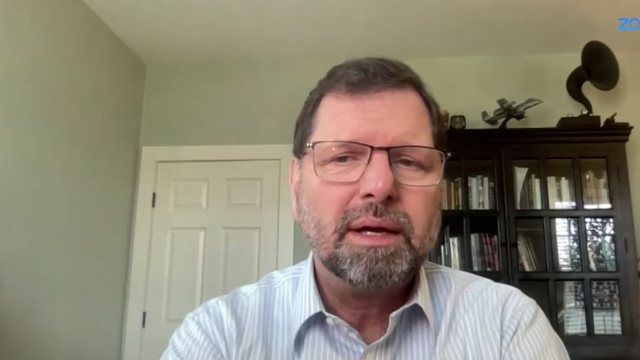
Twenty-five years ago, under the leadership of the United States, NATO launched the first large-scale air intervention to stop the ethnic cleansing of the Albanian population by Serbian forces, after diplomatic efforts to stop the war in Kosovo failed. The air campaign, which began on March 24, lasted 78 days and ended with the withdrawal of Serbian forces from Kosovo and placing Kosovo in an international protectorate for a decade until talks leading to its independence. Twenty-five years later, Voice of America brings the memories of an American pilot who bombed the targets of Serbian forces in Kosovo. Pilot Phil Haun, who returned to Kosovo to assess the impact of his attacks, told colleague Garentina Kraja that from a moral point of view the intervention in Kosovo was the right decision.
Pilot Phil Haun remembers in detail his first flight over Kosovo, 25 years ago, in the A-10 fighter jet.
His mission: to strike Serbian military targets to save the civilian population and ethnic cleansing, which in 1999 had turned Kosovo into a field of death.
It was early April 1999 and NATO's success would depend not only on the fragile political unity of the Western alliance, which was undertaking a military operation for the first time since the end of the Cold War, but also on the weather. .
"It was the first mission. The sky was clear those first days of April. We were flying over the western part of Kosovo. We saw some Serbian cars and it was the only time we saw Serbian military cars on the road. We hit them successfully. After that, they started using civilian cars", he tells the Voice of America.
The plain of Dukagjin, seen from the sky from the plane as part of 'Squad 81', was his first introduction to Kosovo. Several thousand kilometers below, Serbian forces were escalating their attacks, after years of diplomatic efforts failed to persuade Serbia not to expand the war in Kosovo.
During the weeks that pilot Haun was bombing military targets from the air, Serbian forces on the ground were driving an estimated 1 million Albanians out of Kosovo into Albania, Macedonia and Montenegro. With a scenario repeated throughout Kosovo, from Gjakova to Pejë, from Krushë e Madhe and e Vogël to Izbica e Mejë, for 78 days, Serbian forces executed about 10,000 civilians, most of them men.
VOA : Do you think the decision to intervene was the right one?
Pilot Phil Haun: " It's hard for me to say. I still work for the Department of Defense and I have to say that these are my views and do not reflect the positions of the Pentagon. I thought a lot about this. From a moral point of view, it was the right decision, considering what was happening in Kosovo. I have been engaged in many conflicts, in Iraq, in Bosnia, Afghanistan and Kosovo. In my opinion, using force is never the desired solution, or one that makes you feel good. But I have to admit, what we did over the skies of Kosovo makes me feel very good about the use of military force."
He says that NATO's intervention in Kosovo has shaped it in different ways.
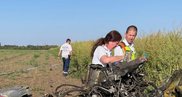
In one of the flights over Kosovo, on May 1, 1999, as seen in this simulation made by a graphic studio, pilot Haun's plane was hit by Serbian forces with a Russian surface-to-air missile. He made a forced landing in Skopje.
In 2010, pilot Haun returned to Kosovo – this time to see it from the ground and see firsthand the impact of the attacks he had carried out.
" After the war there was a lot of discussion about the usefulness of the NATO force and I wanted to go see where I had hit and talk to the people there. Even in the countries where the bombs had caused damage, the people in Kosovo were so kind and constantly thanked me for NATO's commitment. I was impressed by how grateful they were… I went to Kosovo in the spring of 2010. I took the maps with me and identified what I considered to be good target hits, meaning I had hit targets where I thought I had caused significant damage. And then what I considered to be potential bad attacks, where I worried if I had caused unintentional damage and needed to figure out what those were. In Kosovo, I was impressed by the human aspect. From the sky you don't have that feeling, of human life, you are up and you see down, just like you see from the window of an airplane, it's hard to see people. So seeing people and realizing what you've done has had a positive impact on the lives of others was the thread that connects this story. In military college we learn that force is used to achieve political objectives and that force should never be used without a political purpose. Today, when I look at the independence of Kosovo and the political result, it helps me to close this chapter of my life ", says pilot Phil Haun.
Since NATO's intervention in Kosovo, pilot Haun has carried out combat missions in Iraq and Afghanistan. The aerial campaign against military targets in the former Yugoslavia has left a professional mark, becoming one of the main pillars of his academic commitment.
He continues to write and lecture on the military's air power in security program at the renowned American university MIT and at the Naval War College in Rhode Island. The intervention in Kosovo is a concrete example that is studied and discussed with students. NATO's air intervention is considered a turning point and the lessons from it are valuable for the American air force and the general war strategy for achieving political goals./ Voa/

Happening now...







83 mandates are not immunity for Rama's friends
Nga Gentian Gaba
ideas


top


Alfa recipes




TRENDING 




services
- POLICE129
- STREET POLICE126
- AMBULANCE112
- FIREFIGHTER128