


FLASH NEWS
They warned about Balluk/ 9 EU countries freeze negotiations with Albania

2026-04-03 19:53:32 / POLITIKË
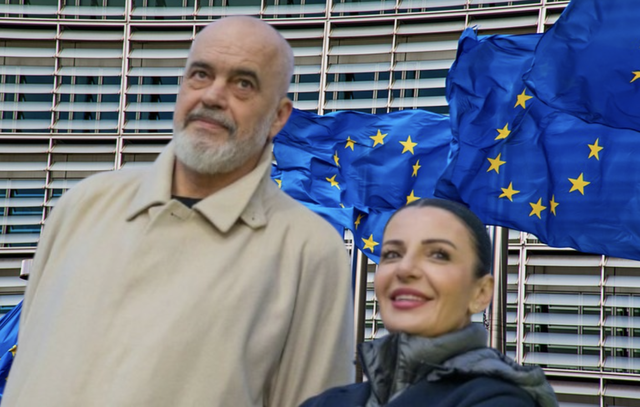
Albania's negotiations with the European Union have entered a holding phase, dedicated to the March 12 vote in parliament, when Edi Rama, with 82 socialist votes, rejected SPAK's request for the arrest of Belinda Balluku, an act for which the consequences had been warned by powerful EU voices and several Western embassies in Tirana.
Therefore, what until yesterday was an internal clash between SPAK prosecutors and the Socialist Party has traveled to Brussels as a failed test for justice reform.
Lapsi.al learned that in the discussions on April 1 at COELA, which is a working group of the Council of the European Union, where representatives of all member states discuss the enlargement process at a technical and political level, 9 member states of the European Union raised several issues that jeopardize the advancement of negotiations.
Diplomatic sources confirm that a detailed discussion has taken place on the IBAR report, the technical instrument that measures whether a candidate country has met the intermediary standards to advance in negotiations, particularly in Chapter 1, which includes the rule of law, justice and democratic institutions.
This report is a kind of critical filter that is repeated time and time again in the assessments of a candidate country: without passing the IBAR, the chapters are not closed and the process remains in limbo.
At this stage, the Presidency of the European Union presented a revised draft common position, partly reflecting the comments of the member states. The changes touched on a wide range of areas, from the functioning of democratic institutions and administrative reform, to confiscation of assets, freedom of expression, property rights and the fight against corruption.
The European Commission, for its part, defended a technically positive stance on Albania. The meeting provided detailed answers to 43 questions from member states and emphasized that Albania “has done enough to close the intermediate points of the Chapter 1 Group”. But it seems that a positive grade in a technical assessment is not enough when political trust is lacking.
And this is exactly where the other side of the process begins, which does not bode well for Albania.
Lapsi.al learned that a significant group of member states, 9 of them, including Germany, Luxembourg, the Netherlands, Sweden, Austria, Finland, Poland, Greece and Bulgaria, are not yet convinced that it is time to give the green light to Albania. Each of them has raised red flags in different areas: Poland on the business climate, Greece on property rights, national minorities, Bulgaria on minorities, Austria on concrete issues such as IPARD, etc. Their hesitation requires additional questions.
Other countries were more flexible. Estonia understands the concerns of the Netherlands, Germany and others, but stresses the importance of advancing the process. If the European Union has additional conditions for Albania, they should be clearly defined, and not continue indefinitely with aimless discussions. On the other hand,
Spain and Italy expressed support, emphasizing that this is also a strategic communication problem for the EU, if it fails to explain to Albania why the process is being delayed.
On the surface, the concerns of the 9 countries appear technical. In essence, they are an expression of a deeper mistrust: does the rule of law really function in Albania, or does it remain dependent on political decisions?
If Albania is to move forward in the negotiation process, it is now up to member states to agree on a common EU position for Group Chapter 1, which will set out the final milestones in the area of the Rule of Law, but for the moment, this agreement is lacking.
The process is expected to enter another round of discussions on April 7 at COELA, where member states will seek additional clarifications from the Commission, before a new draft is tabled on April 9.
This means more questions, more conditions, and more verifications.
Meanwhile, in Tirana, the prime minister has continued with his negative speeches and continues to sell an optimism that does not quite match the situation. "This is a moment when we can make history by entering the European Union. A window has opened, or more precisely, a door has opened, but the door can be closed. It is important that we do not become the reason for the door to be closed and we will not become the reason for the door to be closed," Rama said on April 1 at a meeting with students on the topic of integration into the European Union.
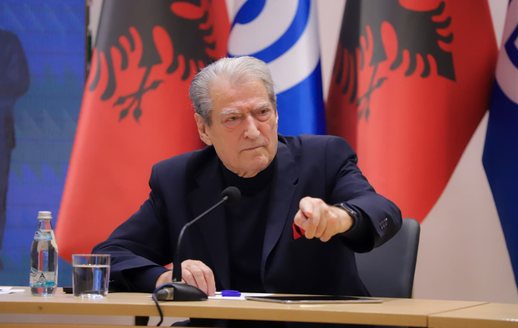
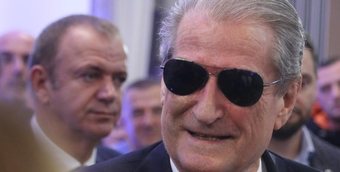
On the other hand, Sali Berisha reads the situation as a direct blockage caused by Balluku's political protection. " Montenegro was voted for, although they have a series of remarks, but they voted for IBARI. Meanwhile, Edi Rama has become a conduit for corruption. He used 83 mandates for Lubi Balluku. Edi Rama is the head of the criminal organization, not only in the case of the government, but also in the Balluku case," he declared in a press conference.
The contrast with Montenegro is significant. Radio Free Europe reported a few days ago that Podgorica managed to pass the IBAR and advance in the negotiations. Tirana, by contrast, is stuck on the same threshold, facing doubts about how promises of justice and the fight against corruption are being implemented in practice.
At the end of the day, Rama's government was warned about the consequences it would have for the negotiations and is failing precisely where it claims to have made a revolution: in justice. And at the center of this revolution, as a symbol of the clash, stands a single name: Belinda Balluku./Lapsi.al
Happening now...





ideas
Renaissance is Disaster Capitalism
Nga Klodian Tomorri
Pse tifozeria e Kosovës ishte aq e vdekur dhe mungonin simbolet kuqezi?
Nga Kreshnik Spahiu

top


Alfa recipes
TRENDING 




services
- POLICE129
- STREET POLICE126
- AMBULANCE112
- FIREFIGHTER128