


FLASH NEWS
Berisha's opposition, much ado about nothing!

2026-04-09 13:53:04 / POLITIKË
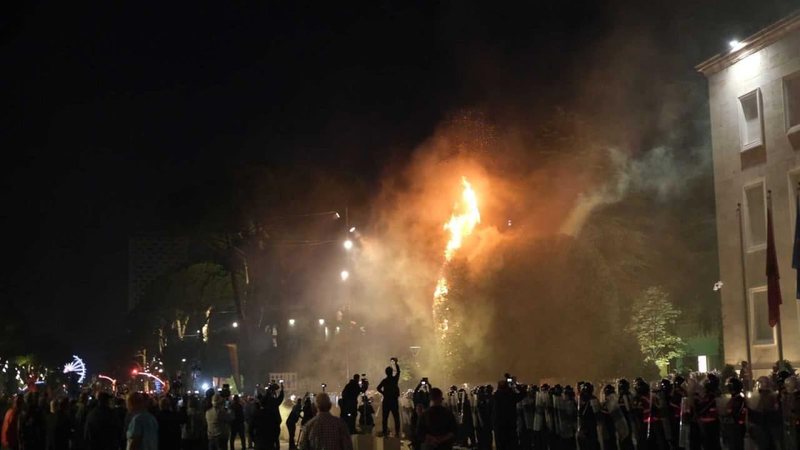
For years, faced with a consolidated majority like the one led by Edi Rama, the opposition has chosen a strategy that on paper appears aggressive, daily denunciations, press conferences, accusations of "theft of the century" and widespread corruption.
But in practice, this strategy has turned into an empty routine, no longer producing either indignation or mobilization.
The problem is not the lack of words. On the contrary, the opposition talks a lot. It appears on the screen every day, repeating the same accusations, the same names, the same scandals.
But this very repetition has produced the opposite effect, the trivialization of corruption. When a “big scandal” is announced every week, no one remains that way in the eyes of the public.
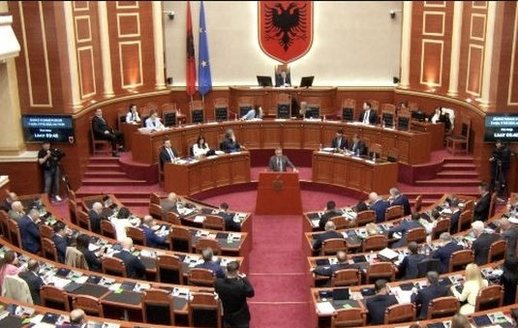
Meanwhile, in parliament, faced with compromised figures like Belinda Balluku, the debate often deviates, becomes distracted and loses focus.
Remember the case when the media was overflowing with facts about the violations of the former deputy prime minister and what did the opposition do?
It blocked the rostrum for the gender equality law!
So, even when there are issues that could potentially shake public opinion, the opposition fails to turn them into political causes.
There is no continuity, no escalation, no strategy. There is only momentary noise.
It's easy to say that Rama wins because he controls power, because he has 83 mandates and can take them even further.
But that's only half the truth. The other half is that he wins because he faces an opposition that doesn't convince.
A leader like Sali Berisha, with all his history and political weight, is failing to generate new trust.
There is still a militant base, but this is not enough to create a majority.
Protests with a few hundred or thousands of people are no longer an indicator of strength, on the contrary, they are evidence of its limits.
Citizens are not reacting not because they don't see problems, but because they don't believe that change comes from this opposition.
They may hear accusations of corruption, but they don't feel represented by those articulating them.
One of the biggest failures is in the protests. They are organized, but they do not inspire.
They seem to be called, not exploded.
There is a lack of spontaneity, a lack of real anger translated into mass participation.
When people come to protest "by force" or by party structure, it is no longer a civic protest, it is a rally. And rallies do not bring down governments.
The fact that even on tough issues, like price increases or corruption allegations, there is no massive reaction, shows a huge gap, a lack of trust. Citizens may be dissatisfied, but they are not convinced that the opposition is the alternative.
The real problem is neither SPAK, nor the majority, nor propaganda.
The problem is the lack of a clear opposition strategy.
Instead of focusing energy on a single cause and seeing it through to the end, with parliamentary action, public pressure, and continuous mobilization, the opposition spreads itself across dozens of topics, losing its effectiveness.
A scandal like the one mentioned against Balluk, in a functional opposition, would turn into a daily political crisis, a parliamentary deadlock, continuous protests, international pressure.
In reality, it passes as another episode in the endless cycle of accusations.
Citizens are no longer satisfied with denunciations. They are looking for alternatives. They are looking for ideas, credibility, and guarantees that change will not simply be a recycling of the past.
When faced with worn-out figures, repetitive rhetoric, and a lack of a clear project, they choose to remain passive.
Not because they agree with the government, but because they see no reason to take to the streets.
If the opposition does not understand this crisis of confidence and does not fundamentally change its approach, from rhetoric to action, from repetition to strategy, from individuals to ideas, then the result is predictable.
Edi Rama does not win only from his own strength, but from the weakness of his opponents. And in this report, today, the balance is clear.
In the end, the biggest risk for the opposition is not another defeat.
It is returning to a structure that exists only to talk, and not to change anything./BallkanWeb
Happening now...









Denouncing Berishism is a prerequisite for denouncing the government
Nga Blendi Kajsiu
ideas

Cycle: Jobs for Albania! What did time prove to us for Air Albania?
Nga Irena Beqiraj

When cardboard and arrogance become law.
Nga Gjergji Nika

Renaissance is Disaster Capitalism
Nga Klodian Tomorri
top



Alfa recipes



TRENDING 




services
- POLICE129
- STREET POLICE126
- AMBULANCE112
- FIREFIGHTER128