


FLASH NEWS
Observation/ How to read the Constitutional Court's decision on Erion Veliaj

2026-05-25 19:26:13 / POLITIKË
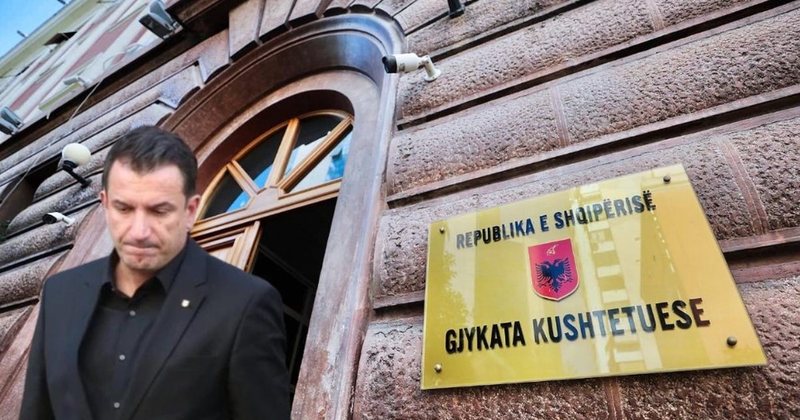
In the real legal reading of the Constitutional Court's decision, a strong contradiction clearly emerges between what the court claims to protect and the consequences that its reasoning would practically bring.
First, it should be noted the most important element that will surely be overlooked in the public debate regarding this decision. The Constitutional Court has accepted the existence of reasonable suspicion for the criminal offenses for which Erion Veliaj is being investigated. Therefore, the Constitutional Court has not overturned the legal basis of the security measure, nor has it said that the arrest was based on arbitrary allegations or without evidence.
On the contrary, it dismissed as unfounded the claim of lack of reasonable doubt and the claim of violation of the presumption of innocence by the language used in the court decisions. This means that the Constitutional Court has legitimized the existence of a serious investigative basis against Veliaj.
And this is where the main contradiction of the decision arises. On the one hand, the court acknowledges that there is reasonable suspicion of serious criminal offenses. On the other hand, it asks the Supreme Court to justify the proportionality of the security measure in relation to the fact that Veliaj is an elected mayor.
But what other justification could the Supreme Court give without creating de facto immunity for elected officials?
If the implicit logic of the Constitutional Court's decision is followed, then the Supreme Court should have concluded that:
" because he is elected by the people, imprisonment should be avoided or treated differently ."
But the Albanian Constitution does not recognize such a privilege for mayors. On the contrary, the justice reform and the very philosophy of SPAK were built precisely on the idea that political office or popular vote cannot create a criminal shield.
If the fact of being a mayor were considered a determining element to avoid imprisonment, then the same standard should apply to MPs, ministers, mayors, and any other elected official.
This would create a parallel standard.
The ordinary citizen can be arrested, while the elected politician enjoys a privileged status that the law does not provide for.
This is why the Supreme Court's position is essentially more legally coherent. It could not construct a rationale that would turn the political mandate into an obstacle to the security measure, because this would contradict the principle of equality before the law.
In the end, the Constitutional Court's decision seems more like a formal exercise in "lack of justification" than a real intervention in the legality of the measure. This court does not dare to say that the arrest is unconstitutional, because such a conclusion would create an extremely dangerous political and legal precedent. But on the other hand, it hints that the status of the elected should produce a special analysis, which brings closer precisely the idea of privilege that the justice reform claimed to destroy.
This is where the main weakness of this decision lies. It requires a justification that, if carried out logically, would result in preferential treatment for elected officials; a standard that neither the Constitution nor Albanian law recognizes./CNA
Happening now...












ideas

Enver-Sali!
Nga Indrit Vokshi

Idolaters and idolatry have nothing to do with democracy!
Nga Ardi Stefa

top



Alfa recipes








services
- POLICE129
- STREET POLICE126
- AMBULANCE112
- FIREFIGHTER128