


FLASH NEWS
Shocking report for Bankers Petroleum/ Water, poisoned meat, disease: Albanian oil that brought the apocalypse!

2024-04-27 22:29:36 / AKTUALITET
Hungarian Telex media write-up by Ivándi-Szabó Balázs and Fehér János
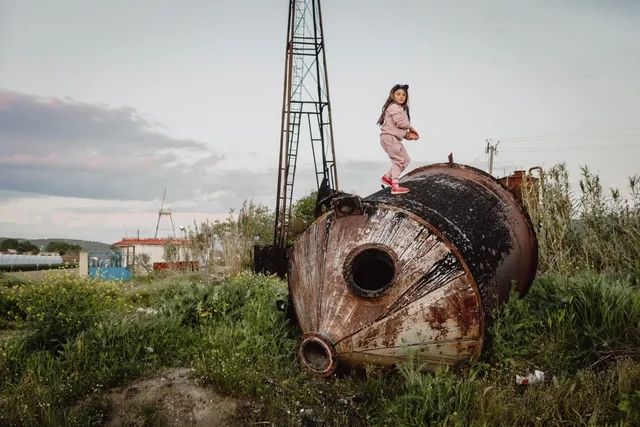
Few would think of Albania as an oil-producing country. This is not surprising, because there they produce approximately the same amount, 16 thousand barrels per day, as in our country, but in one of its regions it seems to be the main industry. The Patos-Marinze oil field, which has huge reserves, brings investors a lot of profits, but the people who live there are more victims of the mining industry. The environment is slowly becoming unlivable, more and more people are getting sick from the pollution and the local society is falling apart.
German Jonas Kakó presents this in his photo essay Black Gold. Kako studied photojournalism and documentary photography at the University of Hanover. In recent years, he has focused his work on the climate crisis. In his projects, he tries to present the lives of those people who suffer most from climate change and whose existence is already threatened by it. He received the World Press Photo Award in 2023 for one of these works. Kakó works as a freelancer, his material has appeared in National Geographic, Stern, Vice, Neue Züricher Zeitung, among other media.
The largest oil field in Europe is located in Albania, in the Patos-Marinze region. It was discovered in 1928 and oil extraction began in the following decade, and mining activity has been virtually continuous ever since. But Albania did not get rich from oil, it remains one of the poorest and most backward European countries. All this can be mainly attributed to Enver Hoxha, who ruled Albania as a dictator after the Second World War, representing the communist direction, but at the same time he was strongly isolated.
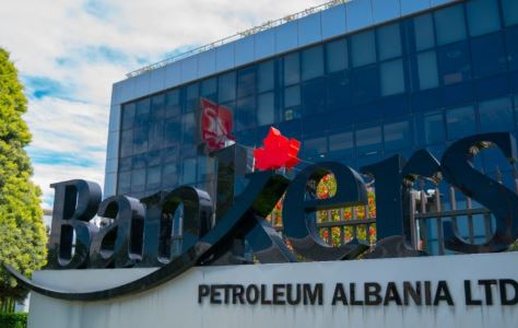
Hoxha also tried to exploit the oil wealth, for which he used Soviet and Chinese help. The 1990s saw the emergence of new investors, such as Canada's Bankers Petroleum, which installed dozens of new oil wells and increased production, while in recent years Shell has conducted exploration in the country. Bankers Petroleum is now in Chinese hands and controls 95 percent of the production of the Patos-Marinze oil field. Although capitalism has gained ground, the region seems to be stuck in the past, environmental issues seem secondary, neglected, profit and the black legacy of the past erases them and has turned into an apocalyptic landscape of the oil region. Poorly managed oil and inadequate extraction technology leave behind polluted lakes and destroyed rivers.
The water in the wells has become toxic, there is no safe drinking water, and the groundwater has also been contaminated, as the oil has seeped there as well. Soil life has also been destroyed in many places, the soil has been stained black by the seeping oil and has become unsuitable for growing crops or raising livestock. The air is also polluted by industrial activity and the landscape, which has also been filled with oil lakes, is littered everywhere with disused, rotting oil tanks, industrial equipment, rusting pipes and leaking poison. The countryside has simply become unlivable, which also destroys communities.
At the time of Enver Hoxha, the oil-producing region was almost a forbidden zone. Only a few people were allowed to live in its territory, but after the change of regime, more and more people, mainly from the poorer strata, infiltrated here. Thus, a not very strong social community is now trying to cope with the environmental disaster. The air echoes old wells, oil in old tanks, or the very pits into which the oil was pumped.
In summer, it is almost impossible to breathe air because of them. Oil pools have become traps for birds and other animals, but they have also killed people. There are many residents of the area who complain of breathing problems or high concentration of carbon dioxide in their blood, and according to environmentalists, cancer in the locals may be related to the oil pollution.
Bankers Petroleum has held a concession from the Albanian government for decades, and the field also has large reserves. They can still extract about two billion barrels from there, but if they don't tighten the environmental protection rules in Albania, the oil could take many victims.

Oil wells belonging to Chinese-owned Bankers Petroleum in the Patos-Marinza oil field, the largest oil field in Europe. Ilir Dielli mows in the village of Zharrëz, a few meters from the burnt oil well of Alpetrol. Workers are installing one of the oil wells near the town of Ballshit. The oil is treated at a nearby site of the Albanian energy company Anio Oil. Xylene and benzene are used to separate oil from sand and water. And the waste water is pumped back underground, while the oil is transported to Fier. Environmental activists fear the facility will contaminate groundwater.


The photo on the right shows a sedimentation pond, where Anio Oil first discharges its wastewater, which then flows into the Vjosa River.

Lulzim Gishti and his wife Mamude Gishti have their apartment in Bellin, a village in the Patos-Marinze oil region. Their house and land are only a few meters away from an oil well. The smell of gas and oil constantly permeates the air of the village. Mamude's lungs and liver have already failed. The couple spends 90 percent of their pension on medicine every month.

Arben Çela used to work at a local refinery, but now prefers to keep sheep grazing near one of Alpetrol's oil treatment tanks, enduring the constant smell of oil and gas.

Children play football in the abandoned train station of Ballshit. The town had an oil refinery, but due to bad business decisions, the refinery closed and people began to leave the town.

Jimmy Ruko, a Bankers Petroleum employee and sometime strike leader, is sitting in a 24-hour pub. The bar is a meeting place for the workers, they meet here at the change of shifts. Bankers Petroleum was taken over by the Chinese in 2016, but they didn't even keep up with inflation with wage increases and didn't pay overtime.


A nurse checks Drita Buz's lung function at the state health institution in the village of Kalm i Madh. Many locals suffer from chronic lung disease, likely caused by toxic gases from oil wells. The image on the right shows water samples taken from local aquifers into which oil field wastewater flows.
Goats graze in a reservoir where Anio Oil drains its wastewater before releasing it into the Vjosa River.

Ylli Baho, who lives in the village of Zharrez, often slaughters sheep, goats and cattle for family and friends, but the meat is difficult to sell because many believe it is contaminated with oil. Zharrezi is also very close to one of Alpetrol's oil wells.

Saimir Dine, an environmentalist and activist of the local NGO Association Zharreza, looks for oil residues in the stream that flows into the Gjanica River. The NGO recently published a study that revealed large amounts of chemicals and oil in the Gjanica River, possibly originating from the treatment plants of Ballshit and Fieri.

Antan Buzi, who lives in the village of Kalm i Madh, does not use his well at all because his water is contaminated with oil. The settlement only has water service a few days a week, so he hauls water to his home remotely each week.

Residents of Fier's Roma community play dominoes in a bar. The area is next to a refinery that discharges oil and polluted water into the Gjanica river, which has turned into an almost dead river. A loading station has been built nearby where oil is loaded to be transported to the port of Vlora. The smell of gas and oil is constantly felt, and many residents suffer from oil-related illnesses.

Baftjar Bani takes care of the last remaining beehive in the backyard of his house, near an Alpetrol factory in Zharrez. His other bee colonies did not survive the continued effects of gas and oil.

Bankers Petroleum employees always carry gas detectors, but the locals have no idea what they are inhaling.

Dashnor Xhepaj uses an asthma pump, maybe he got sick from the constant gas discharges./ Taken from Telex.hu adapted to Albanian Alfapress.al
Happening now...













83 mandates are not immunity for Rama's friends
Nga Gentian Gaba
ideas



top


Alfa recipes




TRENDING 




services
- POLICE129
- STREET POLICE126
- AMBULANCE112
- FIREFIGHTER128