


FLASH NEWS
Money laundering, how "shadow capital" is affecting real estate prices

2026-05-17 09:16:53 / EKONOMI&SOCIALE
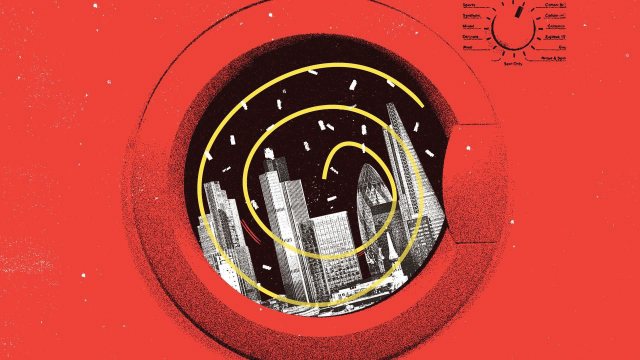
Almost a decade ago, when the construction boom, lending performance, and real estate supply and demand were not reflecting a logical relationship based on numbers, market sources began to talk about the impact of informal money on the economy.
Officially, the government never acknowledged this, leaving it as an unfounded hypothesis.
But as the gap between the figures widened each year and reached the point where the economic boom no longer explained it, it seemed that the scales began to tip towards the fact that money laundering in construction was not just a hypothesis.
The Albania report analyzing the 2024 Country Profile on Urban Development, Housing and Land Management, developed by the United Nations Economic Commission for Europe, highlights a number of factors that affect the affordability of housing in Tirana, underlining that money laundering has been a contributing factor.
"Money laundering has been another contributing factor to the increase in housing prices in Tirana as well as in the coastal areas of Albania. Combined with low disposable income for average families, it has made purchasing a new home in preferential areas unaffordable for most."
This has led to high levels of overcrowding, especially among low-income groups. Tirana is one of the seven major European cities with the highest levels of housing unaffordability,” the report says. This document has been left without any government initiative to change the situation.
Doris Andoni, an independent consultant and expert on housing issues, emphasizes that "the problem of prices and rents is much more complex and is not a simple effect of supply and demand."
The role of informal money in financing the residential sector is a serious hypothesis that has long been circulating in professional and academic circles, and the lack of public data to confirm or refute it does not weaken but rather strengthens the concern.
A market where the origin of capital remains unclear is an undiagnosable and unreformable market."
Moreover, the Financial Intelligence Agency's reports over the years have included real estate in the typologies of money laundering risk.
In 2024 alone, three specific cases are mentioned in this context.
One case was “investments in real estate by persons with criminal activity”, a second “investments in real estate by a former justice official” and the third typology “investment, concealment, alienation of assets by a former senior official”.
In a recent consultation document “National Strategy for Organized Crime 2026–2030” the government acknowledges that “illegal financial transactions and related financial crimes have been impacted by the acceleration of technology and globalization.”
Among the identified risks of money laundering in Albania, the document cites "the laundering of proceeds from corruption through the occasional use of third parties, individuals and legal entities that serve to camouflage the mechanism, and the subsequent integration into financial instruments, real estate within the country or businesses."
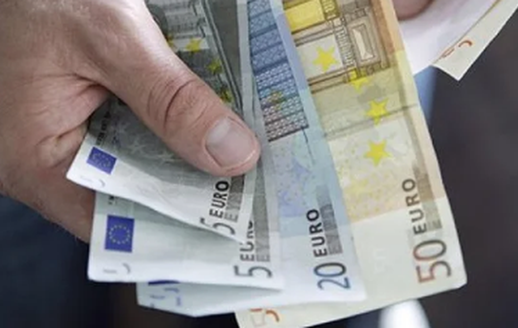
Market players claim that many apartments in Tirana are being purchased by people who do not plan to live there, but use them for so-called "parking money", a practice also known in international real estate markets.
In many countries, investing in apartments is considered a way to preserve capital value, especially in times of economic uncertainty or in economies with a high level of informality. In these cases, the property is not purchased for use or to generate rental income, but simply as an asset where capital is “parked” and protected from depreciation.
This phenomenon has been seen for years in cities like London, Dubai, or Vancouver, where the influx of speculative capital and non-resident investors has led to a sharp increase in prices and a decrease in affordability for local residents.
A similar logic is gradually being observed in Tirana, where some of the new apartments remain empty for long periods, while prices continue to rise despite the relatively low level of income in the country.
On the other hand, as informal money also enters construction, builders (money parkers) do not have much interest in selling apartments quickly and this is another factor that keeps prices high./ Monitor
Happening now...




Molotov cocktail on Saturday, shopping on Thursday!
Nga Bato Kosova
ideas



top








services
- POLICE129
- STREET POLICE126
- AMBULANCE112
- FIREFIGHTER128