


FLASH NEWS
US confirms lifting of naval blockade on Iran

2026-06-18 22:51:49 / BOTA
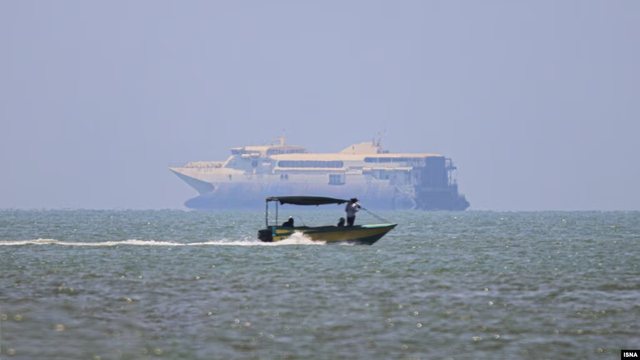
US Central Command (CENTCOM) confirmed that the naval blockade of Iranian ships and ports has been lifted.
“Any U.S. efforts to enforce the naval blockade have been terminated,” CENTCOM said in a post on X. “Our major naval vessels will remain in the general area to ensure that all aspects of the agreement are respected, implemented, and in full force.”
The United States imposed the naval blockade in mid-April, aiming to prevent Iranian oil exports, which are the main source of the country's economy.
The lifting of the naval blockade by Washington and the reopening of the Strait of Hormuz by Tehran, a key artery for global oil and gas supplies, are part of a framework agreement signed on June 17.
Separately, US Vice President JD Vance said that the 60-day period for the United States and Iran to reach a final agreement began on June 18, as the US military confirmed that the naval blockade of Iran has been lifted.
"The 60-day period officially begins today," Vance told reporters at the White House, a day after US President Donald Trump and Iranian President Masoud Pezeshkian signed a memorandum of understanding aimed at ending the nearly four-month conflict.
The initial agreement gives Washington and Tehran two months to reach a full agreement, including on Iran's nuclear program and US sanctions on the Islamic Republic.
Asked what would prevent Iran from possessing a nuclear weapon in the future, Vance said Tehran would need "a lot of money," as the United States has destroyed "billions" of dollars in nuclear infrastructure.
He said the US has "strangled" Iran economically and will not let it out of this situation "until they fundamentally change their behavior."
"What would that look like? It would mean a real inspections regime. It would mean a real enforcement regime," Vance said, adding that the behavior change would also include destroying Iran's stockpile of enriched uranium.
The US vice president also said that the framework agreement is already "bearing real fruit for the American people," adding that about 12.5 million barrels of oil have passed through the Strait of Hormuz since the signing of the memorandum of understanding.
Speaking about the Strait of Hormuz, Vance said Iran has not attacked any ships passing through this key route for global oil and gas shipments. Iran had closed the strait after the US and Israel launched air strikes that triggered the war on February 28.
Regarding the possibility of Iran imposing tariffs on Hormuz, Vance said international waters should be tariff-free and that Washington does not want the strait to be used against the global economy again. He said the final agreement will set conditions for the strait.
He claimed that the US "holds all the cards" in the negotiations and that Iran "has to give us things that are important" in order to benefit from the peace deal.
Vance claimed that Iran's nuclear program and military are "destroyed," and that Iran is unable to "threaten" its neighbors.
He also said that part of the initial agreement had been "misinterpreted," which appeared to be a reference to a $300 billion reconstruction fund that Iran could access as part of the deal.
Vance added that "not a single cent" will be sent from the United States to Iran. Tehran will only benefit from the deal "if it fully complies with it and changes its behavior," he said. /REL
Happening now...






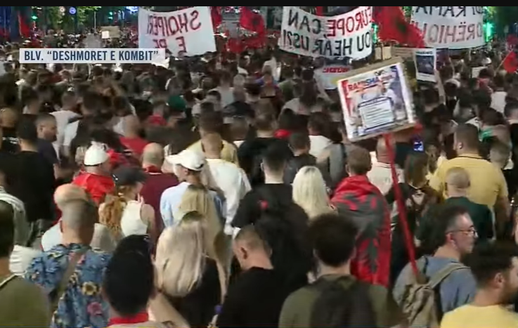

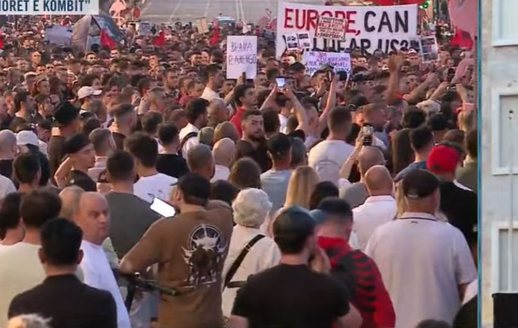

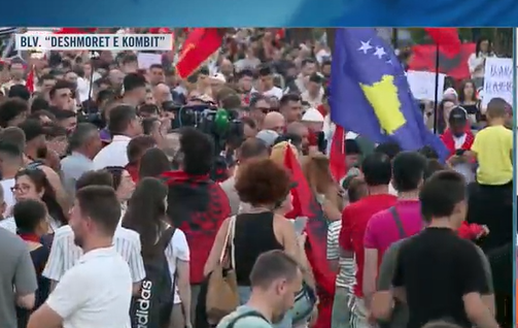


Attacks on Dumani and Berisha's silence on Ilir Shtufi
Nga Bato Kosova
ideas
The rise and fall of comrade Edi
Nga Demush Shasha

The Alliance of Seals and Towers, facing the New Republic
Nga Azgan Haklaj

The beginning of the end of power in Albania...
Nga Veton Surroi
top



Alfa recipes



TRENDING 




services
- POLICE129
- STREET POLICE126
- AMBULANCE112
- FIREFIGHTER128