


Lajme flash
Democracy is not a lottery. Why desperate societies seek political miracles

2026-07-26 18:21:00 / IDE
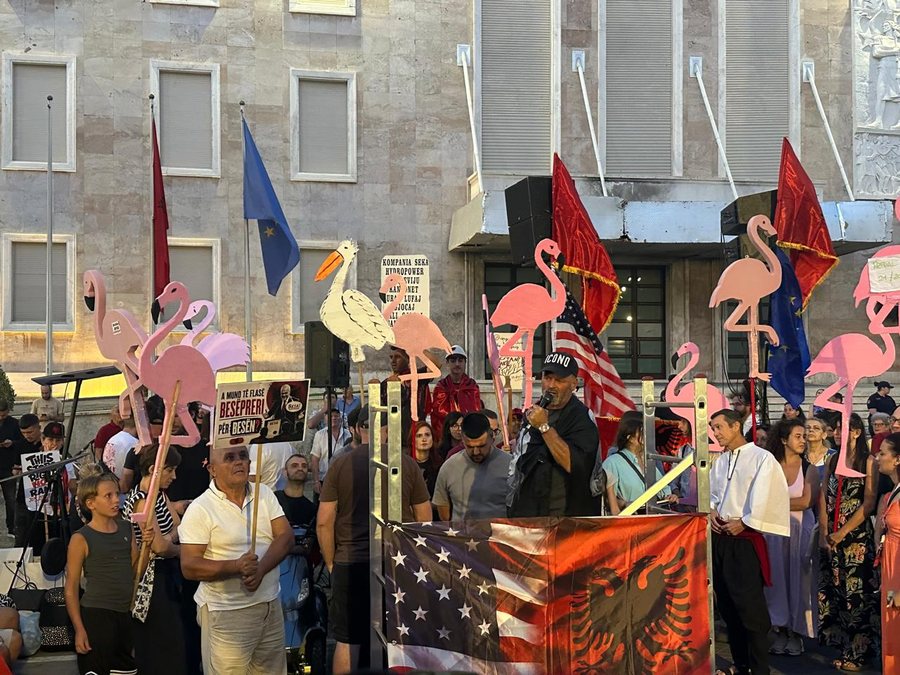
The Flamingo Revolution has sparked a debate that goes far beyond the fate of a protest or a government.
He has raised a much more fundamental question: how do we envision political change?
Do we believe that democracy is built with patience, participation, and perseverance, or do we wait for a single, triumphant, decisive moment that will change everything?
Studies show that when trust in institutions, meritocracy, and gradual improvement weakens, the tendency to seek immediate and savior solutions increases.
Therefore, the psychology that drives people to buy a lottery ticket is, in many cases, the same psychology that drives them to believe in political miracles.
In 2005, the book Freakonomics raised a question that at first glance seemed paradoxical: why do people who have fewer economic opportunities spend proportionally more on lotteries and gambling?
Intuition would suggest the opposite. After all, whoever has less money should be more careful with it.
However, the data showed a reality quite different from reasonable expectations, and the explanation was not related to mathematics, but to psychology.
When man believes that the normal paths of progress are blocked, he begins to seek extraordinary paths.
When work, education, savings, or entrepreneurship no longer seem like realistic tools for changing lives, a lottery ticket begins to seem more rational than it actually is.
The smaller the hope for gradual improvement, the greater the allure of miracle becomes.
Therefore, in this case, the lottery does not sell probability, but sells hope.
In fact, this mechanism is not limited to economics but also appears in politics.
In societies tired of corruption, injustice, and lack of trust, the same psychology is created.
People no longer seek gradual change; they begin to seek a political "jackpot."
A protest that will bring down the government overnight.
A leader who will solve everything with a speech.
An election that will immediately cleanse the institutions.
A dramatic event that will divide history into "before" and "after".
A new American president or ambassador who will put the corrupt government with its back against the wall.
It is a human expectation but unfortunately almost always a wrong expectation.
This is also the trap that the Flamingo Revolution is facing today.
Within a few weeks of its launch, two completely opposite types of reactions began to be heard.
One side immediately declared it a historic success; the other side just as quickly declared it a failure, simply because the system did not collapse within a few weeks.
Të dyja gjykimet burojnë nga i njëjti keqkuptim: ideja se protestat duhen matur vetëm nga rezultati i menjëhershëm.
Nëse nuk bie qeveria, atëherë protesta paska dështuar.
Nëse nuk ndryshon gjithçka menjëherë, atëherë paska qenë e kotë.
Kjo është pikërisht logjika e llotarisë politike: ose fitohet "çmimi i madh", ose bileta hidhet në kosh.
Në pamje të parë këto dy qëndrime duken të kundërta.
Në fakt, ato burojnë nga i njëjti keqkuptim, pra nga ideja se protestat duhen matur vetëm nga rezultati i menjëhershëm.
Por demokracitë nuk funksionojnë kështu.
Lëvizjet qytetare nuk janë "gërvish dhe fito" por investime afatgjata në kapitalin demokratik të një shoqërie.
Ato ndryshojnë mënyrën si njerëzit flasin, çfarë konsiderojnë të pranueshme, kë kritikojnë, kujt i kërkojnë llogari dhe çfarë guxojnë të imagjinojnë si të mundur.
Shpesh ndikimi më i madh i një proteste nuk është ai që shihet në fund të javës, por ai që ndihet vite më vonë, kur shoqëria kupton se busulla morale ka filluar të lëvizë në një drejtim tjetër.
Shpesh ndikimi më i madh i një proteste nuk është ai që shihet në fund të javës, por ai që ndihet vite më vonë.
Historia na jep vazhdimisht të njëjtin mësim.
Pothuajse asnjë demokraci nuk është ndërtuar nga një moment i vetëm heroik.
Asnjë sistem i konsoliduar nuk është rrëzuar vetëm nga një protestë apo nga një fjalim.
Përkundrazi, ndryshimet e qëndrueshme kanë qenë rezultat i akumulimit të shumë proceseve të vogla: presion qytetar, reforma institucionale, ndryshime kulturore, alternativa politike dhe një transformim gradual i mënyrës se si shoqëria e sheh pushtetin.
Kjo është ndoshta pjesa më e vështirë për t'u pranuar nga një shoqëri e lodhur.
Sepse shqiptarët kanë plot arsye për të qenë të paduruar.
Kanë parë korrupsion të përsëritur, pandëshkueshmëri, emigrim masiv, institucione të dobëta dhe një ndjenjë të vazhdueshme se rregullat nuk vlejnë njësoj për të gjithë.
Kur dikush thotë "nuk durojmë më", është e vështirë ta kundërshtosh sepse moralisht, ai ka të drejtë.
Por morali dhe strategjia nuk janë gjithmonë e njëjta gjë.
Një pacient ka të drejtë të kërkojë të shërohet menjëherë.
Kjo nuk do të thotë se mjekësia mund ta bëjë këtë.
Një sipërmarrës ka të drejtë të dëshirojë sukses brenda një muaji.
Kjo nuk do të thotë se tregu funksionon kështu.
Po njësoj, qytetarët kanë të drejtë të duan ndryshim të menjëhershëm.
Por kjo nuk do të thotë se demokracia mund të prodhojë rezultate të qëndrueshme me ritmin e zemërimit apo padurimit tonë.
Madje historia tregon të kundërtën.
Ndryshimet që ndodhin shumë shpejt janë shpesh edhe më të brishta.
Shumë revolucione kanë rrëzuar një elitë vetëm për ta zëvendësuar me një tjetër.
Shoqëritë nuk transformohen vetëm duke ndryshuar njerëzit në krye.
Ato transformohen kur ndryshojnë institucionet, rregullat dhe kultura politike. Dhe kjo kërkon kohë.
Prandaj pyetja e vërtetë nuk është nëse një protestë solli menjëherë rezultatin që prisnim.
The question is whether it has made society freer, bolder, and less willing to accept the normality of injustice.
If the answer is yes, then the change has begun, even if it doesn't yet look spectacular.
This is why pessimism is as wrong as naive optimism.
There is no reason to believe that everything will change overnight.
But there is no reason to say that nothing is changing just because the long-awaited lucky break did not happen within a few weeks. Societies that expect saviors usually end up disappointed.
It is societies that build citizens that are much more likely to build democracies.
So, in the end, perhaps the biggest challenge is not organizing the perfect protest or waiting for the perfect leader.
The challenge is to give up the psychology of political lottery and understand that democracy is not a sprint but a marathon.
Democracy does not hand out jackpots but rewards perseverance.
Every protest, every debate, every vote, every denunciation, every act of solidarity, and every refusal to normalize injustice is a small investment in a big change.
Democracy is not won by luck or strong people, but by citizens. It is built by active, responsible, and engaged citizens who do not give up on participation, accountability, and protection of the public interest.
Po ndodh...


The "small flower" and the big problem of Rama and Berisha!
Nga Ermal Peçi
ide

It's not the Cauliflower Trust, it's the Aruba Cartel!
Nga Gjergj Erebara

Tri krizat dhe tri zgjidhjet
Nga Përparim Gjeka

Innocence for the liberators, so that history is not judged!
Nga Azgan Haklaj
top


TRENDING 


shërbime
- POLICIA129
- POLICIA RRUGORE126
- URGJENCA112
- ZJARRFIKESJA128