


FLASH NEWS
The Balluku case, Article 103 of the Constitution and what the Berisha case teaches us about the interpretation of this article

2025-11-23 13:16:58 / EDITORIAL
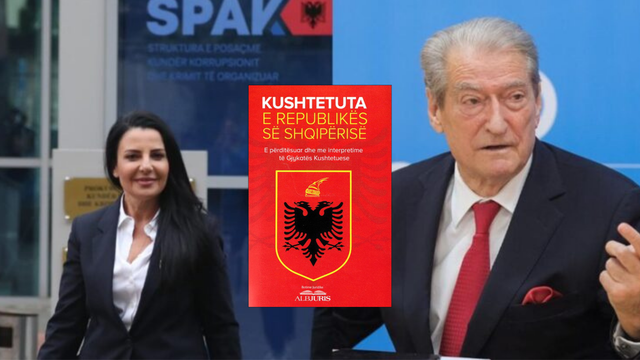
Former Minister of Justice, Ylli Manjani, but also other media figures, are trying to create the idea that we are dealing with a constitutional coup in the case of the suspension of Deputy Prime Minister Belinda Balluku. In an article today in the newspaper TemA, Manjani brought to attention Article 103/3 of the Constitution, according to which Ministers enjoyed immunity the same as MPs.
It is not the first time that whenever a movement restriction, travel ban or suspension from duty is imposed, the claim is immediately raised that "immunity is being violated."
In fact, the Constitution is much clearer than politics: parliamentary immunity, according to Article 73, protects only from arrest and deprivation of personal liberty, as well as from personal and home searches, which require the authorization of the Assembly. Nothing more. This is also the essence of Article 103/3, which states that ministers “enjoy the immunity of a deputy”. So, precisely this narrow procedural protection, and not a new bubble of protection over their executive function.
The misunderstanding stems from the confusion of two different planes: personal freedom and the exercise of duty. Personal freedom is what immunity protects, which includes arrest, detention, pre-trial detention, and in these cases the intervention of the Assembly is required. But restrictions that do not amount to the deprivation of personal freedom, such as the obligation to appear or the prohibition of leaving the country, have nothing to do with immunity.
The Constitutional Court also clarified this in the Berisha case, clearly stating that these measures do not require authorization from the Assembly, because they do not constitute deprivation of liberty.
Furthermore, interventions that affect the status or exercise of office, such as suspension, are not protected by immunity at all, because immunity is not designed to protect political office, but to prevent political arrests.
Article 103 does not create a “super-immunity” for ministers, nor does it expand the boundaries of protection for them. On the contrary, it puts ministers on the same level as MPs: they are protected only from arrest without the authorization of the Assembly, and that’s it.
All claims that the immunity of a deputy or minister prohibits other measures of justice, such as travel restrictions, mandatory reporting, or suspension from office, are simply politically invented interpretations that find no support in the text of the Constitution or in the practice of the Constitutional Court.
For this reason, the public debate must be separated from the illusion that immunity is an unlimited umbrella. It is a limited and very precise protection: against arbitrary arrests. Not against justice, not against the law, and certainly not against measures that do not affect personal freedom. Article 103 does not change this reality, it simply confirms it.
Happening now...













ideas



top



Alfa recipes








services
- POLICE129
- STREET POLICE126
- AMBULANCE112
- FIREFIGHTER128