


FLASH NEWS
The red carpet trap

2025-10-16 23:26:30 / IDE
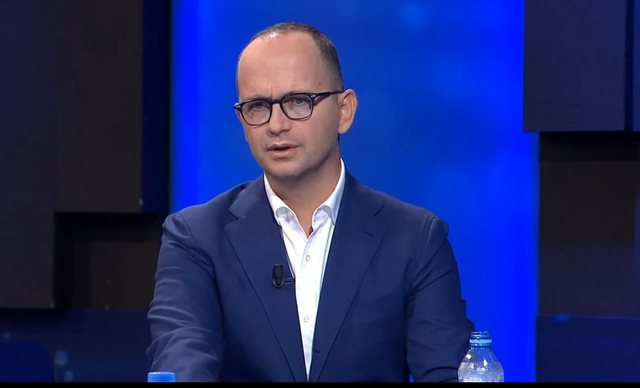
The President of the European Commission has concluded her visit to the Western Balkans. The visit, which precedes the publication of reports examining the progress of our countries towards the EU, aimed to boost morale in the group of countries that, paradoxically, have acquired the status of “professional candidates” due to the drag on this process for over two decades.
EU officials are often criticized for the roundness of the messages they convey or the wooden language they use. However, when you analyze Ursula von der Leyen’s messages in the six capitals of the region, you understand that the purpose of the visit was more symbolic than substantive. To remind the countries of the region that the EU’s enlargement policy has been revived as a geostrategic necessity after Russia’s invasion of Ukraine. At the same time, the EU member states, although they believe that the enlargement and consolidation of the European project is necessary and inevitable, are not yet ready to support a clear membership plan, accompanied by reciprocal actions.
Due to the disruptive geopolitical environment, the EU is in the process of transforming from a community that initially focused on trade and the economy, into a geostrategic project; from a soft influencer in the construction of democratic institutions to an exercise of strong power, placing emphasis on security, energy, sanctions and even industrial policies and strategic autonomy.
Seen in this context, two red lines will be impassable even for the European Commission itself vis-à-vis the member states regarding the progress of the candidate countries: geopolitical alignment and sustainable reforms regarding the rule of law in the economy.
Although the connection between the enlargement process and the critical need for democracy building and the consolidation of the rule of law was most frequently mentioned in Serbia, it is clear that in our region, referring to the OSCE-ODIHR reports, the organization of elections constitutes a challenge in itself. The longevity and personalization of power are distinctive features in the Western Balkans. Even in those cases where political rotation has been enabled, it has not been accompanied by a transformative agenda and a look to the future.
In Albania, the President of the Commission was careful to emphasize that our objectives for concluding the EU accession negotiations must be consistent with reality. The commemoration of the Srebrenica massacre in Bosnia and Herzegovina was a clear signal against the denial of genocide and the rewriting of history inspired by official Belgrade. North Macedonia was reminded of the necessity to implement the commitments undertaken with Bulgaria, within the framework of the EU accession negotiations. Meanwhile, the messages addressed to Kosovo and Bosnia and Herzegovina were more general, in the absence of a concrete offer for their progress towards the EU.
Almost all the stops in the region talked about the Economic Growth Plan, which despite the grants and loans mobilized offers limited results. At best, it equates the countries of the region with Ukraine and Moldova, but does not change the development trajectory of the Western Balkans and the necessary economic and developmental convergence with the EU average.
If we compare the 2 billion euro grant of the Growth Plan for the Western Balkans with the 357 billion euro grant for the member states, within the framework of the Next Generation of the EU, the contrast is stark. During the budget cycle, which coincides with the expressed ambition of Montenegro and Albania to conclude the EU accession negotiation process, the Western Balkans will receive grants from the EU, on average, in an amount of up to 619 euros per capita. While per capita grants in the EU member states surrounding us range from 3,540 euros for Slovenians to 5,700 euros for Greeks, evidence of the fact that the development gap between us is not narrowing, but deepening.
While the President of the European Commission avoided the trap of the red carpet, which is commonly used by local leaders to promote propaganda and certify their power, she failed to convey hope to the citizens of the region. Hope comes from the truth and treating the citizens of the region as European citizens. From the consolidation of the European project that has to do with: a) a credible promise coordinated between the European Commission and the EU member states that each country can realistically achieve membership; b) a cooperative internal political environment on the timeline for implementing the reforms stemming from the talks, and co-identifying for the protection and promotion of national interests in the EU; c) financial assistance and support programs to meet standards and mitigate the development gap.
Happening now...






Karmën nuk e ndalon dot Sali Berisha!
Nga Bato Kosova
ideas

"Topple" Edi Rama by lying to yourself...
Nga Patrik Sadikaj

Only accepting Berisha's truths will save the DP from final extinction!
Nga Neritan Vladi
top




TRENDING 




services
- POLICE129
- STREET POLICE126
- AMBULANCE112
- FIREFIGHTER128