


FLASH NEWS
Trump's visit to Beijing: A snapshot of a changing world

2026-05-17 23:08:14 / IDE
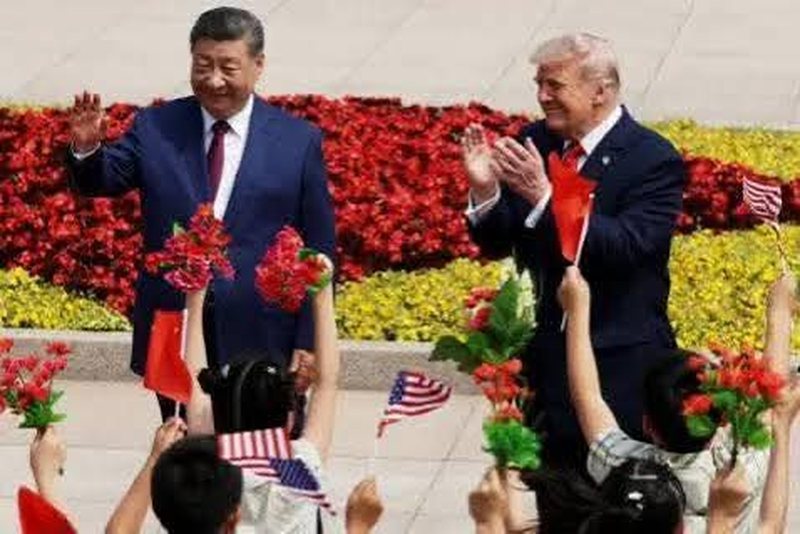
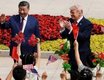
Donald Trump's visit to Beijing was not just a diplomatic meeting between the two most powerful leaders on the planet. It was a stage on which the transformation of the international order was displayed before the world. Beyond the declarations, trade agreements and state choreography, the Trump-Xi summit exposed something much deeper: American anxiety in the face of China's rise and the Chinese awareness that the era of absolute American dominance is gradually entering another phase.
On the surface, the visit produced some tangible results. A Chinese order for Boeing jets was announced, a clash over rare earth exports was postponed, and both sides reaffirmed that Iran should not have nuclear weapons. But these were technical, not strategic, victories. In essence, the summit did not change the balance of power. On the contrary, it made it more visible.
The most significant element of the visit was political symbolism. Trump went to Beijing with language of admiration for Xi Jinping, calling him a “friend,” a “great leader,” and “a man I respect very much.” Xi never returned this personal intimacy. China maintained the cool language of state protocol. This asymmetry is not a matter of vanity or diplomatic ego; it is part of the psychology of power.
In global diplomacy, the way leaders communicate publicly is strategically important. For decades, world leaders have traveled to Washington to seek rapprochement with America. In Beijing, for the first time, the opposite impression was created: the American president seemed to be the party seeking the relationship more than the Chinese side. For the countries of the “Global South,” already oscillating between Washington and Beijing, this was a weighty message.
The most sensitive issue of the summit was Taiwan. Xi Jinping addressed the issue in a direct and warning tone, calling it “the most important issue” in US-China relations and warning of “conflict” if the situation is “mismanaged.” In Chinese diplomatic parlance, this was an open strategic warning.
The problem wasn’t that Trump avoided a verbal clash with Xi. A serious president doesn’t improvise war rhetoric in summit halls. The problem was that he then implied that US arms sales to Taiwan could be discussed with Beijing. This strikes at the very heart of the Indo-Pacific security architecture.
For Japan, South Korea, Australia, and the Philippines, American credibility is measured not just by aircraft carriers or missiles, but by the belief that Washington does not negotiate over its allies under pressure from rivals. If China perceives that it can influence Taiwan's military supply, then American deterrence begins to seem less absolute.
However, the summit analysis should not fall into the exaggeration of America being “collapsed.” The US remains the dominant global military power, with the largest network of alliances, the dollar as the world’s reserve currency, and a vast technological advantage. But what is changing is the psychological monopoly of American superiority. China is not replacing America immediately; it is forcing the world to get used to the existence of another pole of power.
This was also clearly seen in the Iran issue. China does not want a nuclear Iran, because an uncontrolled explosion in the Middle East would damage the global economy and Chinese interests. But Beijing has no interest in completely stopping the flow of technologies and components that help Iran consume American resources in the region. This is the modern Chinese strategy: not frontal confrontation with the US, but the gradual consumption of American power through peripheral crises and economic rivalry.
Perhaps the most significant moment of the summit was Xi Jinping’s reference to the “Thucydides Trap” – the theory that conflicts arise when a rising power challenges a dominant power. Xi is trying to portray China’s rise as an inevitable historical process. And when Trump publicly acknowledged the idea that America had been “in decline,” he inadvertently legitimized the Chinese narrative of a global power transition.
In the end, this visit will not be remembered for Boeing jets or trade declarations. It will be remembered as a symbolic moment of the transition from the American unipolar era to a multipolar world, where China no longer seeks merely to be part of the world order – but to be its co-architect.
And this is the question that is shaping the 21st century: is the world entering a new balance between two superpowers, or a long-running rivalry that will determine the political, economic, and military fate of the coming decades?
Happening now...










Molotov cocktail on Saturday, shopping on Thursday!
Nga Bato Kosova
ideas


top










services
- POLICE129
- STREET POLICE126
- AMBULANCE112
- FIREFIGHTER128