


FLASH NEWS
Why do some women only give birth to boys?

2025-05-23 23:36:50 / JETË
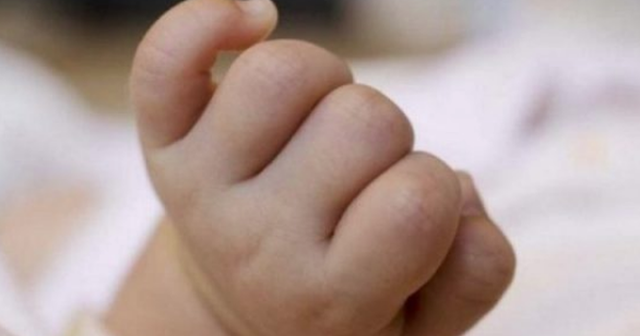
Some pregnant women may believe that environmental factors can play a role in their baby's gender, while others look to their family tree. Whether you're having a baby for the first time or the fourth time, we all know for a fact that this is a scientific matter.
The cells in our bodies are made up of 46 chromosomes that are grouped in pairs. Each pair has one chromosome from the mother and one from the father. Each gamete carries half a chromosome. When it comes to the mother's eggs, chromosome 23 is always X. For the father's sperm, chromosome 23 can be either X or Y.
"Sperm determines the sex of a child depending on whether it carries an X or Y chromosome. X and Y combine to make a boy, while XX creates a girl," said Joel Gator Warsch, a pediatrician from Southern California.
Although it is the male sperm that ultimately determines the sex of the baby, is it a coincidence that some women give birth to only boys, while others only girls? Mathematics and science have a lot to say about this!
The mathematics behind determining a baby's gender
A study suggests that family trees may provide insight into why some couples still have only girls or only boys. A Newcastle University study examined the family histories of nearly 1,000 couples to try to get to the bottom of why some families are all girls or all boys. The researchers found that men are more likely to have boys if they have more brothers and more likely to have girls if they have sisters. But for women, the probability of having a girl or a boy simply couldn't be predicted.
While some researchers look at family trees, others look at some simple math when it comes to sex chromosomes and the number of boys or the number of girls in the family.
Kimberly Langdon, an Ohio-based gynecologist, explained the math and science to better understand gender change.
“What we’ve been conventionally taught is that – barring any genetic disorder that causes early pregnancy loss that only affects girls or boys – there’s always a 50/50 chance of one sex or the other every time. The chances of a girl after three boys are still the same, when it comes to probability.”
A study from Newcastle University, published in Evolutionary Biography, found that men are more likely to have sons if they have more brothers, but more likely to have daughters if they have more sisters. This suggests that an undiscovered gene controls whether a man's sperm contains more X or more Y chromosomes, which affects the sex of his children. Looking at how sperm affects the sex of a child is key to figuring out why some women only have boys and others only have girls.
According to Science Focus, almost all women are predisposed to having more boys – the average sex ratio of 105 boys to 100 girls is influenced by partner choice, which will have a genetic component – so we can expect genetic effects in women, albeit weak ones.
As we can tell from various studies, more research is needed into why women only give birth to boys or girls. Most of the research has focused on men since they have a crucial chromosome, but more studies could be done to look at women's family trees to see if any kind of pattern can be identified.
How does sperm affect the sex of the baby?
The gene, Dr. Langdon explains, is made up of two parts, known as “alleles,” one inherited from each parent. So, he adds, men with the first combination, known as MM, produce more Y sperm and have more sons. The other, known as MF, produces roughly equal numbers of X and Y sperm, and (men with an MF combination) have roughly equal numbers of sons and daughters. The third combination, FF, (causes men) to produce more X sperm and have more daughters.
According to Langdon, "the gene passed down from both parents is the reason why some men have more sons and some more daughters, and that this may explain why we see the number of men and women to be roughly balanced in the population."




Happening now...















America may withdraw from Europe, but not from SPAK
Nga Gentian Gaba
ideas


Who is the Surrel Rabbit?
Nga Sidi Hasanaj

The two wrong paths of the opposition with the Ombudsman
Nga Patrik Sadikaj
top



Alfa recipes




TRENDING 




services
- POLICE129
- STREET POLICE126
- AMBULANCE112
- FIREFIGHTER128