


FLASH NEWS
How many types of military drones are there and why are they called "drones"?

2023-05-22 11:51:48 / AKTUALITET
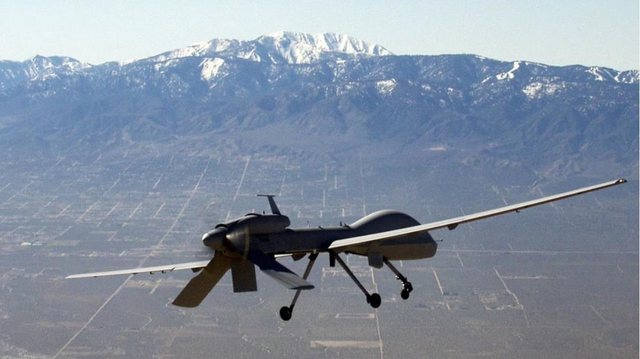
For a year, the word "drone" takes on less and less noble meanings.
If until the beginning of 2022 we heard about it mainly for applications in the photographic and audiovisual, meteorological or aerospace fields (but also for the transport of medicines and organs for transplantation, to fight poaching, etc.), with the explosion of the war in Ukraine, this aviation technology is increasingly associated with the war.
And this should not surprise us: Like many other technologies of daily use (web, GPS, etc.), drones are actually a purely military invention, "reconverted" only later to civilian or even recreational uses.
The predecessor of today's UAV (Unmanned Aerial Vehicle, in Italian APR, Aeromobile a Pilotaggio Remoto), was invented in 1918 by the American engineer Charles Franklin Kettering, who designed a radio-controlled torpedo, the forerunner of today's rockets. navigation.
He called it the "Kettering Bug", the Kettering bug, and it is curious to note that the word "drone" also has a similar etymology: it comes from the German drohne, or "drone" (male bee), because of the buzzing typical that it produces when rising, similar to that of a swarm of bees.
The resemblance to insects, however, stops there.
If you think of a combat drone as a larger, "lower" variant of the "helicopters" that take pictures at parties and weddings, you are completely off target.
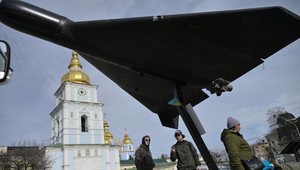
Military drones look more like stealth planes or bombers, often reaching their size.
On the other hand, they are used to throw equipment weighing several hundred kg.
Suffice it to say that one of the most disturbing designs from the point of view of the current war scenario is the S-70 Okhotnik, a drone currently in production by the Russian company Sukhoi, very similar to a fighter-bomber, weighing 20 tons. and capable of traveling at 1000 km/h.
The vast majority of drones are smaller in size anyway.
The United States Department of Defense classifies them into five distinct categories: small (small, up to 9 kg), medium (medium, up to 25 kg), large (large, up to about 600 kg) and then groups 4. and 5 (larger and larger), both heavier than 600 kg and with different characteristics, capable of operating up to 5-6000 meters altitude and reach speeds over 500 km/h.
Meqenëse nuk ka standardizim ndërkombëtar, çdo shtet dhe çdo zonë gjeografike ka klasifikimin e vet; në Evropë është e rregulluar nga EASA (Agjencia Evropiane e Sigurisë së Aviacionit).
Përdorimi i kësaj teknologjie në luftë ngre gjithashtu pyetje morale, mbi të gjitha sepse avantazhi i mos rrezikimit të jetës së një piloti të vërtetë tejkalohet kryesisht nga rreziku real i një rritjeje eksponenciale të viktimave civile.
E gjithë kjo me rrethanë rënduese, sipas disa ekspertëve, se duke qenë se këto armë kontrollohen “në distancë” nëpërmjet një monitori, ato mund të krijojnë edhe një lloj efekti videoloje.
Kjo nënvizohet kryesisht nga shoqatat jofitimprurëse si Amnesty International dhe Human Rights Watch, të cilat denoncojnë mungesën e të dhënave të qarta për numrin e misioneve dhe për ato të viktimave kolaterale.
Happening now...







Denouncing Berishism is a prerequisite for denouncing the government
Nga Blendi Kajsiu
ideas

The Hungarian lecture and 4 messages for the political establishment in Albania
Nga Kreshnik Spahiu

Viktor Orban dictator?
Nga Indrit Vokshi

top



Alfa recipes







services
- POLICE129
- STREET POLICE126
- AMBULANCE112
- FIREFIGHTER128