


FLASH NEWS
The Lighthouse of Alexandria, the most impressive building of the ancient world

2025-05-10 15:42:27 / MISTERE&KURIOZITETE
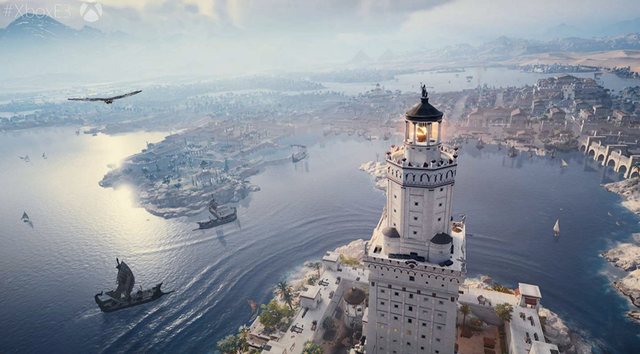
The small Egyptian city of Rakatis, in present-day Alexandria, existed in 1900 BC. Its location on the Mediterranean was perfect. The city was protected from the large waves and rough seas by the nearby island of Pharos, as well as a chain of smaller coral islands .
Rakotis was supplied with fresh water from both Lake Mariut and the Nile River. The city had long served as a maritime transport route, supplying goods to the island of Pharos. According to Homer, the famous Hellenic writer, the port near the island of Pharos existed since ancient times .
He described this island in his classic literary work, The Odyssey , where Menelaus was stranded on the island of Pharos while returning from the Trojan War. The old port still exists today, but unfortunately at the bottom of the sea on the north side of Ras El - Tin .
The city was a center of ancient civilization, controlling trade between Egypt and the rest of the Mediterranean. Its location was perfect , as a vital crossing point for traders on their sea routes between Asia and Europe. Egypt was a major producer of grain in the ancient and medieval world. Cotton was almost as important.
Its wealth and strategic position attracted the attention of Alexander the Great , who in 332 BC attacked the Egyptian coast, on the outskirts of the modern city of Alexandria. He arrived there after conquering the island of Tyre , but the conquest was unexpectedly delayed.
To his surprise, the siege lasted so long and the local resistance was so fierce that his army was forced to devise a new strategy . The siege lasted from January to August of that year. Since Alexander could not attack the island from the sea, he built a long land road.
After a long preparation and a fierce battle , he finally conquered the island of Tyre and in a fit of rage burned it all down. The similarities between the island of Tyre and the island of Pharos are striking. After the conquest of Egypt, Alexander began to make grand plans for the small city of Rakotis , which in ancient Greek means “construction in progress” or “ construction site”.
Ai kishte nevojë për një far, por jo për një far të thjeshtë. Donte një strukturë multi–funksionale, që të garantonte sigurinë në port, dhe t’i jepte mundësinë sundimtarëve të rinj të mbikëqyrnin si duhet qytetin, portin dhe rajonin përreth. Por në të njëjtën kohë, synohej të ndërtohej një ndërtesë që t’i bënte përshtypje gjithë botës së njohur.
Në fillim u ndërtua një port i ri. Më pas vëmendja u përqendrua tek fari, që parashikohej të ishte një strukturë kolosale, e fortë, dhe e aftë t’i bënte ballë sfidave të kohës si dhe tërbimit të detit. Gjatë ndërtimit duhet të kenë dhënë kontributin e tyre inxhinierët e aftë dhe më shumë përvojë të Egjiptit.
Ndërtimi, i urdhëruar nga Ptolemeu I (një nga gjeneralët e Aleksandrit, dhe sundimtari i parë i Egjiptit me origjinë greke) filloi në vitin 290 Para Krishtit, dhe mendohet se ka zgjatur gati 20 vjet. Rrëfimet e lashta janë konfuze dhe kontradiktore. Por nëse do t’i besojmë Strabonit, një gjeograf grek, dhe Plint Plak, historian romak, ata e përshkruajnë atë “të veshur me mermer një të bardhë të mrekullueshëm, dhe përbëhej nga tre struktura bazë:një bazë drejtkëndore, një baza mesore tetëkëndore, dhe pjesa e sipërme cilindrike ku ndodheshin 2 fanarë”.
Brenda strukturës, ishte ndërtuar një bosht i pjerrët, për të ngritur deri lart karburantin e nevojshëm për të mbajtur ndezur zjarrin. Një pasqyrë reflektonte rrezet e diellit gjatë ditës, ndërsa zjarri përdorej natën. Godina përmbante brenda 364 dhoma, me përmasa 2-4 metra katrorë.
Dhomat ishin kishte edhe dritare, që ishin menduar të amortizonin forcën goditëse të errëraveqë përplaseshin me farin, duke zvogëluar kësisoj rrezikun e shembjes së tij. Disa dhoma shërbenin si magazina për vajin që përdorej për zjarrin. Ato ishin të mbuluara me trarë prej druri dhe harqe prej guri.
The viewing galleries were located on the second and third floors, where visitors could enjoy the panorama from a height of 122 meters. The lighthouse was equipped with the best technology of the time. At its top were placed 2 large mirrors that reflected light more than 56 kilometers out to sea during the day.
There are several conflicting theories about how mirrors were made. Some talk about the use of a highly polished metal, while others insist that they were made with a silver-based glass or transparent stone.
Its strong light guided ships for centuries, and placed the port city at the center of Mediterranean trade for a very long time. It was therefore rightly declared one of the seven wonders of the ancient world . But it did not withstand all the challenges that time brought. Thus the Lighthouse was severely damaged in the earthquakes of 956, 1303 and 1323 AD.
Meanwhile, in 1408, the lighthouse was crippled and part of it collapsed along the coastline. The ruins of its foundations are still found underwater today. Although most scholars agree that the lighthouse was destroyed by the last three earthquakes, the 10th-century writer Al - Masud is convinced that the Byzantines sent a spy to the lighthouse.
Convinced that a great treasure was hidden beneath the foundations, he began to dig there , bringingand the collapse of the mythical building. The Lighthouse of Alexandria had a great influence on the architecture of Arab minarets , and greatly influenced the way they were built. It is interesting to note that the Arabic word for minaret and lighthouse is the same./ Bota.al
-

-

-
Land mass collapse in Gramsh, two workers die
May 10, 15:15 -

-

Happening now...















83 mandates are not immunity for Rama's friends
Nga Gentian Gaba
ideas



top



Alfa recipes



TRENDING 




services
- POLICE129
- STREET POLICE126
- AMBULANCE112
- FIREFIGHTER128