


FLASH NEWS
From strokes to road accidents, how the time change affects us

2025-10-27 15:30:28 / MISTERE&KURIOZITETE
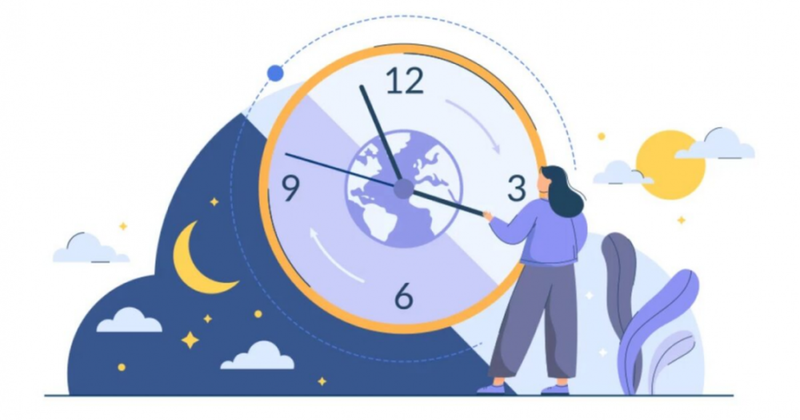
The time change, one hour forward in the spring and one hour back in the fall, is linked to a range of health problems, from heart attacks and strokes to mood disorders and road accidents.
Changing the clocks forward in the spring, which deprives people of an hour of sleep, has strong links to increases in heart attacks and fatal accidents.
Various studies in the US, Sweden, Germany, Croatia, Brazil, Finland and Mexico show that the number of these events increases after the time change.
A meta-analysis estimates that the average increase in heart attacks is about 4%.
The negative effects are mainly related to disruption of the body's circadian rhythm, the internal 24-hour clock that determines when we should sleep and wake up.
Our brain uses sunlight to regulate this clock: melatonin is produced at night and makes us feel sleepy, while in the morning cortisol wakes us up.
Moving the clock forward makes evenings brighter and mornings darker, making sleep more difficult and increasing its fragmentation during the week following the change.
In addition to the physical effects, the time change can also affect mental health.
A 2020 study shows that daylight saving time worsens mood disorders, depression, anxiety, and substance abuse.
Also, fatal road accidents increase after the spring time change, possibly due to lack of sleep.
An American study suggests that the risk of accidents increases by 6%.
Turning the clocks back in the fall seems less problematic.
An extra hour of sleep brings slight benefits: people sleep an average of 33–40 minutes more and feel more energetic and happier.
However, some studies link this change to an increase in depressive episodes, especially during the 10 weeks following the change.
From an economic and social perspective, changing the clock twice a year costs over 750 euros per person, according to a recent study.
Many experts, including circadian biologists, suggest that winter time is more favorable for health.
A parallel is also found in shift workers, who live "against the body clock" and experience higher levels of chronic disease and early death.
Even people living on the western edge of time zones are exposed to similar effects.
However, daylight saving time continues to be implemented in about 70 countries and over a quarter of the world's population.
The European Parliament voted in 2019 to abolish summer time, but countries have not agreed on its implementation and most prefer to maintain summer time, despite scientific recommendations.
As the autumn nights grow darker and we prepare to turn back the clocks, one thing is clear: darker evenings aid sleep, and we should appreciate this, as sufficient sleep is essential for our mental and physical health.
Happening now...















Karmën nuk e ndalon dot Sali Berisha!
Nga Bato Kosova
ideas

"Topple" Edi Rama by lying to yourself...
Nga Patrik Sadikaj


Only accepting Berisha's truths will save the DP from final extinction!
Nga Neritan Vladi
top







TRENDING 




services
- POLICE129
- STREET POLICE126
- AMBULANCE112
- FIREFIGHTER128