


FLASH NEWS
Evolutionary tree rewritten after dinosaur discovery

2026-02-06 16:07:24 / MISTERE&KURIOZITETE
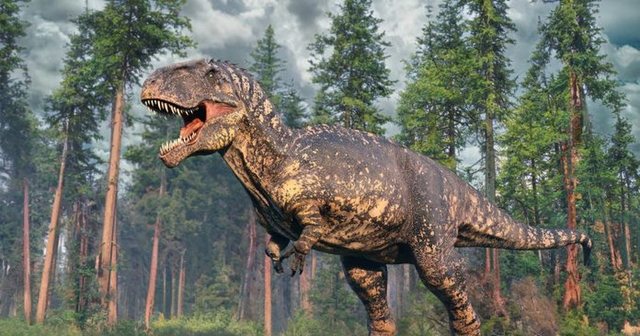
Fossils of a new, very small dinosaur are causing paleontologists to reconsider the shape of the evolutionary tree.
From snout to tip of long tail, the herbivorous dinosaur Foskeia pelendonum, which walked on two legs, was just over half a meter long.
Standing upright, it would barely reach a man's knee.
Paleontologists analyzed new cranial elements from at least five specimens of this rhabdodontomorph from the Early Cretaceous period, discovered in Salas de los Infantes, northern Spain.
"What they discovered was that the dinosaur skull was strange and extremely derived," said Marcos Becerra from the National University of Cordoba, emphasizing that miniaturization did not imply evolutionary simplicity.
The leader of the research, Paul-Emile Dieudonné from the National University of Río Negro in Argentina, said that from the first moment someone sees this animal, they are amazed by its extreme smallness.
"However, it retains a highly derived skull, with unexpected anatomical innovations," he adds.
The study, published in the journal "Papers in Paleontology," places Foskeia near the origin of the European herbivorous lineage Rhabdodontidae.
Thierry Tortosa from the Sainte-Victoire nature reserve said the dinosaur helps us fill a gap of 70 million years, a small key that opens a large missing chapter.
Penelope Cruzado Caballero from the University of La Laguna also agrees that "this is not a small Iguanodon, it is something fundamentally different."
"Its anatomy is strange precisely in the way it rewrites the evolutionary tree," she points out.
Happening now...















Germany, the "curse" of Rama and Berisha
Nga Bato Kosova
ideas



top



Alfa recipes



TRENDING 




services
- POLICE129
- STREET POLICE126
- AMBULANCE112
- FIREFIGHTER128