


FLASH NEWS
How cats became divine symbols in Ancient Egypt

2025-02-18 14:00:26 / MISTERE&KURIOZITETE
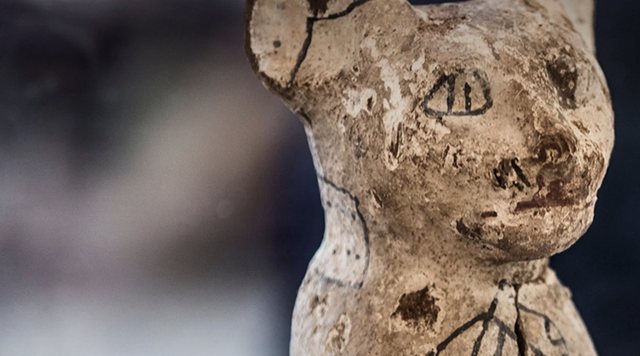
Along with hieroglyphs, obelisks, and geometric patterns, cats appear frequently in ancient Egyptian art, reflecting the unique status of this animal among the people who lived along the Nile River. They were originally adopted as useful predators in ancient Egypt, gradually becoming symbols of divinity and protection for humans.
"Although it's hard to say whether they believed in this or that, as many changes occurred during their 3,000-year history, in general the ancient Egyptians did not worship animals as gods," says Julia Troshe, an Egyptologist and assistant professor of history at Missouri State University, and author of the book "Death, Power, and Apotheosis in Ancient Egypt: The Old and Middle Kingdoms."
“Rather, they saw the animals as representations of the divine aspects of their gods,” she points out. But whether or not they were worshipped as deities, cats were an integral part of ancient Egyptian life. And based on mummified cats discovered in tombs alongside humans, they also played an important role in the afterlife.
Cats kept people company and eliminated pests
For most of the history of this civilization, the ancient Egyptians viewed cats as mutually beneficial companions. "Cats chased and eliminated dangerous animals, such as snakes, many of which were poisonous, but also scorpions," Troshe explains.
Much of what we know about the role of cats in ancient Egyptian society comes from scenes of daily life depicted in paintings on tomb walls. “In these scenes, cats are shown lying or sitting under chairs, chasing birds and playing. In some funerary texts, they are shown with a knife stabbing Apophis: the serpent-shaped deity who threatens the god Ra (the Sun) in the underworld at night,” she adds.
Companionship in the afterlife
After keeping a cat as a pet during their lifetime, the ancient Egyptians continued the relationship in the afterlife. "The tomb was a person's home after death in this world. The tomb would depict the deceased's family, the titles and greatest awards they had won, and the things they enjoyed doing.
"The depiction of cats in such paintings shows the importance they had both in the daily lives of the ancient Egyptians, as well as their hope that they would continue to be with them in the afterlife," Troshe emphasizes.
In the Tomb of Nebamun, now in the British Museum in London, a painting depicts a cat accompanying Nebamun while he is out fishing and hunting. The cat has caught a bird in its mouth and 2 other birds in its claws.
One of the cat's eyes is decorated with gold leaf, which according to the British Museum is the only known example. But the presence of cats in Egyptian tombs was not limited to paintings. In some cases, cats were mummified and placed inside the tomb of their human companion. One reason is that when cats were mummified, it meant that the deceased person could inhabit their body in the afterlife.
Ancient kings made cats fashionable
As is the case in all different civilizations and cultures, the ancient Egyptians viewed members of the royal family as trendsetters. They took cues from them on everything from food to fashion to cats.
"The ancient Egyptians highly valued cats because of the practices and preferences of their gods. But also because their kings, the pharaohs, kept giant cats," says Monique Skidmore, professor of anthropology at Deakin University.
“Members of the royal court dressed their cats in gold, and allowed them to eat from their plates. Although members of the lower classes were unable to dress their cats in precious metals, Skidmore notes that they did put on their own jewelry that contained the image of the cat.
Cats had characteristics that were coveted
In addition to valuing their ability to keep rodents, snakes, and other pests out of their owners' homes, the ancient Egyptians understood that cats of all sizes are smart, fast, and powerful.
"Sekhmet was a goddess in the form of a lioness, a warrior and protective deity who kept away the enemies of the sun god Ra. She also kept away various diseases. So the ancient Egyptians considered cats in general as their protectors, and at the same time respected their ferocity," the researcher emphasizes.
Cats in ancient Egypt possessed another kind of power: fertility. "They are often depicted sitting under women's chairs, implying a strong connection with the latter, and perhaps also fertility," Troshe emphasizes, noting that this connection may stem from the fact that cats give birth to multiple kittens during a single pregnancy./ Bota.al
Happening now...















83 mandates are not immunity for Rama's friends
Nga Gentian Gaba
ideas



top



Alfa recipes


TRENDING 




services
- POLICE129
- STREET POLICE126
- AMBULANCE112
- FIREFIGHTER128