


FLASH NEWS
"Protests a manipulated reality"/ Rama writes to CNN: Low participation, never exceeded 8,000 people

2026-06-06 21:46:16 / POLITIKË
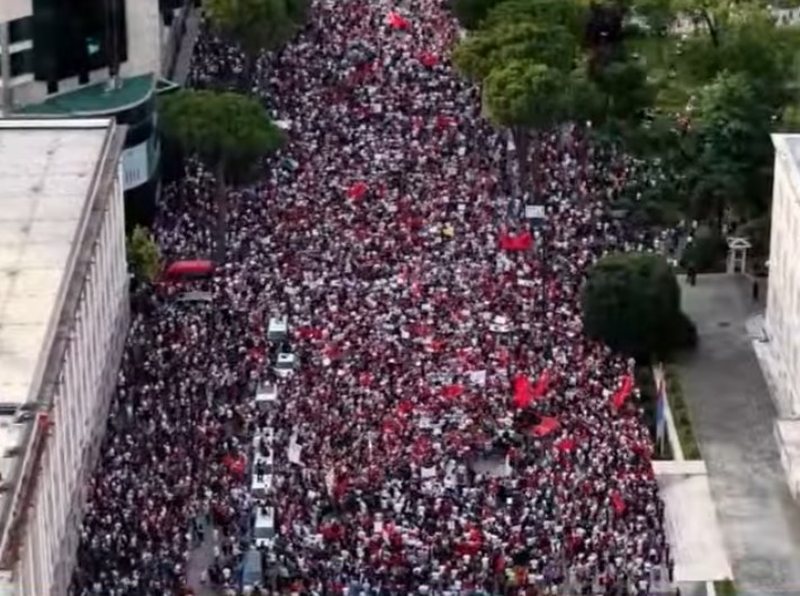
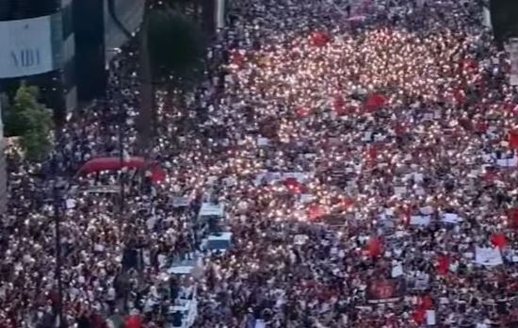
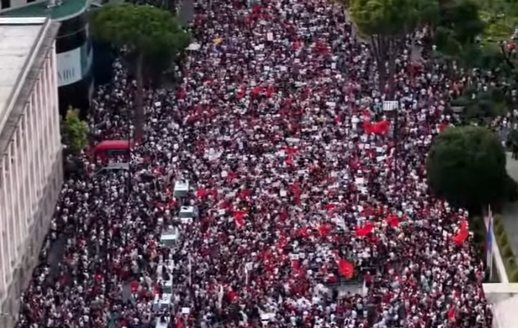
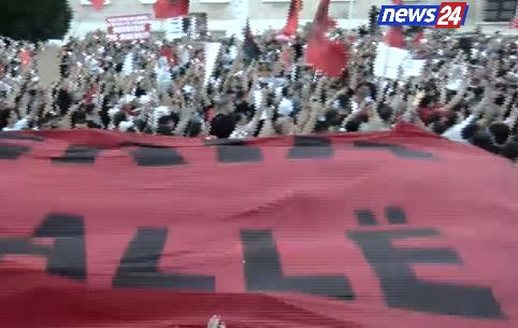
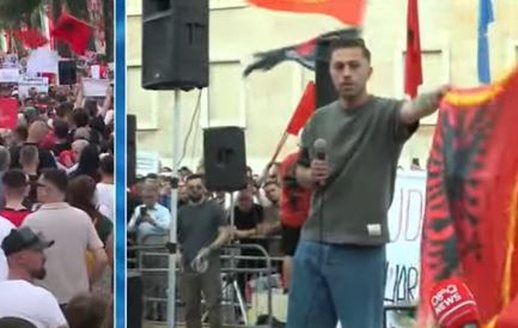
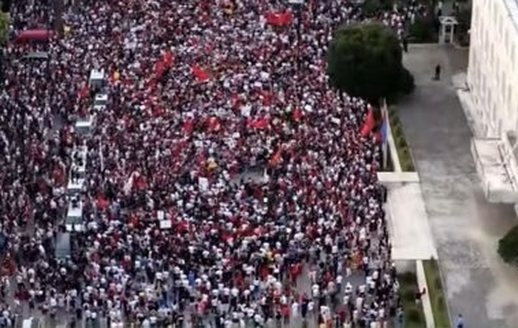
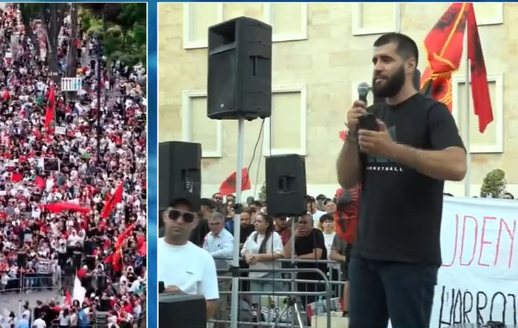
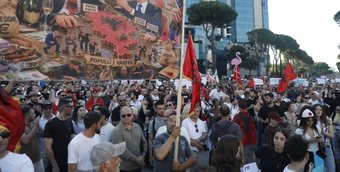
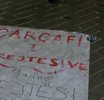
"A manipulated reality," Edi Rama calls the square in front of his office, filled with tens of thousands of citizens protesting against his government, himself, his partner in the opposition, and the entire corrupt political class. Panicked by the internationalization of the causes of the great protest, Rama has written a letter to foreign media.
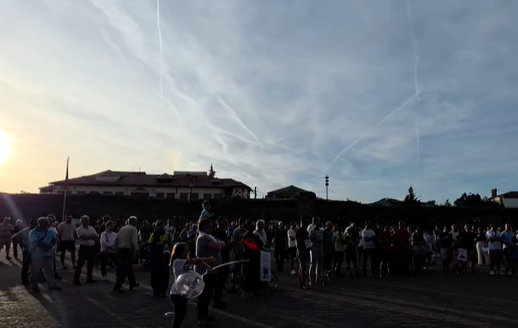
In the letter posted on his "X" account, Rama writes that the protest has low participation, around 2,000 people, and that what is being reported on social media is a manipulated reality, which does not match the number of people on the ground.
He explains that there is still no permit or final design for the project in question. According to him, it is only a vision for high-level tourism development, which, according to the government, will even bring increased greenery and not environmental destruction.
"To @CNN International and all the countless media outlets, big and small, along with all the well-intentioned content producers on Facebook, X, Instagram, TikTok, and every other platform that now shapes the global conversation, I would love to pass along the following post: As we speak, today's protest has attracted roughly 2,000 participants. It's the lowest turnout yet, but even at its peak, attendance never exceeded 8,000 people. So how is it possible that what most of the world has seen over the past few days seems so big, so dramatic, so overwhelming?
At some point, when the projected digital hysteria of these days has passed and emotions have cooled, the democratic world should take a closer look at how the gap between reality and its representation became so wide. Not just as a matter of this particular case, but as a symptom of something much larger. How can a small country become global news for reasons so disconnected from reality on the ground? How can a local protest involving a few thousand people be transformed into an international spectacle? How can assumptions become facts, narratives decisions, and speculations accepted truth before the basic facts have been established?
And perhaps most importantly, what does this say about our information ecosystem when perception can travel around the world faster than reality itself? Because the reality is that there is still no project. There is still no building permit. There is still no construction. There is still no final design. There is only one vision and one plan: to transform Albania into the most attractive high-end tourism destination in this part of the world, while simultaneously creating a positive environmental development that, according to the current vision, would ultimately result in approximately 25% more trees and green spaces than exist today, along with measurable improvements in numerous biodiversity indicators.
The ambition is not simply to build. The ambition is to show that development and environmental improvement can go hand in hand. That is precisely why some of the world’s leading experts in ecology, biodiversity, landscape architecture, environmental engineering and sustainable tourism are working on these concepts and parameters. Whether they will succeed or fail is a matter for future assessment, science, public scrutiny and transparent debate. But presenting as an environmental disaster something that does not yet exist, has not yet been designed, has not yet been permitted and whose stated objective is in fact to produce positive environmental outcomes is not a serious contribution to the public discussion.
And yet, out of this simple reality emerged a whirlwind of digital hysteria, apocalyptic headlines, fabricated outrage, and sweeping conclusions presented as established facts. Along the way came deepfakes, manipulated images, fabricated claims, coordinated amplification, anonymous networks, and online behavior that bears many of the characteristics of the hybrid information warfare that increasingly shapes public debate in all democratic societies. Even more striking is that social media platforms recorded an explosion in activity around the topic, with engagement in the Albanian language increasing several-fold in just a few days. A significant part of this sudden growth appears to have been driven not by an organic expansion of public participation, but by the rapid proliferation of newly created profiles, anonymous accounts, and pages with little or no identifiable history, raising legitimate questions about artificial amplification and the production of digital momentum .
Happening now...

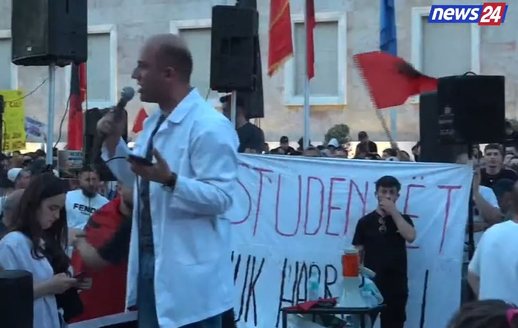
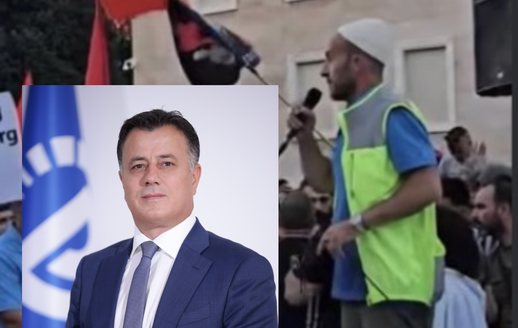

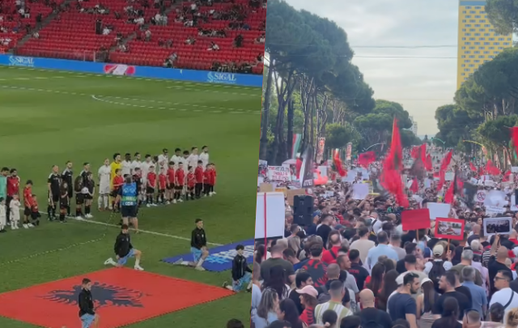


Protests and the crackdown on the Rama-Berisha system
Nga Erl Kodra
ideas


top
Alfa recipes


TRENDING 



services
- POLICE129
- STREET POLICE126
- AMBULANCE112
- FIREFIGHTER128