


FLASH NEWS
El Niño officially confirmed, one of the strongest phenomena since 1950 warned

2026-06-12 23:16:30 / BOTA
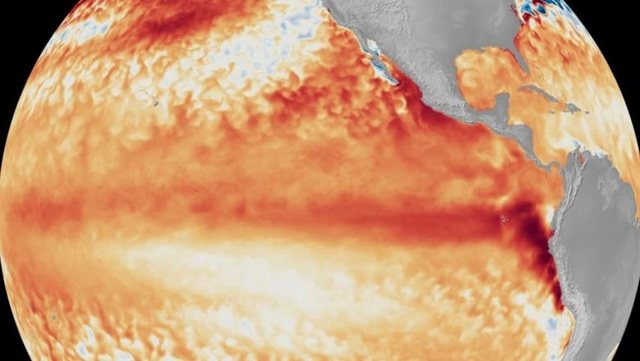
NOAA, the US weather agency, has confirmed the onset of an El Niño in the tropical Pacific, with a 63% chance. The phenomenon is thought to be “among the most intense recorded since 1950”. In early June, the World Meteorological Organization (WMO) announced that El Niño had an 80% chance of occurring before September. UN Secretary-General Antonio Guterres said that El Niño “will add fuel to the fire” of an already warming world. According to the WMO, the previous El Niño of 2023-2024 contributed to 2024 topping the list of the warmest years on record.
El Niño is the cyclical warming of the surface waters of the eastern Pacific Ocean along the equatorial coast of South America. Peruvian fishermen named it El Niño – Spanish for “Baby Jesus” – because it occurs every five to eight years around the Christmas season. Once thought to be a purely local phenomenon, climatologists have discovered that El Niño actually affects the climate of almost the entire planet, even affecting the European and Mediterranean regions, even though they are over 10,000 kilometers from the coast of Peru. El Niño forms when the surface temperature of the eastern Pacific is 0.5°C above average over a three-month period, which NOAA experts have verified. The warming of the water is caused by a change in the circulation of the trade winds in the equatorial Pacific: they usually blow from east to west; if their direction changes, warm water accumulates on the coast of South America.
The effects of El Niño are not uniform across the region. Drought conditions are setting in in the Amazon, Australia and Southeast Asia, while China, Central Africa and the southern United States are experiencing increased rainfall and lower temperatures. It is warmer in India, as well as in Brazil and Japan; the Indian monsoon rains expected for rice cultivation are weaker. Hurricane activity in the Atlantic is decreasing, while Pacific typhoons are increasing. The link between El Niño and the European climate is less direct: it multiplies extremes and, when combined with global warming, makes heat waves more intense and persistent, including in Italy. In 2027, the summer season could see very high temperatures./Corriere della Sera
Happening now...
















ideas

Cikloni gjeopolitik dhe paktet e fundit të tranzicionit shqiptar
Nga Azgan Haklaj

Gen Z
Nga Neli Demi

top



Alfa recipes



TRENDING 




services
- POLICE129
- STREET POLICE126
- AMBULANCE112
- FIREFIGHTER128