


FLASH NEWS
The situation is getting out of control! Global alarm for the Ebola virus in Africa, WHO declares international emergency

2026-05-17 23:19:10 / BOTA
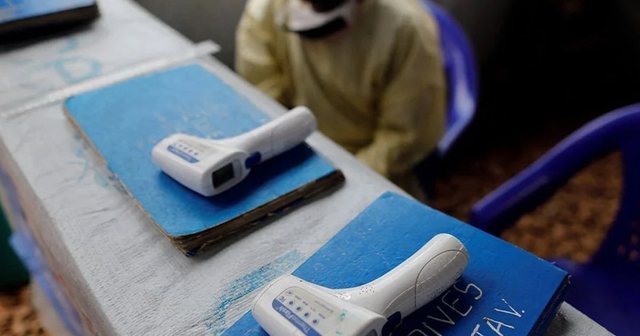
In recent days, the world has been alarmed by the uncontrolled spread of the Ebola virus in the Democratic Republic of Congo. Health authorities warn that dealing with the virus has become extremely complicated, while the current variant of Ebola is considered rare and has few treatment options.
Nearly 250 suspected cases and about 80 deaths have been reported so far, with experts warning that the real figures could be even higher. The exact extent of the virus' spread is still unknown, as many affected areas are difficult to monitor due to insecurity and constant population movements.
According to the BBC, most past Ebola outbreaks have been relatively limited, but memories of the catastrophic 2014–2016 epidemic in West Africa remain fresh. During that period, over 28,600 people were infected and thousands died.
The World Health Organization has declared the outbreak caused by the “Bundibugyo” variant in the Democratic Republic of Congo and Uganda a public health emergency of international concern. However, the WHO emphasizes that the criteria for classifying the situation as a global pandemic have not yet been met and that the risk to the rest of the world remains low.
"The situation is quite complex and requires international coordination," said Dr. Amanda Rozek from the Institute for Pandemic Sciences at the University of Oxford.
What is Ebola and why does the “Bundibugyo” variant worry experts?
Ebola is a serious and often fatal disease caused by a virus that usually circulates in animals, especially fruit bats. People become infected through close contact with infected individuals or animals.
The current outbreak is linked to the “Bundibugyo” variant, one of three major forms of the Ebola virus known to cause epidemics. This variant has only been recorded twice before, in 2007 and 2012, causing the death of about 30% of those infected.
What makes this variant more worrisome is the lack of approved vaccines and drugs to treat it. Unlike other forms of Ebola, only experimental treatments exist for “Bundibugyo,” while diagnostic tests have also proven less effective.
Experts say that the first cases initially tested negative for Ebola, until more advanced laboratory tests confirmed the presence of the "Bundibugyo" variant.
The first known case was that of a nurse who showed symptoms on April 24. However, it took authorities about three weeks to officially confirm the outbreak.
"Transmission has been ongoing for weeks and the outbreak has been identified very late, which is extremely concerning," said Dr. Anne Corry of Imperial College London.
According to the WHO, this delay could mean that the real spread of the virus is much greater than currently reported. The main strategy now remains the rapid identification of infected people, isolation of cases and contact tracing.
Another challenge remains the safe treatment and management of victims, as the bodies of people who have died from Ebola continue to remain infectious even after death.
The situation is further complicated by the fact that there are over 250,000 displaced people in Congo. Many of the affected areas are mining towns with mobile populations, which significantly increases the risk of the virus spreading beyond communities and state borders.
However, experts point out that the Democratic Republic of Congo has gained considerable experience in dealing with previous Ebola epidemics. “The response to outbreaks today is much stronger than it was a decade ago,” said Dr. Daniela Manno of the London School of Hygiene and Tropical Medicine.
Happening now...















Molotov cocktail on Saturday, shopping on Thursday!
Nga Bato Kosova
ideas



top











services
- POLICE129
- STREET POLICE126
- AMBULANCE112
- FIREFIGHTER128