


FLASH NEWS
Silence as a policy and fear as a system

2026-04-19 13:52:54 / IDE
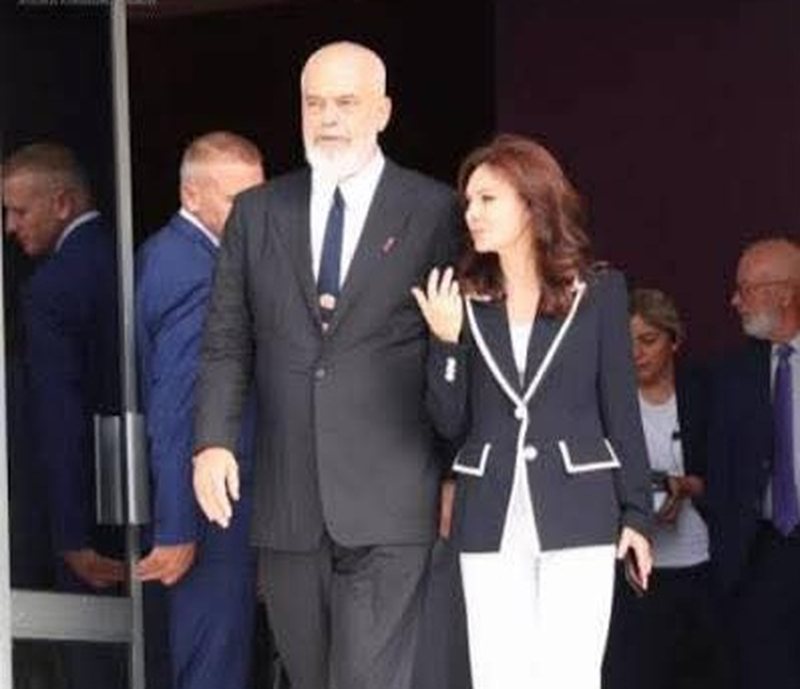
There comes a moment in the life of every political system when everything seems calm on the surface, but inside it a crisis has begun that will not stop. It is not a major crisis, it is not a revolt, it is not even a spectacular clash. It is something quieter: a voice that comes from within and says that the model no longer works.
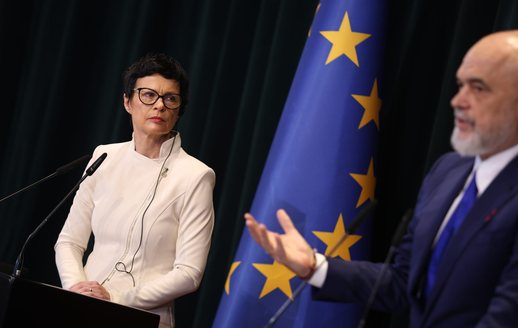
This is why the latest case — a figure who until yesterday was among Edi Rama’s strongest supporters and today articulates a critical stance — should not be read as a personal conflict or as an ordinary political episode. The question is not “why did she change?”, but “what has changed within the system that made her speak out?”.
Because in politics, especially in systems consolidated around a strong decision-making center, no one speaks without reason.
For years, a governance model has been gradually built that no longer relies on institutions as decision-making spaces, but on them as instruments of implementation. In theory, the state functions on law and procedure. In practice, it increasingly functions on order and relationship.
This transformation does not happen overnight. It does not come with a single decision. It is built with small tolerances, with reasoned silences, with pragmatic justifications: “this is how the system works”, “don't clash in vain”, “protect yourself”.
This is what sociologist Max Weber would describe as the deformation of bureaucracy: from a rational structure to a personal mechanism. In today's political language, this is called state capture — a process that Francis Fukuyama has defined as the moment when institutions stop serving the public and start serving a narrow network of interests.
At this stage, the law does not disappear. It simply becomes flexible. Procedure is not abolished. It is interpreted. Institutions do not collapse. They are used.
And this is where the big problem begins: because from the outside everything seems fine, while from the inside everything works differently.
The advice given in these cases is always the same: keep quiet.
“Don’t make a sound.”
"I can't do it."
“They will attack you.”
It's advice that sounds like prudence, but it's essentially a control mechanism. It's not just individual fear. It's an entire culture that's built on the idea that personal survival is worth more than public integrity.
This is what Hannah Arendt called the banalization of evil: not because people become evil, but because they choose not to object.
At first, silence is a choice. Then it becomes a habit. Finally, it becomes the norm.
And when silence becomes the norm, the system no longer needs open violence. Potential fear is enough.
The most important question is not whether a political figure is trustworthy or not in their turn. History has shown that many of the greatest reforms have started precisely from within systems that seemed unbreakable.
The question is different: is there still capacity for self-correction within the system?
Because no closed system is reformed from the outside. External pressure can force change, but it does not create lasting transformation. It comes only when a division arises within the structure itself, a real debate, a rejection of the model.
In the absence of this, any criticism remains episodic. Any voice remains isolated. And any crisis is treated as a communication problem, not a structural problem.
In Albania, for years, another parallel phenomenon has been building: the replacement of politics with loyal administration. What can be called “directorocracy” is not just a polemical term. It is a functional reality where decision-making moves from political representation to administrative appointment.
In this model:
* loyalty is rewarded more than competence
* control is worth more than performance
* and silence is the safest currency
This creates a system that in the short term appears efficient, but in the long term produces a vacuum: a trust vacuum, a representation vacuum, a responsibility vacuum.
And this void is not filled with propaganda.
In the end, the dilemma remains personal, but the consequences are collective.
Should you speak or remain silent?
Silence is always the easiest option. It protects you, preserves you, makes you invisible. But at the same time, it feeds the very model that makes it necessary.
Speaking has a cost. But silence also has a cost — only it's paid for later, and usually by everyone.
Because any system that does not allow opposition from within does not become stronger. It becomes more fragile. Not because it is attacked from without, but because it rots from within.
And when this happens, it's always too late to say: we should have spoken earlier.
Happening now...







ideas

Silence as a policy and fear as a system
Nga Sokol Neçaj

Is Spiropali a "Magyar", facing the autocrat Rama?!
Nga Neli Demi

American Libra!
Nga Arian Galdini
top



Alfa recipes







services
- POLICE129
- STREET POLICE126
- AMBULANCE112
- FIREFIGHTER128