


FLASH NEWS
Changing municipalities, here are the 4 scenarios of the Socialist Party

2026-03-29 08:56:49 / POLITIKË
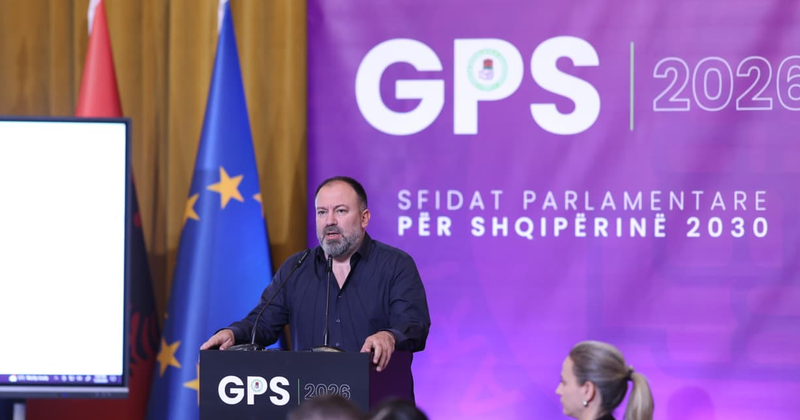
The head of the Special Parliamentary Committee for Administrative-Territorial Reform, Arbjan Mazniku, revealed today the four SP scenarios for Territorial Reform, reports A2CNN journalist Fiorela Beleshi.
In the first scenario, small municipalities merge with larger neighbors, while the second scenario envisages large municipalities on the scale of former districts.
In the third scenario, the role of the directly elected district is strengthened, while in the fourth scenario, four strategic regions are created.
One of the main objectives of this reform by the Socialists is said to be making municipalities efficient, "real capacity for quality services, stable income and long-term investments, not units that do not even cover operating costs". It is also important that the new municipalities are functional in the EU area, maintain local identity, providing services to citizens regardless of residence.
Scenario 1: Functional Consolidation: small municipalities merge with stronger neighbors, regions remain as the coordination level. Advantage: fast implementation with low political cost and no constitutional change. Risk: lack of inter-municipal strategic level and compliance with EU requirements remains limited.
Scenario 2: Consolidation and Decentralization: large municipalities at the level of former districts as the main executive level, while current former municipalities receive city status with directly elected mayor and council. Advantage: two levels with dual democratic legitimacy and high efficiency in complex services. Risk: consolidation requires major boundary changes and massive transfer of staff, assets and systems.
Scenario 3: Strengthening the Region: all municipalities and counties are preserved, but the region is transformed from a coordination level to a real executive level with direct elections — functions are divided according to their nature, not according to the size of the municipality. Advantage: no borders change — avoids territorial tension and has a strong European precedent. Risk: the current capacities of the regions are very low and there is a risk that the region will be weaker than the municipality it replaces.
Scenario 4: Strategic Regions: very small municipalities are easily consolidated, counties are simplified, and four strategic regions are added for long-term planning, important infrastructure, and EU funds. Advantage: higher compliance with EU NUTS-2 requirements and capacity for major projects. Risk: three levels of government increase bureaucracy, while the new regions have weak democratic legitimacy due to indirect election.
No scenario was presented as the final choice, while the group was explained that the process goes through public consultations, hearings in the territory, and a political document before reaching the legal package.
Happening now...





ideas


Saliu's horse, Ed's taggia
Nga Adrian Thano

Italy/ Investigations, laws and poisons, the eternal clash between politics and justice
Nga Giovanni Bianconi
top



Alfa recipes



TRENDING 




services
- POLICE129
- STREET POLICE126
- AMBULANCE112
- FIREFIGHTER128