


FLASH NEWS
Saliu's horse, Ed's taggia

2026-03-25 12:25:52 / IDE
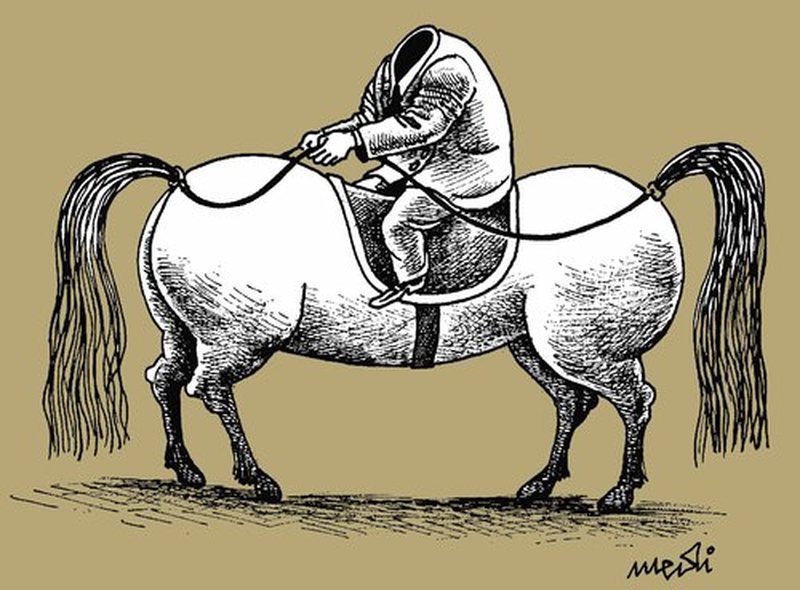
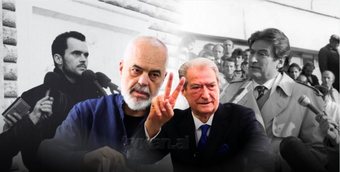
"Did you see the Molotov cocktails? I'm worried that by hitting Rama with revenge, we're making Saliu's horse ready again," a reader wrote to me last night at my father's happy age.
In Sali Berisha's political calendar, tensions and conflict have been the main instrument of survival. This country has given him everything these 35 years, but this disgusting school of violence and deceit has never spared social peace or human lives.
Today, Berisha's violence has surprisingly erupted simultaneously with the first knock of justice at the highest levels of government. In fact, nothing can hide the filth of wiretapping, official accusations and investigations surrounding the "dictator" better than the smoke of Molotov cocktails on the streets of Tirana.
This forced, completely unnecessary violence pushes citizens dissatisfied with governance, corruption, and prices into a painful dilemma. Should they carry the evil they know on their backs? Or should they throw themselves into the uncertainty brought by the flames of Berisha's miserable Molotov cocktail?
In fact, it is a choice within the same circle that feeds itself.
What needs to be understood is the invisible side of the moon in Albanian politics. The rhetoric of cannonballs on the screens and the noise of controlled Molotov cocktails in the streets hide a clear symbiosis of interests.
Although officially in opposition and under investigation, Berisha remains a major shareholder in the country's economy. Berisha's horse, which the elderly reader worries about, is well fed with the public money. Supporters call for protests for "overthrow", but the bank accounts of the businessmen who finance Berisha's family and the narrow court of the DP, swell every day with funds signed by the government.
It is no longer a secret that the main clients of major public projects are the same names that have been by Berisha's side for decades.
Berisha gets whatever he needs from Rama on the economic front, ensuring that his “machinery” is always well-oiled. But he doesn’t just benefit from every major tender through his clientele. He also has political influence because his people have been appointed and continue to be appointed to key leadership positions, most recently ministerial ones.
It seems paradoxical, but Berisha is today at the most luxurious point of his career.
And there is zero responsibility. For every failure, for every theft, and for the blocked path to integration, Rama's "narco-government" is to blame.
Berisha is part of the system, perhaps the most profitable part of it. He has no real reason to overthrow it.
This does not mean that Sali Berisha would not want to return to power. Absolutely yes. The spirit knows it. It is known that for Berisha, power is not simply a political goal.
He knows this better than anyone. Even if we ignore the red line of non-women, Berisha has a low electoral ceiling with no possibility of expansion, despite his loyal base (militants). Moreover, the division within the DP, the creation of new forces make the math of votes even more difficult.
If it were otherwise, the nearest elections would be enough to eradicate corruption like everywhere else in the world.
Berisha's path to power is surrounded by barricades that no longer obey his will, by circumstances that he can no longer dictate. Therefore, today, Berishaism finds itself more comfortable under the cloak of the scarecrow that serves Rama's longevity, than under the burden of an alternative.
Even the opposition as a whole cannot be freed from it. Without Berisha, they lose even these electorate figures they have. With Berisha, they will never expand. The same Berishism that is today oxygen for Rama, for the opposition is a "tumor" with full metastases in the political sense.
This is a balance that feeds itself. The citizen is faced with a situation where he has been deprived of the right to real choice since 2008. Today, this citizen is held hostage to the obligation to vote between Molotov and corruption.
There are institutions that are changing (slowly), there are new actors, although still weak, there are spaces that are not completely closed. However, a credible and organized alternative is still missing.
At the moment, the system operates on the theater of strong polarization and the creation-use of crisis as political capital. Violence in the streets and corruption in power feed each other.
This circle does not break on its own. But first, symbiosis must be understood and analyzed as such.
Happening now...







ideas

Saliu's horse, Ed's taggia
Nga Adrian Thano

Italy/ Investigations, laws and poisons, the eternal clash between politics and justice
Nga Giovanni Bianconi
top


Alfa recipes

TRENDING 



services
- POLICE129
- STREET POLICE126
- AMBULANCE112
- FIREFIGHTER128