


FLASH NEWS
SPAK closes the door to the "Xhafaj 2" Commission

2026-01-30 17:54:58 / POLITIKË
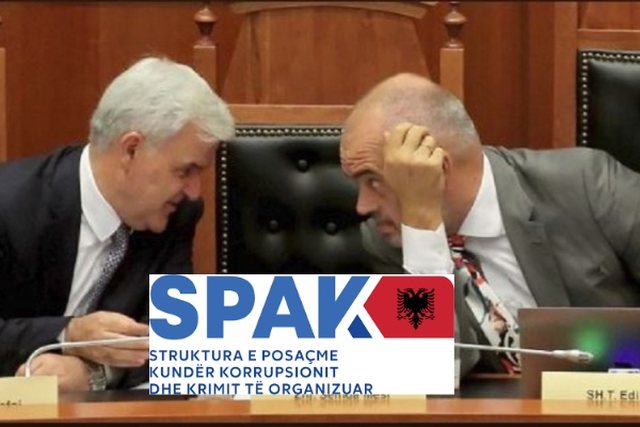
As soon as SPAK prosecutors broke several taboos with the Belinda Balluku and Ergys Agas files, spoiling Edi Rama's fun with a slight scratch on the center of power, the socialist majority has reactivated parliamentary mechanisms to "monitor", test and, if possible, discipline the new judiciary.
An official document proves that Edi Rama's majority has now gone on the counterattack in an attempt to intimidate prosecutors by using the same Fatmir Xhafaj again.
The document is an official response that the Special Prosecution Office against Corruption and Organized Crime has returned to parliament, saying "No" to the Parliamentary Committee "On Civic Initiatives, Cooperation and Institutional Oversight", headed by Fatmir Xhafaj, for a "monitoring visit" to SPAK, ostensibly with the idea of implementing measures to combat money laundering.
With a clear wording, SPAK prosecutors describe the initiative as an illegal intervention and a direct violation of the constitutional independence of the institution, leaving Xhafaj outside the doors of the prosecution.
Initially, SPAK clarifies that institutional reporting has been and continues to be carried out in a regular and complete manner. The prosecutors point out that there have been no concrete concerns, no specific issues and no problems on the part of the Financial Intelligence Agency that would require extraordinary parliamentary intervention.
Then comes the crux. SPAK reminds the Assembly and the Xhafaj Commission that it is an independent constitutional institution, which reports only in accordance with the Constitution, organic laws and the Rules of Procedure of the Assembly. And it says it clearly, without equivocation: “The Special Prosecution cannot be 'monitored' and does not recognize the legitimacy of this practice.”
Any attempt at such monitoring visits, the document states, “would conflict with the constitutional independence of the Special Prosecution Office,” an independence that is not merely a formal principle, but “a fundamental condition for ensuring independent, impartial and efficient investigations in the protection of the public interest and the rule of law.”
In conclusion, SPAK openly expresses its disagreement with the realization of the planned visit by the Xhafaj Commission that was scheduled to take place on February 6, 2026, considering it "in violation of the law and violation of the independence of the Special Prosecution Office."
The revival of the "Xhafaj" commission for interference in SPAK
The attempt to organize a "monitoring" visit to SPAK is a continuation of the first mission assigned to Fatmir Xhafaj about a year and a half ago.
The so-called "Anti-Corruption Commission", according to Rama and Xhafaj, would serve to address a number of issues, including the progress of justice reform, but both were accused of having a plan to put justice under stricter control. The "Xhafaj 1" Commission ran into a wall of rejection during its work.
The Constitutional Court, the High Court, SPAK, the General Prosecutor's Office, the High Judicial Council, the High Inspector of Justice, and later even civil society organizations, one after the other, refused to become part of a process that was widely perceived as an attempt to politically capture justice.
The Constitutional Court argued its refusal with the fact that its participation would constitute a functional conflict, while SPAK declared at the time that it “does not consider the participation of experts necessary.” The European Union also indirectly but clearly rejected this initiative, leaving the commission without real support and international legitimacy.
The "Xhafaj 1" Commission died out in silence, after being isolated from the justice system and diplomacy. Today, it has been revived with a second version, under a different pretext, but with the same goal: to open a channel of pressure on SPAK at a critical moment.
SPAK's blocking of Balluk's arrest and the AKSHI file
The initiative to conduct a monitoring visit to SPAK was undertaken on December 18 of last year, two days after prosecutor Dritan Prençi submitted to parliament the request for authorization to arrest Belinda Balluku.
Precisely the investigations against Balluk, the suspension of the Deputy Prime Minister, the AKSHI file, the arrest warrant for Ergys Agas, are the strongest signals that SPAK has sent to the government, creating a new political situation.
A situation where Edi Rama has forgotten the praise he once gave to the new justice system, which he called a "historic reform" that was being carried out for the first time and that had the guarantee and unconditional support of the Socialist Party.
With the latest files, the game has changed. The Socialist Party has become Belinda Balluku's "refuge". Socialist MPs in parliament are dragging out the request for her arrest in an unprecedented manner, on the other hand, the decision to suspend her as deputy prime minister is being appealed to the Constitutional Court and in the meantime, the attempt to surround SPAK with parliamentary mechanisms, commissions, "monitoring" or controlled institutional dialogue is moving forward.
Practices that failed once, but are being revived to put a red line on investigations into corruption affairs. It seems like SPAK is not taking any steps back, but like everyone else, it has a weak point, the power of prosecutors stems entirely from the will of Western embassies and in conditions where Rama is pulling every possible thread in diplomacy, declaring himself a Muslim today, a Catholic tomorrow and a Jew the next day, the question remains: Until when?
Happening now...








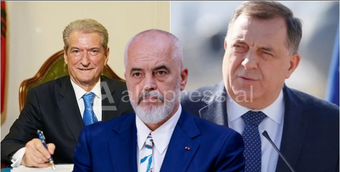
Rama dhe Berisha “rrëzohen” nga rasti Dodik
Nga Baton Haxhiu
ideas

The great loneliness of the West and liberal democracy
Nga The Economist

Corruption money is buying political time.
Nga Taulanda Jupi
top





TRENDING 




services
- POLICE129
- STREET POLICE126
- AMBULANCE112
- FIREFIGHTER128