


FLASH NEWS
After 8 years of diplomatic freeze, Britain and China sign historic agreement: It serves both peoples and the world!

2026-01-30 15:37:06 / BOTA
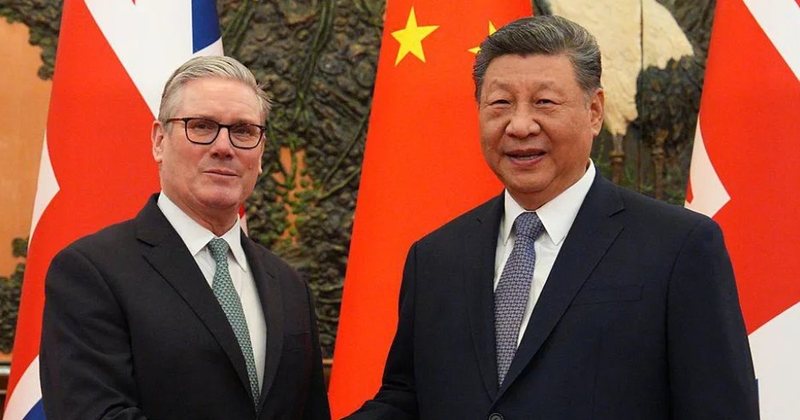
It seems the UK has wasted no time in pushing back against President Trump's economic policies against the US's historic partners, the countries of Europe. Sir Keir Starmer's visit to China this week is the clearest sign yet that the two countries are seeking to end the diplomatic "ice age" that has defined their relationship. Both leaders are facing economic pressures and are seeking new opportunities for trade and investment.
For Sir Keir, the first UK prime minister to visit China since Theresa May in 2018, the trip was a chance to highlight the strength of British firms in finance, pharmaceuticals, healthcare, clean energy and car manufacturing.
Meanwhile, President Xi Jinping aimed to show that China can be a reliable partner for Western economies, while US President Donald Trump continues to shake up the global trading system.
Although no comprehensive free trade agreement was reached, the visit marked a cautious but tangible reset of Britain-China economic ties.
Agreements on visas, services, healthcare, green technology and finance, combined with revived dialogue, could lead to better access for British firms to Chinese markets and greater Chinese investment in the UK.
What agreements were reached?
The biggest commercial announcement came from AstraZeneca, which pledged to invest $15 billion (£11 billion) in China over the next four years to expand drug research and manufacturing - the company's largest investment in China to date.
In the energy sector, British firm Octopus Energy is entering the Chinese market for the first time through a partnership with local company PCG Power to develop a digital platform for trading electricity.
The project aims to improve efficiency in the energy system and support China's efforts to increase the use of renewable energy.
For Octopus, which has grown rapidly in the UK, the deal allows entry into the large and growing energy market in China, where demand for clean energy and digital commerce is on the rise.
Greg Jackson, CEO of Octopus Energy, who was part of the UK business delegation to China, noted that the country's scale and innovation have made solar, wind and battery power cheaper.
China also agreed to halve tariffs on Scotch whisky, a deal that the UK government said could generate £250m for the British economy over the next five years.
"Our whisky distilleries are the jewel in Scotland's crown," said Sir Keir. It is "proof that our pragmatic and determined international engagement is delivering benefits at home," he added.
Scotch whisky is a key export for Britain's drinks sector, with more than £5 billion in annual exports. In recent years, China has been one of its fastest-growing markets.
Industry groups welcomed the move, saying it would help Scottish distillers compete in a crowded market where American, European and Japanese firms are also competing for customers.
Another result of the trip was visa-free travel for British citizens visiting China for up to 30 days for holidays and business, putting the UK on par with around 50 other countries, including France, Germany, Australia and Japan.
The two sides also agreed to cooperate to dismantle migrant smuggling networks, a key priority for Sir Keir's government.
For Beijing, renewed ties with the United Kingdom - a major European economy and close US ally - signal that China remains a reliable partner for the West despite Trump's trade tensions.
Economically, the resettlement provides access for Chinese exporters of high-value goods, such as electric vehicles, solar panels and clean energy, while creating opportunities for Chinese investment in British services, finance and green technology.
Chinese state media described the visit as a step towards transforming "the potential of China-UK cooperation into real achievements that benefit the two peoples and the world."
British firms were also quick to highlight the benefits to both countries through expanded partnerships.
Happening now...







Rama dhe Berisha “rrëzohen” nga rasti Dodik
Nga Baton Haxhiu
ideas
The great loneliness of the West and liberal democracy
Nga The Economist

Corruption money is buying political time.
Nga Taulanda Jupi
top


TRENDING 




services
- POLICE129
- STREET POLICE126
- AMBULANCE112
- FIREFIGHTER128