


FLASH NEWS
Britain reveals why Albanians are most affected by deportations

2026-05-23 23:00:37 / AKTUALITET
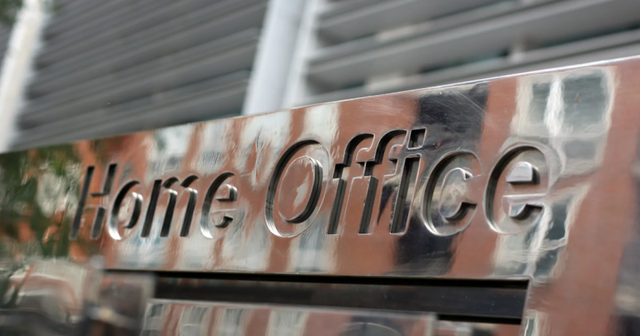
For months, Albanians have been at the center of the British debate on immigration and crime, often described in media headlines as one of the most problematic groups in the United Kingdom.
But a British government document itself sheds a more complex light on this narrative.
In an official Equality Impact Assessment published yesterday by the Home Office, Albanians are listed among the nationalities most affected by a practice known as “Detention on Reporting” (DoR) – a procedure where migrants are detained during their routine appearance at reporting centres, usually when authorities consider they are close to leaving British territory.
According to the document, the five nationalities that make up the largest share of such cases are India (16%), Albania (14%), Brazil (9%), Pakistan (7%) and Nigeria (7%).
At first glance, this could be interpreted as another indication that Albanians represent a disproportionate problem in the British immigration and policing system.
But the Home Office itself gives a different explanation.
The document explains that part of the reason why some nationalities are more affected is related to the fact that the United Kingdom focuses efforts on returning people from countries with which there are functional diplomatic relations and more feasible deportation procedures.
"Due to the focus on returning those nationals with whom we enjoy good diplomatic relations," the document states, suggesting that the volume of cases does not necessarily reflect a higher level of criminality, but also the practical ability of the British state to organize faster returns.
In other words, being more represented in deportation statistics does not automatically equate to being more criminal.
This nuance becomes particularly important in the context of the public debate that has accompanied Albanians in Britain in recent years.
Since the return agreement between London and Tirana, Albanians have been frequently mentioned in British political discourse as a symbol of the illegal immigration crisis, while some tabloid media have built strong narratives about Albanian organized crime.
However, the Home Office document itself makes a distinction between migration status and nationality, arguing that the pre-deportation detention policy targets people “who are likely to leave in the near future” and not a particular nationality as a problematic category.
The "Detention on Reporting" procedure is considered by British authorities to be the "most efficient and lowest-risk" form of detaining people facing deportation, as it avoids arrest operations in apartments and allows for detention in controlled environments such as reporting centers or police stations.
The document also acknowledges that the policy may have a disproportionate impact on some nationalities, precisely because migration control affects more non-British citizens and because some countries have more effective cooperation with London on travel documents and returns.
This comes at a time when the public narrative about Albanians in Britain has also been fueled by controversial figures on crime and imprisonment – often reproduced without full context or direct institutional verification.
In this sense, the Home Office document does not refute claims about the disproportionate presence of Albanians in some immigration statistics, but suggests that their interpretation requires more caution.
Because the difference between being more deportable and more criminal may seem technical.
But in public debate – both in Britain and Albania – it is often the difference between statistics and stigma.
Happening now...




The DP fortress that became Berisha's tavern and Rama's fortress
Nga Ermal Mulosmani





Elections can't cover a donkey's ears
Nga Ergys Mërtiri


The DP fortress that became Berisha's tavern and Rama's fortress
Nga Ermal Mulosmani
ideas

Elections can't cover a donkey's ears
Nga Ergys Mërtiri

Referendum - The false legitimacy of Sali Berisha
Nga Taulanda Jupi

Good times for SPAK and the Special Court
Nga Preç Zogaj
top


Alfa recipes







services
- POLICE129
- STREET POLICE126
- AMBULANCE112
- FIREFIGHTER128