


FLASH NEWS
Monopoly on the runway/ Who benefits from fuel supply at Pristina Airport?

2026-04-20 18:40:15 / AKTUALITET
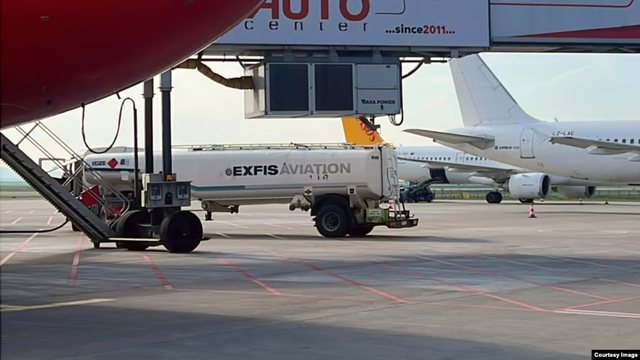
At an airport where over 40 flights take off and land every day, an important part of the economic chain has remained unchanged for 15 years: fuel supply.
The latest decision to extend the kerosene supply contract at Pristina International Airport “Adem Jashari” (ANP) was not simply an administrative act – it brought a deeper issue back to the center of the debate: the way critical services at the airport are managed and the lack of competition in the market.
Contract that is extended, market that is not opened
The Exfis company will continue to be the sole supplier of aircraft fuel to the ANP until the end of 2032.
The contract, which Radio Free Europe/Radio Liberty obtained from the Civil Aviation Authority of Kosovo (CAAK), states that it entered into force on January 1, 2026, and will remain valid until December 31, 2032.
In practice, this means a seven-year extension of this company's exclusive position in the fuel supply market in the ANP - a role it has held without competition since 2011.
The CAA emphasizes that the approval of the Exfis company's request constitutes a continuation of a previous decision and that it was made after assessing all applicable regulatory requirements.
According to the CAA, the institution is not responsible for operator selection, but only for overseeing safety and regulatory compliance.
In its response to Radio Free Europe/Radio Liberty, it explains that this competence is defined in the airport concession contract, signed in 2010, according to which the decision-making on the selection of operators for ground services belongs to the airport operator – in this case Limak Kosovo International Airport.
REL contacted the Limak company with the question of whether there was any open tender or competitive procedure for the selection of the operator providing the fuel supply service to the ANP, but did not receive a response.
Similarly, the Ministry of Infrastructure and Transport did not respond either.
Pristina Airport was granted a concession to the Turkish operator, Limak, for 20 years, with an investment obligation of up to 100 million euros and a return of over 39% of gross revenues to the state.
In 2024, the deadline was extended for an additional 20 months by the Government of Kosovo, due to the impact of the COVID-19 pandemic.
Regulation calls for competition, but the market remains closed
The extension of the Exfis contract is justified by Regulation 04/2011 on access to the ground services market, supplemented in 2019.
But, this very regulation stipulates that, once the airport crosses the threshold of two million passengers, it must operate with more than one economic operator to provide services.
Sipas të dhënave të AAC-së, gjatë vitit 2025 janë realizuar 14.981 fluturime, ose mesatarisht mbi 41 në ditë, ndërsa numri i udhëtarëve ka kaluar 4.6 milionë.
Rregullorja e ndryshuar lejon edhe kufizimin e numrit të operatorëve, por jo më pak se dy.
AAC-ja konfirmon se nuk ka pranuar asnjë kërkesë për kufizimin e numrit të furnizuesve.
Radio Evropa e Lirë iu drejtua edhe Qeverisë së Kosovës me pyetje lidhur me masat që mund të ndërmarrë për hapjen e tregut dhe zbatimin e rregullores në fuqi, por nuk mori përgjigje.
Përndryshe, në deklarimet financiare të Lëvizjes Vetëvendosje, e cila udhëheq me Qeverinë e Kosovës, figuron se për zgjedhjet e parakohshme të 28 dhjetorit të vitit të kaluar, kompania Exfis ka dhuruar rreth 23 mijë euro për këtë subjekt politik.
Institucionet me përgjegjësi të paqarta
Ministri në detyrë i Infrastrukturës dhe Transportit, Dimal Basha, ka deklaruar më 12 mars se Exfis nuk është licencuar nga AAC-ja për këtë shërbim, duke shtuar se përgjegjësia për furnizimin me karburante buron nga kontrata e koncesionit të aeroportit, e nënshkruar në vitin 2010.
Sipas tij, kompania koncesionare Limak Kosovo International Airport e ka për detyrë të sigurojë funksionimin e këtij shërbimi.
“As Autoriteti i Aviacionit Civil i Kosovës dhe as Ministria e Infrastrukturës dhe Transportit e Kosovës nuk vendosin për këtë çështje. Kjo kompetencë është përcaktuar në kontratën e koncesionimit të aeroportit, të nënshkruar në vitin 2010, ku, sipas asaj kontrate, Limak-u është përgjegjës të sigurojë që gjatë gjithë kohës të ekzistojë shërbimi i furnizimit me karburant në aeroport”, ka shkruar Basha në rrjetet sociale.
Procesi për hapjen e tregut i ndërprerë
Ish-drejtori i AAC-së, Eset Berisha, thotë se përpjekjet për të hapur tregun kishin nisur vite më parë, por nuk u finalizuan.
“Disa kompani kishin plotësuar kushtet për certifikim. Ky ishte një hap paraprak për organizimin e tenderit, por pas largimit tim nuk kam informacione se si ka vazhduar procesi”, thotë ai për Radion Evropa e Lirë.
Berisha u shkarkua në vitin 2020, pas rreth një viti në detyrë, nga Qeveria e Kosovës e udhëhequr edhe atëkohë nga Lëvizja Vetëvendosje, me arsyetimin për shkelje të detyrave profesionale, por vetë Berisha e cilësoi vendimin si politik.
Ndërkohë, asnjë nga kompanitë e derivateve të naftës, të kontaktuara nga REL-i, nuk pranoi të deklarohet publikisht nëse do të hynte në tregun e furnizimit me karburant në aeroport, në rast se ai do të hapej.
Nga AAC-ja konfirmojnë se gjatë viteve të kaluara kanë pranuar aplikime nga kompani të ndryshme të interesuara për të ofruar shërbime të tilla.
Por, sipas saj, këto aplikime nuk kanë rezultuar me aprovime të plota, pasi aplikuesit nuk kanë përmbushur të gjitha kërkesat e përcaktuara në kornizën rregullatore në fuqi.
Institucioni shton se kompanitë përkatëse janë njoftuar se mund të riaplikojnë sapo t’i plotësojnë kushtet.
These conditions must demonstrate compliance with aviation safety standards – from fuel storage infrastructure to proven financial stability.
Businesses demand the breaking of the monopoly
Representatives of the business community say that fuel sector operators have continuously raised concerns about the lack of competition in fuel supply at Pristina Airport.
According to the president of the Kosovo Business Alliance (AKB), Agim Shahini, they demand that institutions open the market and enable the participation of other companies.
He estimates that the monopoly also has a direct impact on ticket prices.
"In Kosovo, there are at least three companies that can provide these services without a problem and are ready to supply. There have been continuous complaints to the AKB, but this is a political problem and must be resolved urgently to break the monopoly," Shahini tells Radio Free Europe.
Even aviation expert Albion Idrizi considers the situation a de facto monopoly.
"This limits competition and increases costs for airlines, which are then reflected in higher prices for travelers," says the travel and tourism entrepreneur.
According to him, the main responsibility lies with the state of Kosovo, which has not addressed this issue in a timely manner.
And, Remzi Ejupi, founder of the airline Eurokoha, does not stop at the debate about competition, but says he is satisfied with the existing services.
He estimates that the Kosovo market is too small for wider competition.
"The company is serious and has experience in this field. Competition is good when it is genuine and brings quality, but when it is weak it only disrupts the market," he tells Radio Free Europe.
Concession fees and the chain of benefits
The benefits of the current ANP management structure are not limited to the fuel supply operator.
This scheme also includes the airport management company, Limak, which benefits through tariffs set within the framework of the Public-Private Partnership Agreement.
According to data extracted from CAA documents, from every liter of fuel sold, 0.10 euros go to Limak, as a fee applicable within the framework of the operation.
Exfis, meanwhile, pays 0.12 euros per liter to Limak, although the Public-Private Partnership Agreement provides for a fee of only 0.02 euros for this service.
The CAA, in 2021, obliged the airport management company not to apply fees that are not approved by the aviation regulatory authority.
Following this decision, Limak sued the CAA, but the Commercial Court rejected its lawsuit as unfounded in 2024.
The Commercial Court confirmed to Radio Free Europe that the case is currently being processed in the second instance chamber of this court.
The Exfis company did not respond to REL's questions regarding the fee it currently pays. The CAA did not provide an answer to this issue either.
Happening now...













ideas

Silence as a policy and fear as a system
Nga Sokol Neçaj
Is Spiropali a "Magyar", facing the autocrat Rama?!
Nga Neli Demi

American Libra!
Nga Arian Galdini
top

Alfa recipes








services
- POLICE129
- STREET POLICE126
- AMBULANCE112
- FIREFIGHTER128