


FLASH NEWS
CNN Analysis: The Seven Islands That "Hold the Keys" to the Strait of Hormuz and the Plan That Could Establish Gulf Control

2026-03-28 10:02:53 / BOTA
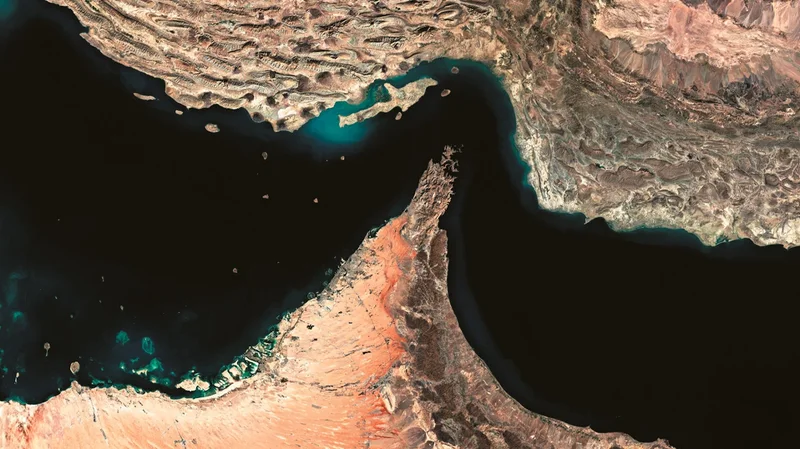
The deployment of thousands of American troops to the Middle East is fueling speculation about a possible American military operation against Iran, with one of the main questions being what the objective of such an action would be.
One scenario being considered is the occupation of Kharg Island, a key energy hub in the northern Persian Gulf through which about 90% of Tehran's oil exports pass. However, analysts say other islands could be even more important, as they directly affect shipping in the Strait of Hormuz.
Seven islands form what researchers call Iran's "defensive arc," CNN explains.
According to a 2022 study, their geographic arrangement allows Tehran to control maritime traffic in the strait, as large ships and tankers are forced to navigate close to them due to shallow waters. Abu Musa, the Greater and Lesser Tunbs are considered particularly critical, as they could be points of attack by Revolutionary Guard speedboats, mine laying, or the use of drones.
Iranian officials have described these islands as “bottomless aircraft carriers,” underscoring their strategic value. The Islamic Revolutionary Guard Corps has already strengthened its presence on these islands, with its commander declaring that Iran has the ability to strike enemy bases, ships, and targets in the region.
According to analysts, for the US to be able to secure the passage of naval forces to the Persian Gulf – especially in the event of a landing operation in Kharg – it will first have to neutralize Iranian positions on these islands.
A force of about 5,000 soldiers has already been put on alert, including marine units and about 1,000 soldiers from the 82nd Airborne Division. It is estimated that two landing units could be used to achieve “overwhelming power”. The transfer of troops could be done either by sea or by air. The landing vehicles include special ships that can approach the coast, but their entry into the Persian Gulf poses risks, as they must pass through areas controlled by Iranian forces, such as the islands of Hormuz, Larak, Qeshm and Khengham, as well as the continental coastline of Iran.
Analysts point out that Larak Island, at the entrance to the Strait, is a particularly critical target, since from there Iran could strike ships trying to enter the Persian Gulf.
On the other hand, the US could try to launch an air strike, but that would mean less equipment on the ground, while air assets are vulnerable to anti-aircraft systems.
An operation to capture the island is estimated to take anywhere from two days to two weeks. If successful, it would allow the US to install radars and military forces, controlling activity in the Strait and depriving Iran of critical bases of operations.
However, maintaining control of these islands would require a permanent occupation force of around 1,800 to 2,000 troops, who would be exposed to missile, drone and artillery attacks from Iranian soil.
At the same time, US and Israeli forces have already launched attacks on Iranian military installations, including infrastructure on islands such as Abu Musa and Tunb, potentially preparing the ground for future operations.
Military options also come with political challenges. The islands of Abu Musa and Tunb have been the subject of a dispute between Iran and the United Arab Emirates since 1971, when Iran took control of them. The Emirates has appealed to the United Nations and has not ruled out taking the case to the International Court of Justice.
In this context, a possible American occupation of the islands creates dilemmas: if they are returned to Iran, this could cause tension with the Emirates; if they are given to another party, this could undermine the stability of a future Iranian government.
At the same time, Donald Trump announced that he was extending the deadline for possible attacks on Iran's energy infrastructure by 10 days, to April 6, in order to give time for negotiations. The US Secretary of State reported that progress had been made, but the Secretary of Defense made it clear that military operations were continuing.
Developments in the Persian Gulf show that control of critical geographic points, such as islands in the Strait of Hormuz, can be crucial, while any military option comes with significant costs, risks, and geopolitical consequences.
Happening now...













ideas


Saliu's horse, Ed's taggia
Nga Adrian Thano

Italy/ Investigations, laws and poisons, the eternal clash between politics and justice
Nga Giovanni Bianconi
top



Alfa recipes



TRENDING 




services
- POLICE129
- STREET POLICE126
- AMBULANCE112
- FIREFIGHTER128