


FLASH NEWS
What is the naval blockade announced by Trump, why it is not easy and the risk of retaliation from Iran

2026-04-12 22:35:02 / BOTA
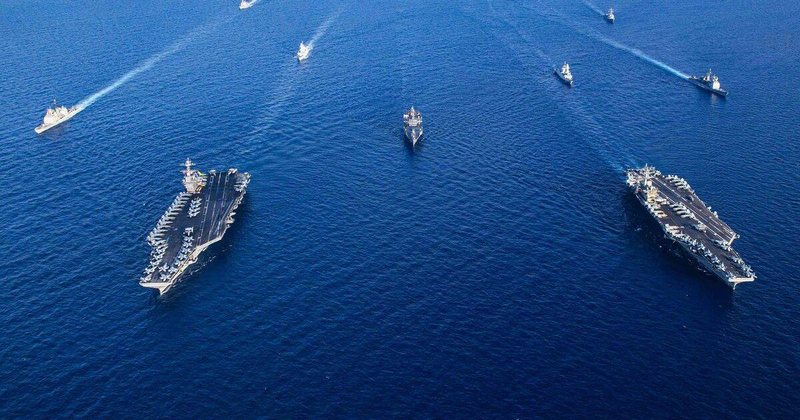
By Guido Olimpio, Corriere della Sera
A naval blockade against Iran. A scenario that was initially mentioned without being directly stated by Donald Trump himself, but then openly announced in response to the failure of negotiations in Islamabad.
The US president initially limited himself to reposting an article published on the Just the News website, where this possibility was being considered. Then came the now-common announcement on the Truth network.
The plan – still undefined in detail – should lead to a US Navy patrol along the route leading to the ports of the Islamic Republic. This would put pressure on both the Iranian regime and countries that use this sea route, such as China or India. At that point, there could be diplomatic action to encourage Tehran to be less inflexible.
The idea was brought back a week ago by former General Jack Keane in the pages of the New York Post:
"If the war resumes and, after the enemy's arsenal has been sufficiently weakened, the US may choose to occupy or destroy Kharg Island... The alternative is to impose a naval blockade to choke off vital exports."
Then there was the Lexington Institute vice president, Rebecca Grant, known for her interventionist stances, who supported the solution of a naval blockade. According to her, the Navy should repeat what was done against Venezuela before the capture of leader Nicolás Maduro: a few quick strikes, blocking tankers and strict patrols. Any ship that wants to pass must be subject to US Navy inspections. For Grant, implementing this measure would be “very easy.”
In reality, nothing is easy in this conflict, as the long weeks of operations have proven. Tehran has always reacted to every blow by expanding the conflict and would do so even in the event of a blockade, once again targeting US allies on the other side of the Gulf. Or by completely shutting down traffic, causing further economic damage globally.
Possible controls on tankers or cargo ships would create serious friction with governments that buy products from Iran. The list is long, as are the possible consequences.
There are also military risks. The Pasdaran's naval component has been weakened by Operation Epic Fury: some 115 units have been sunk, including 6 of the 7 frigates available, three corvettes, a submarine, a drone carrier and support vessels. However, according to expert Farzin Nadimi, the guards still have about 60% of a flotilla consisting of motor launches, speedboats, light craft, anti-ship cruise missiles and thousands of mines, capable of complicating the mission.
Kamikaze drones, in both aerial and naval versions, should not be underestimated either: since February 28, the Iranians have attacked around fifty ships.
Iran has been training for confrontation in the narrow, shallow waters of the Gulf since the 1980s, focusing on asymmetric tactics, swarming maneuvers, and rapid attacks. The goal is always to wear down and tire an adversary who does not want to be trapped in a protracted crisis.
However, this choice – like any war – does not protect the Islamic Republic from major dangers. Washington could order new waves of bombings on a country with an already destroyed civilian and military infrastructure.
For this reason, it would be better for everyone not to abandon the path of negotiations.
Happening now...














Denouncing Berishism is a prerequisite for denouncing the government
Nga Blendi Kajsiu
ideas



top



Alfa recipes


TRENDING 




services
- POLICE129
- STREET POLICE126
- AMBULANCE112
- FIREFIGHTER128