


FLASH NEWS
RCC: Skopje launches regional "offensive" for universities

2026-03-26 12:52:25 / EKONOMI&SOCIALE
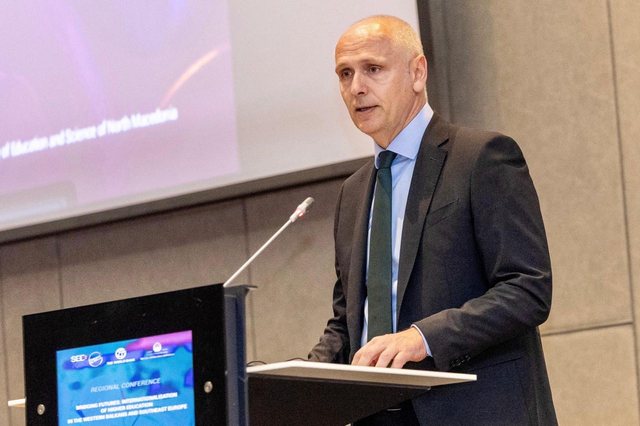
Diplomas without borders, or borders without diplomas?
At a time when universities risk producing more degrees than knowledge, a conference has opened in Skopje that promises to do just the opposite. The Regional Cooperation Council (RCC), the World Bank, and the Ministry of Education and Science of North Macedonia have gathered ministers, rectors, experts, and industry representatives in the Macedonian capital to discuss an issue that is usually treated with much talk and little results: the internationalization of higher education.
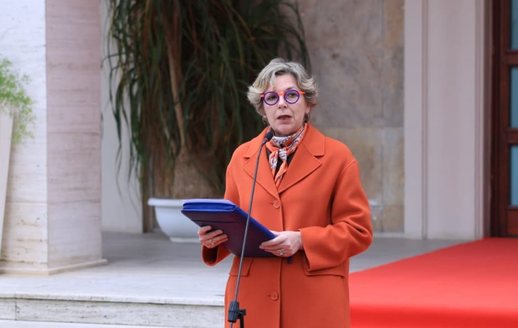
The conference, with the ambitious title “Building Bridges,” comes at a time when the region is trying to convince itself that it can compete globally, while still struggling with the recognition of diplomas within its own borders. The organizers elegantly acknowledge this contradiction, turning it into a motive for cooperation. Minister Vesna Janevska said that the aim is no longer to discuss, but to produce a concrete action map that connects universities, increases quality and opens up real opportunities for students.
In the background is a greater pressure, the rapprochement with the European Union, where education is no longer just an academic matter, but an economic and political standard. For this reason, according to the Secretary General of the RCC, Amer Kapetanović, regional cooperation is not a luxury, but a necessity, a way to avoid isolation and to create a real knowledge market where students and professionals can move without obstacles.
On the other hand, Xiaoqing Yu from the World Bank defined internationalization as a way to turn competition into cooperation, an idea that sounds simple in theory, but which in the region often clashes with more stubborn realities, from bureaucracy to old academic rivalries.
The conference tables discuss topics that usually remain in documents, student mobility, recognition of diplomas, industry linkages, funding and quality. The difference this time is the promise to turn them into a concrete regional roadmap, a document that theoretically should move from the shelves of institutions into practice.
In a region where “brain circulation” often means leaving without return, the idea of turning it into intra-regional circulation is perhaps the most interesting ambition of this initiative. Whether it will work remains to be seen. But for once, the Balkans are trying to build bridges for knowledge, not just for conferences.
Happening now...












ideas


Saliu's horse, Ed's taggia
Nga Adrian Thano

Italy/ Investigations, laws and poisons, the eternal clash between politics and justice
Nga Giovanni Bianconi
top



Alfa recipes



TRENDING 




services
- POLICE129
- STREET POLICE126
- AMBULANCE112
- FIREFIGHTER128