


FLASH NEWS
The country with the highest level of cash in Europe, Albania begins financial transformation: Here are the measures

2025-12-06 16:43:42 / EKONOMI&SOCIALE
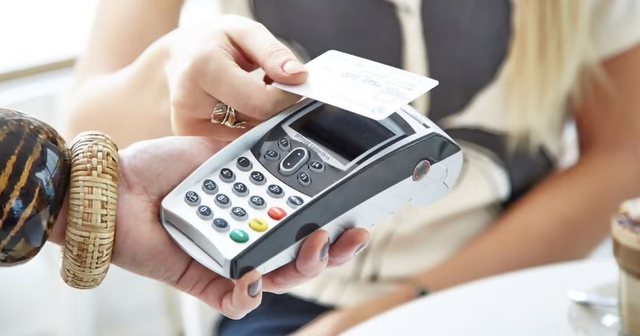
The Ministry of Economy and Innovation recently presented the national initiative "Cashless Albania 2030", a long-term strategy that aims to significantly reduce the use of physical cash and promote the transition to electronic payments throughout the economy.
The plan foresees clear objectives and coordinated work mechanisms that will extend over years, with the aim of modernizing payment systems, reducing informality and increasing transparency.
According to the document presented, the main objective is that by 2028 the country will have universal coverage with POS terminals, at least 60% of payments will be made digitally, and all public institutions will accept non-cash payments. These goals constitute the basis for the transformation towards an economy that operates more through electronic channels, reducing the use of physical cash that currently dominates daily transactions.
The plan foresees the drafting of 12 concrete measures, oriented according to priorities related to the adoption of payment technologies, strengthening infrastructure, raising awareness of citizens and obligations for public institutions. For their implementation, a Council for Digital Payments will be established, a structure that includes the Ministry of Economy, the Ministry of Finance, the National Agency for Payments, the National Agency for Payments, the Bank of Albania, Taxes, the Albanian Post, banking associations, non-bank financial entities and electronic money and international card operators.
At the technical level, an operational group will function to coordinate the implementation phases and the progress measurement calendar.
The calendar of measures foresees setting deadlines for each step, ensuring strategic coherence between legal changes and technical phases, and organizing regular monthly meetings to monitor objectives and address challenges. The government aims for the initiative to remain not just a political directive, but a coordinated process measured by clear outcome indicators.
The initiative comes at a time when Albania has one of the highest levels of physical cash use in the region. Albania has the highest level of cash circulation outside banks among Balkan countries, an indicator that is directly related to informality and the high costs of managing physical cash. Although electronic payments have increased in recent years, the pace of adoption still remains slower compared to EU countries, where the weight of cash in the economy is rapidly declining.
According to the latest data from the Bank of Albania, the ratio between money outside banks and the M3 aggregate (money outside banks and bank deposits) in July 2025 was 24.3%.
However, this ratio, in the case of Albania, has serious limitations, because it does not include foreign currency circulating outside the banking sector; this is an element of considerable importance, given the high Euroization of the Albanian economy.
If we were to calculate the ratio of money outside banks to the money supply only for the Lek (in relation to the M2 monetary aggregate), then the ratio is significantly higher, 40.4%.
Compared to the Eurozone, Albania has a much higher level of cash in circulation.
According to the latest data from the European Central Bank, in August 2025, money outside banks accounted for 9.3% of the M3 monetary aggregate and approximately 10% of the M2 monetary aggregate.
Comparative figures available for some economies in the region show even lower ratios. In the case of Serbia, the ratio between money in circulation and M3 aggregate in August was 7.6%, but it increases significantly in relation to M2 aggregate, to 14.8%.
In North Macedonia, the ratio between money in circulation and the M3 monetary aggregate was 9.9%, while in relation to the M2 aggregate it was slightly higher, at 11.1%.
The country closest to Albania, but at much lower levels, is Bosnia and Herzegovina, where according to the latest data, the ratio between money in circulation and the M2 monetary aggregate was 20.5%.
The Bank of Albania has emphasized for years that the use of physical money creates direct costs for the financial system, hinders the traceability of transactions and makes the fight against informality and evasion more difficult. / Taken from Monitor
Happening now...









Karmën nuk e ndalon dot Sali Berisha!
Nga Bato Kosova
ideas
Will Berisha take stock of the first in his second speech?
Nga Preç Zogaj

First Secretary of the Democratic Party
Nga Indrit Vokshi

"Topple" Edi Rama by lying to yourself...
Nga Patrik Sadikaj
top


Alfa recipes

TRENDING 


services
- POLICE129
- STREET POLICE126
- AMBULANCE112
- FIREFIGHTER128