


FLASH NEWS
King Zog helped him recover from his illness. With the money from "Vatra" he bought a house, support for Noli! The gift he received when he was 70 years old

2025-03-24 16:07:35 / JETË
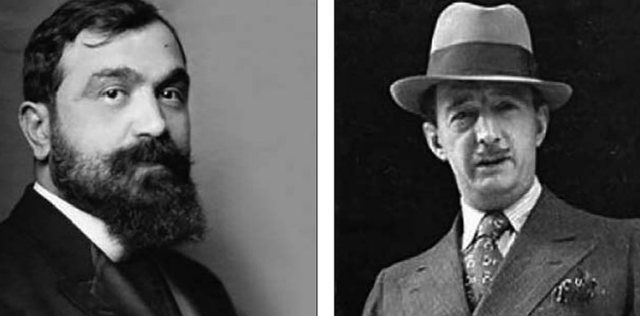
On March 12, 1891, the Albanian education reformer, Mirash Ivanaj (March 12, 1891 – September 23, 1953), was born.
60 years ago, Fan Stilian Noli (January 6, 1882- March 13, 1965) passed away. Fan Noli is one of the brightest figures of our nation: Statesman, democratic patriot, high cleric, poet, translator, publicist, scholar, historian and musicologist. Fan Noli was born in Ibrik Tepe in Edirne (Turkey), where he also completed high school. In 1903, he went to Egypt, where he worked as a teacher and during this time he met prominent patriots of the Albanian colony of Egypt. During this time, he translated into Greek Sami Frashëri's work "Shqipëria ç`ka këne, ç`est e ç'do të fëret".
In 1907, after his departure to America, he founded the “Besa-besë” society in Boston. On February 9, 1908, Fan Noli was ordained a deacon and in March 1908, the Orthodox archbishop of New York ordained him an Orthodox priest. A few days later, Noli held a liturgy in the Albanian language for the first time in Boston. In July 1919, Noli was elected Bishop of the Albanian Orthodox Church in America. Noli’s efforts for an Albanian national church were fulfilled in 1937, when the Patriarchate of Istanbul officially recognized the Autocephalous Albanian Orthodox Church.
From 1909 to 1911 he published the newspaper “Dielli” and together with Faik Konica he founded in 1912 the Pan-Albanian Federation “Vatra” of America. In 1912 he completed his higher studies at the Faculty of Philosophy at Harvard University and years later, in 1938, he completed his higher studies at the Boston Conservatory of Music. In 1920 Noli was elected head of the Albanian delegation to the League of Nations in Geneva, where through Albania’s membership in this association, Albania received international recognition.
Më 1932, me ndihmën e pasuesve të tij, mundi të kthehej nga Gjermania në Shtetet e Bashkuara, ku fitoi edhe lejen për qëndrim të përhershëm. Noli u tërhoq nga jeta politike dhe nga ky moment iu kushtua përsëri detyrave si drejtues i Kishës Ortodokse Autoqefale Shqiptare. Në dhjetor 1933 u sëmur rëndë dhe nuk ishte në gjendje t’i përballonte shpenzimet e trajtimit mjekësor për të cilin kishte aq shumë nevojë, deri sa mori si dhuratë 3000 franga ari nga Shqipëria, me ndërhyrjen e Faik Konicës tek Ahmet Zogu. Ky gjest arriti pikërisht qëllimin për të cilin ishte nisur: një farë pajtimi midis Nolit dhe Zogut, si dhe një përmirësim të marrëdhënieve shpesh të acaruara të Nolit me Faik Konicën. Në vitin 1935 Noli iu kthye njërit prej pasioneve të tij të hershme – muzikës – dhe në moshën pesëdhjetetrevjeçare u regjistrua në Konservatorin e Muzikës të Nju England, në Boston, ku u diplomua më 1938. Me zgjedhjet e mbajtura më 5 prill 1921 zgjidhet deputet i Kolonisë së Amerikës në legjislaturën e dytë (21 prill 1921 – 30 shtator 1923). Ai shërbeu si ministër i Jashtëm në qeverinë e Xhaferr Ypit, vetëm për pak kohë përpara se të dorëhiqej. Noli ishte kryetar i Partisë Popullore, e majta e asaj kohe, kundrejt Partisë Përparimtare. Përkrah Luigj Gurakuqit dhe Stavro Vinjaut është ndër oratorët më shpotitës të foltores parlamentare. Më 21 nëntor 1923, u shugurua peshkop i Korçës dhe mitropolit i Durrësit në Durrës, ndërsa më 27 dhjetor 1923 u zgjodh deputet i Korçës.
Noli nuk u mjaftua vetëm me detyrat kishtare dhe filloi studimet pasuniversitare në Universitetin e Bostonit, ku mori doktoratën më 1945 me një disertacion për Skënderbeun. Në vitet e para pas Luftës së Dytë Botërore, Noli pati marrëdhënie pak a shumë të mira me regjimin e ri komunist në Tiranë dhe ushtroi ndikimin e vet për ta bindur qeverinë amerikane që ta njihte atë. Në 1921 ai botoi veprën e rëndësishme “Historia e Skënderbeut”. Në qershor 1924, Fan Noli u bë kryeministër. Përveç veprimtarisë shumë të rëndësishme politike, poetike e publicistike, gjatë këtij dhjetëvjeçari Noli përktheu tragjeditë e Shekspirit, Rubairat e Omar Khajamit, romanin “Don Kishoti” të Servantesit etj.
Noli's first work was the three-act drama "Israelites and Philistines", published in Boston in 1907. This drama was written as early as 1902, based on the story of Samson and Delilah in the Old Testament. Feeling the need for believers to hold mass in Albanian, he translated the Orthodox rituals and liturgy in two volumes "Book of Holy Services of the Orthodox Church, Boston 1909, and Book of Great Acts of the Orthodox Church", Boston 1911. Translations that he considered his greatest achievements. In 1921, his magnificent prose work "History of Skanderbeg (Gjerq Kastrioti), King of Albania 1412-1468", Boston was published. He came to Albania again in the early 1920s. In 1947 he published his treatment of George Castrioti Scanderbeg (1405-1468), New York 1947; which would serve as his thesis at Boston University. Another of his works in English, “Beethoven and the French Revolution” (Beethoven and the French Revolution), in 117 pages, published in New York 1947, reflected the great figures of history (Julius Caesar, Jesus, Scanderbeg and Napoleon Bonaparte).
The volume of poems Album was published in 1948. Between 1961 and 1963, he published the last two original poems and some Albanian translations of poems by famous poets. Noli's most extensive contribution was, in fact, that of a stylist, as seen in his translations. Together with Faik Konica, he can be considered among the greatest stylists of the Tuscan dialect. The affinity he had with foreign languages, Greek, English and French enabled him to make Albanian into a refined and elegant, albeit folkloric, language. Noli translated many American and European authors of the 19th century, putting his musical ear to work, he was able to reflect the style and rhythmic colors of the original. In 1953, at the age of seventy-one, Noli was given $20,000 by the Vatra Federation, with which he purchased a house in Fort Lauderdale, Florida, where he died on March 13, 1965. He was buried in Forrest Hill Cemetery, Boston. The Autocephalous Church he had created later became the Albanian Orthodox Archdiocese of America and the Orthodox Church in America./ Gazeta Panorama
-

-

Four mistakes you make when starting a weight loss diet
March 24, 15:52 -
-
-

Happening now...








83 mandates are not immunity for Rama's friends
Nga Gentian Gaba
ideas

top

Alfa recipes

TRENDING 




services
- POLICE129
- STREET POLICE126
- AMBULANCE112
- FIREFIGHTER128