


Lajme flash
Today, on the 200th anniversary of the birth of Pashko Vasa, the heart that beat so hard for Albanians

2025-09-17 17:02:41 / JETË
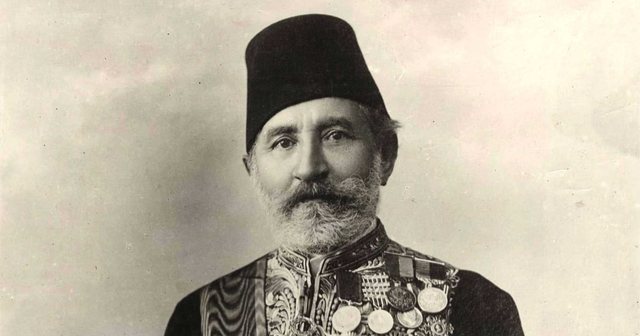
In this significant year, when time counts down two centuries from the birth of Pashko Vasa, Albania pauses to bow its head and lift its heart. This anniversary is not simply a calendar date, but a call to remembrance, to reflection, and to the revival of the values he embodied: uncompromising patriotism, intellectual courage, and unwavering faith in the power of language and culture to build a nation.
Pashko Vasa was not only a poet, a writer, a governor. He was a voice that spoke to his time with courage, and who speaks to our time with wisdom. He was a heart that beat for Albania in every step of life, in every written verse, in every effort for freedom and dignity. He was a cornerstone of national consciousness, one of the brightest stars of the Renaissance, who did not fade with the years, but became a guiding light for generations.
Today, on the 200th anniversary of his birth, we not only remember the man, but we revive the message. Because Pashko Vasa's legacy is not a relic of the past, but a living call to protect the language, to honor history, and to build a future where Albanianness is not just a name, but a spirit, action, and pride.
A voice and a heart. A personality and a cornerstone. An unquenchable will of patriotism that did not tremble even in the face of the wildest storms. A cry that did not fade with time, but continues to roar in the Albanian chests, like a bloody flame that illuminates the eternal legacy of Albanianness.
He was and remained: Pashko Vasa. He came and became part of the voice of the nation, in the heart of a witness who never stopped remembering. His name is a knot of history and patriotism, power of the soul and dedication of the pen. A pen that flashed like an arrow, that struck injustice and awakened conscience.
On June 29, 1892, far away, in Beirut, Lebanon, Vaso Pasha Shkodra passed away. A light of the National Renaissance died, a poet, a writer, a governor who served the nation until his last breath. Born on September 17, 1825 in Shkodra, in a house that today preserves his memory as a museum, he inherited roots from Mirdita, but grew up in the cradle of luminaries.
His path was long, full of challenges and perseverance. He did not stop at dreaming—he lived it. In 1847, he found himself in Italy, at the heart of the uprising for freedom. He aligned himself with the idealists of the time: Mazzini, Garibaldi, Gioberti, Mickiewicz. In Bologna, as an officer of the Civic Cavalry, he was not just a soldier, but a living spirit of international solidarity.
In the letters he sent to Nicolo Tomazeu, he expressed not only his ideas, but also the spirit of an Albanian who sought freedom for all. He participated in the proclamation of the Republic of Venice, alongside the people fighting against the Austrians. After the fall of the city, he was forced to flee to Istanbul, where he began a new chapter in his life.
In the Ottoman Empire, he rose through the ranks of the administration, turning his position to the service of the Albanian cause. In Aleppo, in London, in Shkodra—wherever he went, he sowed the seeds of national consciousness. He was involved in efforts for a common alphabet, for Albanian schools, for cultural and patriotic organizations.
In the years 1878–1882, alongside Abdyl Frashëri, he stood out as one of the key figures of the Istanbul Committee. In 1879, he was among the founders of the Albanian Font Printing Society. He was not only an activist, but also an enlightened mind, a heart that beat for the freedom and dignity of his people.
His works are a testament to a great soul:
– “Historical sketch of Montenegro according to the traditions of Albania” (1872)
– “The Truth about Albania and the Albanians” (1879)
– “Bosnia and Herzegovina during the mission of Xhevdet Efendi” (1865)
– “Grammar of Albanian” (1887)
In them, he defended the right of Albanians to live freely, criticized the Ottoman bureaucracy, and articulated the demands of the National Movement with a clarity that leaves no room for doubt.
Pashko Vasa is not just a name in history. He is a voice that never fell silent. A heart that never stopped beating for Albania. A pen that never tired of writing the testament of freedom.
-
-

Was he arrested or not? Getinho denies the news about his brother, Mozzik
September 17, 16:44
Po ndodh...


ide


top


TRENDING 


shërbime
- POLICIA129
- POLICIA RRUGORE126
- URGJENCA112
- ZJARRFIKESJA128