


FLASH NEWS
The Great Dictionary of the Albanian Language/ Skënder Gjinushi expelled from the Kosovo Academy of Sciences

2026-01-15 13:23:07 / POLITIKË
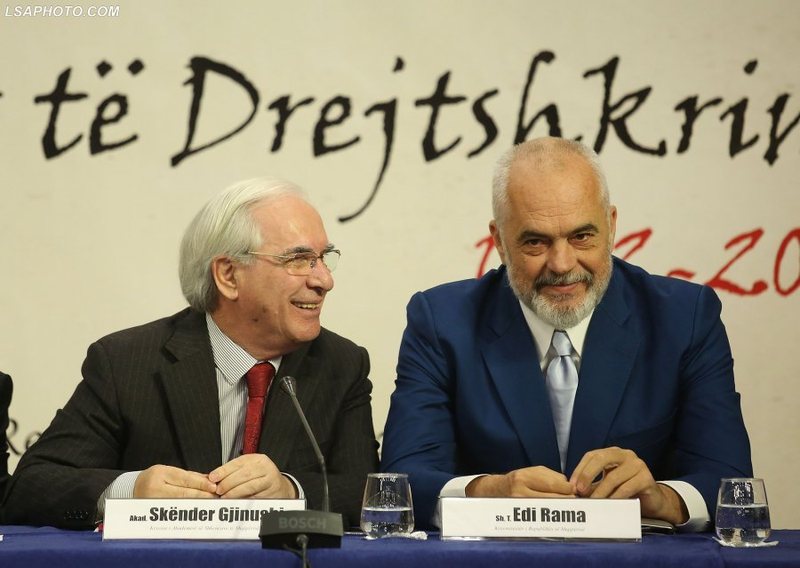
The Great Dictionary of the Albanian Language with 125 thousand lexicographic units is considered the most voluminous dictionary of the Albanian language. But, all this was done unilaterally by the Academy of Sciences of Albania without the cooperation of the Academy of Sciences and Arts of Kosovo. The Academy of Sciences of Albania had also started this process unilaterally by paralyzing the functioning of the Interacademic Council for the Albanian Language, which consisted of members of the Academy of Sciences of Albania and the Academy of Sciences and Arts of Kosovo. From the idea of standardizing the lexicon to setting the basic principles, the Academy of Sciences of Albania had jumped to the project for the Great Dictionary of the Albanian Language without any agreement
By Shaban Maxharraj, KOHA DITORE
The Albanian Academy of Sciences on Tuesday published the online version of the Great Dictionary of the Albanian Language. It is a dictionary with 125 thousand lexicographic units, ranking as the most voluminous dictionary of the Albanian language. However, all this was done unilaterally, without the cooperation of the Academy of Sciences and Arts of Kosovo. The Albanian Academy of Sciences had also started this process unilaterally, paralyzing the functioning of the Interacademic Council for the Albanian Language, which consisted of members of the Academy of Sciences of Albania and the Academy of Sciences and Arts of Kosovo. From the idea of standardizing the lexicon to setting the basic principles, the Albanian Academy of Sciences had jumped to the project for the Great Dictionary of the Albanian Language without any agreement. This project would start in 2021 by engaging several researchers from the Albanological Institute of Pristina in the working groups.
The published dictionary explains in the preface that it possesses about 105 thousand words in separate entries, then about 3 thousand and 500 words "hidden" in meanings as nouns, adjectives and adverbs, about 12 thousand and 500 phraseological units, about 5 thousand terminological phrases, about one thousand and 200 abbreviations, about 250 new terms not assimilated phonetically, about 1,650 foreign expressions not assimilated and about 250 thousand lexical meanings. Based on the preface, the Dictionary comes as a lexicographic work that has been missing for a long time and is highly sought after by many users of the Albanian language.
“Ky fjalor, duke pasqyruar në një masë e cilësi të re këto pasuri leksikore të shqipes bashkëkohore, më shumë se dy herë i vëllimit të të gjithë fjalorëve të mëparshëm shpjegues, në aspektin kombëtar bëhet ende tregues më i plotë i pasurisë, i larmisë, i forcës dhe i bukurisë së gjuhës shqipe, pa kufizime territoriale, shoqërore, stilore, autoriale, apo edhe gjuhëformuese, sepse shprehëse më jetësore të shqipes krijon kështu mundësi të pandërprera, me lëndën e vet, që ajo t’i kryejë me funksionin më të nevojshëm e më hijeshi funksionet komunikuese në të gjitha gjinitë e ligjërimit e stileve të përdorimit”, shkruhet midis të tjerash në parathënien e gjatë.
Sipas hartuesve, ky Fjalor, duke qenë normativ, përveçqë ndihmon për ruajtjen e pastërtisë së shqipes e për njësimin gjuhësor sipas standardit, u shërben gjithashtu edhe të huajve që mësojnë e studiojnë shqipen thellësisht.
“Hartimi i një fjalori të përgjithshëm dhe shpjegues të tipit të madh ka qenë jo vetëm dëshirë e sinqertë e shumë brezave të hartuesve shqiptarë, por edhe nxitje për përgatitje të shumanshme: për ndërtimin e një projekti e të parashtresave me parime e kritere leksikografike, për konstitumin e grupit hartues e të grupeve të tjera të punës, për sigurimin e bazës materiale objektive (kartotekat leksikore e frazeologjike) etj.”, shkruhet në parathënie.
Aty sqarohet se: “Projekti, Parimet e kriteret leksikografike dhe Parashtresat u hartuan nga akademik prof. dr. Jani Thomai, si përfaqësues i Akademisë së Shkencave të Shqipërisë (ASHSH), dhe akademik prof. dr. Valter Memisha, si përfaqësues i ish-Akademisë së Studimeve Albanologjike (ASA)”. Menjëherë sqarohet edhe një tjetër gjë.
“Projekti bashkë me grupin fillestar të autorëve të veprës u miratuan dhe u pranuan nga ASHSH e nga ASA, si dhe u mbështetën me bashkëpunimin e Institutit Albanologjik të Prishtinës (IAP) e të Universitetit të Kalabrisë (Kozencë), me leksikografë nga Universiteti i Tiranës, nga Universiteti “Fan S. Noli” i Korçës, nga Universiteti “Luigj Gurakuqi” i Shkodrës dhe nga leksikografë të tjerë nga Republika e Shqipërisë, nga Republika e Kosovës, nga Republika e Maqedonisë së Veriut, nga Palermoja”. Krejt kjo është bërë pa Akademinë e Shkencave dhe Arteve të Kosovës e po ashtu pa miratim të leksikografëve të Universitetit të Prishtinës.
Pikërisht parimet ishin ato që ndanë Akademinë e Shkencave dhe Arteve të Kosovës nga Akademia e Shkencave e Shqipërisë, sa i përket projektit për Fjalorin e madh të gjuhës shqipe.
“Në Këshillin Ndërakademik ishte paraparë të diskutoheshin çështjet e leksikut. Së pari, pra, do të përcaktoheshin parimet e punës dhe do të zgjidheshin dilemat. Ne, në Akademinë e Kosovës, nuk e kemi parë të arsyeshme të punojmë pa ato parime dhe nuk kemi pranuar të përfshihemi në atë mënyrë”, ka thënë gjuhëtari, profesori universitar e akademiku Bardh Rugova. Ka shtuar se nuk duan ta gjykojnë punën e askujt.
“Por mendoj se nuk mund të ketë projekte të gjuhës shqipe pa përfshirjen e ASHAK-ut. Shqipja nuk është e drejtë autoriale e askujt. Fjalorët, në radhë të parë, janë mjete standardizuese. Nuk do të duhej të hartoheshin në atë mënyrë, pa marrëveshje ndërinstitucionale”, ka thënë ai. Kurse sa i përket funksionit të Këshillit Ndërakademik, Rugova ka qenë po ashtu i prerë.
“Tani nuk ka më kuptim të ketë Këshill Ndërakademik. Për çfarë do të shërbente?”, ka thënë ai.
Këshilli Ndërakademik për Gjuhën Shqipe e ka gjenezën në vitin 2004. Është ngritur me vendimin e ASHAK-ut dhe ASHSH-së të datës 27 tetor 2004. Siç përcaktonte rregulloja e punës së këtij grupimi, “Këshilli... është forum gjuhëtarësh që shqyrton probleme të përgjithshme e të veçanta të shqipes standarde dhe të funksionimit të saj në gjithë hapësirën e përdorimit të gjuhës shqipe”. Ky Këshill përbëhej nga 17 anëtarë dhe drejtohej nga dy bashkëkryetarë, fillimisht Shaban Demiraj nga ASHSH-ja dhe Rexhep Ismajli nga ASHAK-u. Nga ASHAK-u anëtarë të këtij Këshilli asokohe qenë: Rexhep Ismajli, Besim Bokshi, Idriz Ajeti, Imri Badallaj, Shefkije Islamaj, Isa Bajçinca dhe Abdullah Zymberi. Nën përkujdesjen e ASHAK-ut qe pjesëmarrës edhe Remzi Nesimi, anëtar i këtij Këshilli nga Maqedonia. Por ASHAK-u pas më shumë se një dekade njoftonte se derisa Këshilli ishte nën kryesimin e ASHAK-ut, nisi një punë të frytshme, “për t’u ndërprerë në vitet kur kryesimi i Këshillit kaloi nën kompetencë të ASHSH-së”.
“During 2011, ASHAK has held contacts and talks with ASHSH for the activation of the Council, fulfilling all the requests that have come from ASHSH, including changes in the regulations and in the organizational structure. The Linguistics and Literature Section of ASHAK will also be engaged in 2012 to find the most appropriate solutions for the functionalization of the Interacademic Council of the Albanian Language, taking on a more cooperative role with the leading structures of ASHSH, which have already been identified as the main obstacle to the work of this Council,” a notice read. ASHSH has had major problems in the face of reforms and even problems where Prime Minister Edi Rama threatened via “Facebook” to stop funding for this institution. Then there was an attempt to re-establish the Council in 2020 when academic Skënder Gjinushi, who is currently the chairman, was at the head of ASHSH. All this was done that year until the two presidents of the academies, Skënder Gjinushi and then president of ASHAK Mehmet Kraja, signed in Tirana the protocol of mutual cooperation for the period 2020-2021. Later, in the meetings of the two presidency, it was decided that the Council would have 15 members, 7 from ASH, 7 from ASHAK and one representative from North Macedonia. ASHAK elected its members as follows: academician Rexhep Ismajli, co-president, corresponding members Mehmet Halimi, Bardh Rugova and Shkumbin Munishi, professors Rrahman Paçarizi, Naim Berisha, Imri Badallaj, as well as Lumnije Jusufi from North Macedonia. But, the initiative would still stall.
"However, efforts to 're-establish' did not prove fruitful and contacts have not been very active. It is proposed: to publish the Council's existing materials within 2022. Then the entire initiative can be reconsidered," it is written in the ASHAK "Annual" for 2022.
Despite the fact that in January 2020 the two academies had agreed to “re-establish” the Council a year later, ASHASH launched the project for the Great Dictionary of the Albanian Language without agreeing on the principles of lexical standardization with ASHAK. The editorial board of the Dictionary consists of: academician Jani Thomai as editor-in-chief, academician Valter Memisha as deputy editor-in-chief and scientific secretary, Shezai Rrokaj, also as deputy editor-in-chief, and members Dhimitër (Miço) Samara, Shefkije Islamaj, academician Gjovalin Shkurtaj, Ali Jashari, Anila Omari and Anila Kananaj. In addition to these names, the compilers also include: Artur Lama, Abdurrahim Maxhuni, Idriz Metani, Juliana Kume, Mimoza Priku, Naim Berisha, Rozana Rushiti, Teuta Toska, Rezarta Draçini, Sejdi Gashi, Manjola Zaçellari, Behar Hoxhaj, Resul Telhaj, Olger Brame, Engjëllushe Karaj, Petrit Zeneli and Viktor Bakillari.
Happening now...

Germany, the "curse" of Rama and Berisha
Nga Bato Kosova
ideas

The opposition must and will be bigger than an individual.
Nga Taulanda Jupi
Violent protests as group therapy
Nga Roland Lami
Those who mocked and attacked Basha
Nga Ermal Peçi
top

Alfa recipes
TRENDING 



services
- POLICE129
- STREET POLICE126
- AMBULANCE112
- FIREFIGHTER128