


FLASH NEWS
Artemis II successfully completed, next mission to land a man on the moon in 2028

2026-04-11 19:08:02 / BOTA
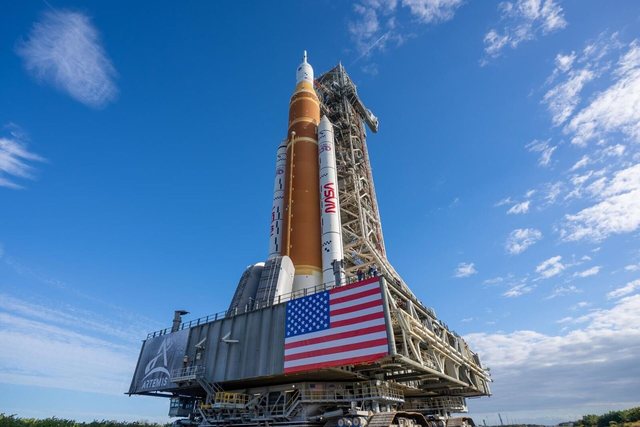
NASA's Artemis II mission has successfully sent four astronauts around the far side of the Moon and returned them safely to Earth. The Orion spacecraft has performed brilliantly, and the images the astronauts have captured have inspired a new generation about the possibilities of space travel.
But does this mean that children fascinated by this mission will be able to live and work on the Moon for the rest of their lives? Perhaps even go to Mars, as the Artemis program promises?
It seems a bit cynical to say, but orbiting the Moon was relatively easy. The hardest part is yet to come, so the answer is: "maybe, maybe not."
When Neil Armstrong and Buzz Aldrin became the first people to land on the Moon in July 1969, many thought this was just the beginning and that humans would soon be living and working in space.
This did not happen, because the Apollo program was not born out of a love of exploration, but out of the Cold War, to demonstrate US superiority over the Soviet Union. This goal was achieved with Armstrong's "small step" on the lunar surface - and the mission was considered complete.
Just a few years later, television ratings for the other Apollo missions dropped significantly and future missions were canceled.
This time, NASA's ambition is different. Administrator Jared Isaacman has outlined plans for a crewed landing on the Moon every year, starting in 2028, with the fifth Artemis mission marking the beginning of what the agency calls a lunar base.
It sounds like science fiction, but the director general of the European Space Agency (ESA), Josef Aschbacher, says: “The lunar economy will develop. It will take time to build the necessary elements, but it will develop.”
But as the commander of Apollo 13 said when his ship ran into problems en route to the Moon: “Houston, we have a problem…”
To send humans to the surface of the Moon, NASA needs a lander. It has contracted with two private companies: Elon Musk's SpaceX and Jeff Bezos' Blue Origin.
Both are behind schedule. According to a report released March 10 by NASA's Office of Inspector General: SpaceX's Starship is at least two years behind schedule Blue Origin's Blue Moon is at least eight months behind schedule
These vehicles are much more complex than the small Eagle module of 1969. They must transport heavy equipment, rovers and parts of a lunar base.
This requires large amounts of fuel, more than can be launched with a single rocket.
The plan is to store the fuel in an orbiting depot and deliver it over 10 tanker flights. This idea is elegant, but extremely difficult.
Storing and transferring oxygen and methane at very low temperatures in space is a major technical challenge.
As Dr. Simeon Barber says:
“From a physical point of view it makes sense, but if it’s hard on Earth, it’s even harder in orbit.”
The next mission, Artemis III, aims to test the connection of the Orion capsule with the lander in orbit and is planned for 2027. But many experts think this is too ambitious a goal.
NASA has maintained the 2028 target partly for political reasons, as it aligns with President Trump's new space policies.
However, analysts believe this deadline is unrealistic.
Another factor is China, which aims to send astronauts to the Moon around 2030. If NASA is delayed, China could arrive first.
The Chinese approach is simpler and avoids some of the technical complexities of the American plan.
Elon Musk has talked about sending people there before the end of the decade, but most experts think that won't happen before the 2040s.
The journey itself takes 7–9 months and involves great risks.
Artemis II has reignited interest in human space travel. Private companies are building technology at a rapid pace, and collaboration with NASA is creating something new.
Even if the deadlines are delayed, it seems that a new era of space exploration has begun.
ESA astronaut Alexander Gerst has said that the view of Earth from space changes everything.
He hopes that one day all people will see our planet from afar, a small, fragile and beautiful world that we don't take enough care of.


Happening now...















Denouncing Berishism is a prerequisite for denouncing the government
Nga Blendi Kajsiu
ideas



top


Alfa recipes



TRENDING 




services
- POLICE129
- STREET POLICE126
- AMBULANCE112
- FIREFIGHTER128