


FLASH NEWS
US-Iran deal fails to allay fears over Hormuz

2026-06-21 13:50:05 / BOTA
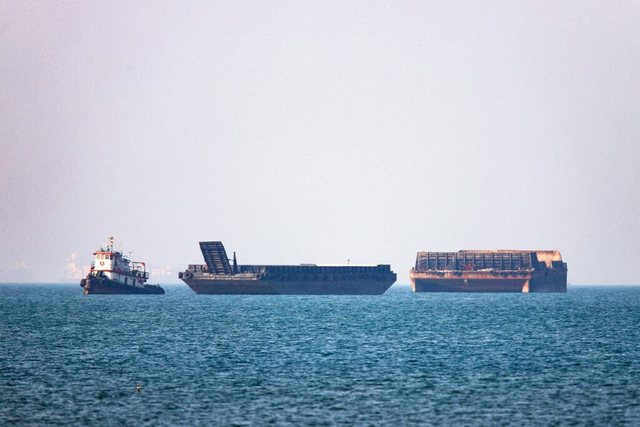
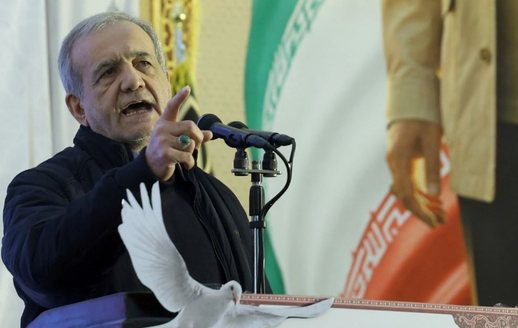
The signing in principle of the peace memorandum by US President Donald Trump and Iran's Masoud Pezeshkian has not fully eased tensions between the parties.
Following the Israeli attacks in Lebanon, the Iranian military announced the closure of the Strait of Hormuz as a precautionary measure in response to the ceasefire violation. Today, the negotiating teams will meet in Switzerland where the agreement is expected to take full shape.
However, the crisis has brought back a strategic question that has troubled energy markets for years: how safe is it for the global economy to continue to rely on a maritime corridor just 33 kilometers wide, controlled by one of the main actors in the tensions in the region? About 20 million barrels of oil passed through Hormuz per day, making it the most important energy hub in the world.
In search of alternatives, Gulf producers are relying on existing infrastructure. The most important solution remains the Saudi Petroleum Pipeline, a pipeline connecting oil fields in the Persian Gulf to the port of Yanbu on the Red Sea. The line, with a capacity of 7 million barrels per day, could replace some of the exports that usually pass through Hormuz.
However, experts point out that Petroline has significant limitations. Refined products require special infrastructure, while the port of Yanbu operates near maximum capacity and exports must then pass through Suez or Bab el-Mandeb, another sensitive point for maritime security.
Another alternative is the UAE pipeline, which connects Habshan to the port of Fujairah on the Gulf of Oman. It can currently transport up to 1.8 million barrels per day, or about 60 percent of the country's exports. The Emirates has announced plans to double its capacity, in line with its strategy to increase oil production.
In the north of the region, Iraq is trying to increase the use of the historic Kirkuk-Ceyhan pipeline, which ends at the Turkish port of Ceyhan on the Mediterranean. Although its theoretical capacity is up to 1.5 million barrels per day, it currently transports only a fraction of that volume. Its future depends on negotiations between Baghdad and Ankara to renew transit agreements.
The Hormuz crisis has also revived interest in long-standing Middle Eastern energy projects. The return of the Kirkuk-Baniyas pipeline to the Syrian coast is under discussion, as is the modernization of the Trans-Arabian Pipeline (Tapline), which once connected Saudi Arabia to the Mediterranean. These projects are receiving renewed attention following political changes in Syria and interest from international investors.
At the same time, American think tanks and several regional governments are promoting the “Four Seas” initiative, which aims to connect the energy networks of the Gulf, Iraq and the Caspian to European markets via Syria and Turkey. The project envisages transporting up to four million barrels of oil per day and 50 billion cubic meters of gas per year to Europe.
However, the challenges remain. The pipelines would pass through areas that have been characterized by political instability and security risks for decades. Moreover, the main markets of the Gulf countries are located in Asia, while most new projects are oriented towards Europe.
Experts estimate that, even if some of these plans are realized, it will take years and billions of dollars of investment to turn them into realistic alternatives to Hormuz. For some strategic products such as chemical fertilizers, helium, sulfur, methanol and aluminum, no other transportation route currently exists.
For this reason, although the agreement between Washington and Tehran may have averted an immediate crisis, the debate over global dependence on the Strait of Hormuz remains open.
Happening now...






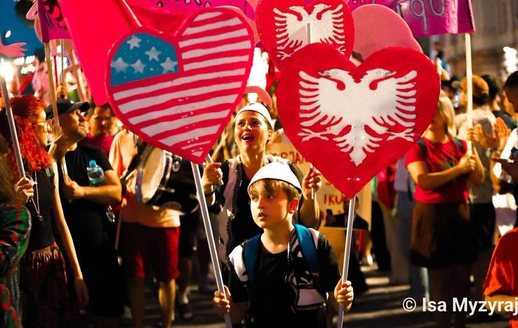
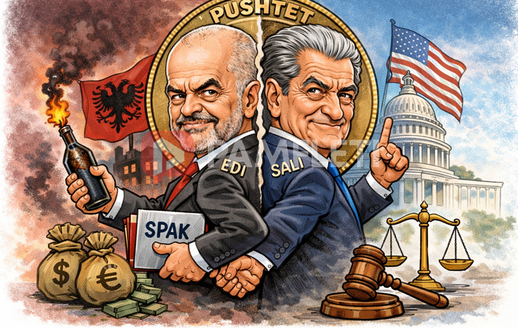
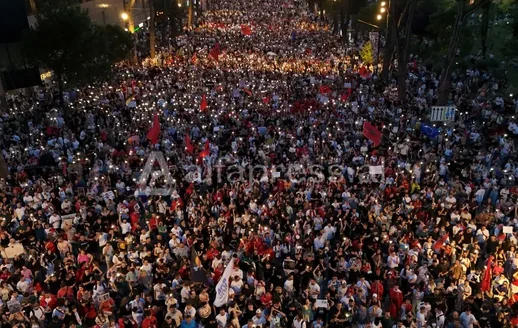

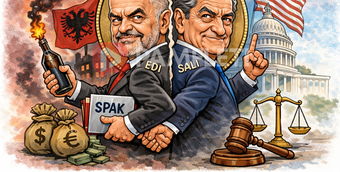
Sali is gone, Rama is gone.
Nga Bato Kosova
ideas


Mr. Rama, the algorithm is a consequence!
Nga Ermal Mulosmani

Botërori, më shumë se futboll
Nga Andi Lila
top


Alfa recipes



TRENDING 




services
- POLICE129
- STREET POLICE126
- AMBULANCE112
- FIREFIGHTER128