


FLASH NEWS
NASA's ambitious plan: Nuclear reactors on the Moon by 2030

2026-04-16 17:41:33 / BOTA
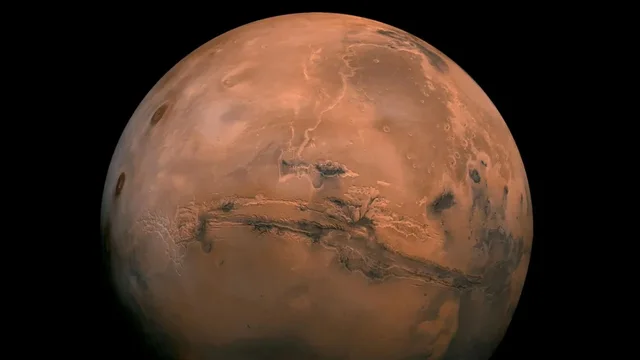
Space capabilities have grown significantly in recent years, with NASA's Artemis II mission taking astronauts Reid Wiseman, Christina Koch, Victor Glover and Jeremy Hansen to the Moon in the first lunar mission in more than 50 years.
Now, the US space agency is aiming for an even more ambitious goal: to place nuclear reactors on the Moon by 2030 through its Surface Fission Power Project, with plans to launch a medium-power reactor into orbit by 2028.
For this difficult task, NASA will have to join forces with the US Department of Energy and the Department of Defense.
The White House Office of Science and Technology Policy (OSTP) has now shared new guidance for federal agencies to develop an action plan for space nuclear technology.
"Nuclear power in space will give us the sustainable electricity, heating and propulsion essential for a permanent presence on the Moon, Mars and beyond," OSTP said in a post on X.
Why is solar energy limited in space?
This change occurs primarily because solar power and other traditional energy sources will not be sufficient to reliably support long-term human settlements on the Moon or other planets, such as Mars.
The lunar night is a major reason for this, as a single night on the Moon lasts about 14 Earth days. During this time, solar panels cannot be used and batteries do not have enough capacity to support an entire base during cold, dark periods.
Relying solely on solar power also makes it harder for programs like Artemis to explore permanently dark regions, such as the lunar south pole, which never sees sunlight but contains valuable water ice.
In contrast, nuclear reactors primarily provide continuous and abundant energy for years through nuclear fission, regardless of weather, sunlight, or location. Nuclear electric propulsion could also help spacecraft carry out complex, long-duration missions without risking fuel depletion.
"It's time for America to start nuclear power in space," NASA administrator Jared Isaacman wrote in X.
The Surface Fission Power Project is expected to have a design capacity of 40-100 kilowatts of electricity, which should be sufficient to support a small lunar habitat with science laboratories and resource extraction equipment for several years.
This project is expected to help the US strengthen its position in space technology compared to China and Russia, while providing a lunar test platform to advance technologies for future crewed missions to Mars.
The system is expected to operate autonomously with minimal maintenance required by astronauts, while remaining scalable and modular. It will need to consider applications that could support both space propulsion and future life on the Moon.
Happening now...
















Denouncing Berishism is a prerequisite for denouncing the government
Nga Blendi Kajsiu
ideas

American Libra!
Nga Arian Galdini


The Hungarian lecture and 4 messages for the political establishment in Albania
Nga Kreshnik Spahiu
top


Alfa recipes








services
- POLICE129
- STREET POLICE126
- AMBULANCE112
- FIREFIGHTER128