


FLASH NEWS
Slovakia on its feet/Massive protests against Robert Fico's government

2025-09-28 11:12:39 / BOTA
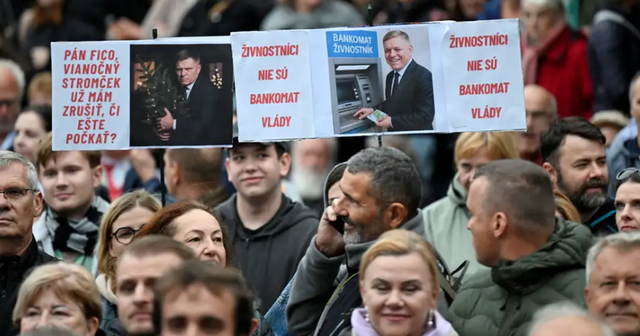
About 10,000 people gathered in Bratislava’s Freedom Square this week to protest the policies of Prime Minister Robert Fico’s government. Rallies were also held in several other cities across Slovakia. The turnout was smaller than last week, when 16,000 people gathered in the capital. On that occasion, demonstrators also heard an announcement from four liberal opposition parties that they would reach a cooperation agreement. The protests are a continuation of a series of demonstrations that began after Fico returned to the prime minister’s post at the end of 2023. They are set to add to the growing list of challenges — both domestic and international — facing the Slovak prime minister.
International criticism
Internationally, attention continues to focus on Fico's close relations with Russia and China, which sparked the first protests. The European front was further troubled by Fico's meeting with Russian President Vladimir Putin and Chinese President Xi Jinping in early September, as well as his refusal to halt Russian energy purchases, and his attempt to implement constitutional changes that would give Slovak law precedence over EU law.
All this, along with authoritarian restrictions on the media and NGOs, reportedly convinced the Party of European Socialists (PES) to permanently expel Fico's left-wing party, Smer, from its EU parliamentary group. Michal Šemecka, leader of the liberal opposition party Progressive Slovakia (PS), told DW that the move, which the PES is expected to confirm in mid-October, "would be a significant blow to Robert Fico's reputation."
The most important domestic issues for Slovaks
However, analysts say Slovakia's deep political polarization means that international affairs currently have little impact on the country. Radoslav Štefančík of the University of Economics in Bratislava tells DW that the PES move "will not even be noticed by Smer voters." Domestic issues are clearly the main battleground in Slovakia. Recent opposition demonstrations, organized under the slogan "Protest against impoverishment!", have taken direct aim at Fico's economic policies.
They are a response to the consolidation package announced by the government, the third set of austerity measures since it took power. The package, approved by the Slovak parliament on Wednesday evening (24.09.2025), is an attempt to curb the country's economic crisis, which is being further worsened by US tariffs on the auto industry, a key industry in the country.
Ajo synon të zvogëlojë deficitin buxhetor me 2.7 miliardë euro për vitin 2026. Ndërsa askush nuk e kundërshton nevojën për masat, theksi në rritjen e taksave dhe sigurimeve shoqërore, shkurtimet e pagave dhe vendeve të punës në sektorin publik, si dhe shkurtimet e mirëqenies sociale po shkakton pakënaqësi. Kritikët argumentojnë se paketa do të godasë qytetarët e zakonshëm, duke kursyer oligarkët e lidhur me Smer. Grupet e biznesit ankohen se do të dobësojë konkurrueshmërinë. Zyra e shtypit e qeverisë sllovake nuk iu përgjigj kërkesës së DË për koment.
Paqëndrueshmëria qeveritare
Disa besojnë se zemërimi i përhapur për planin e konsolidimit ekonomik mund të ringjallë paqëndrueshmërinë që ka ndjekur koalicionin qeverisës tripartiak që kur erdhi në pushtet gati dy vjet më parë. Pasi humbi përkohësisht shumicën e tij parlamentare në fillim të këtij viti, ndërsa ligjvënësit rebelë kërkuan të zbatonin kërkesat e tyre, Fico ka rifituar besnikërinë e tyre në postet ministrore dhe qeveria e tij tani komandon 79 nga 150 vendet në Parlament. Adrius Tursa i firmës konsulente Teneo Intelligence me seli në Londër tha, se pret që debati parlamentar mbi paketën ekonomike të "verë në provë shumicën e brishtë parlamentare të Ficos".
Opozita dëshiron të rrëzojë qeverinë
Opozita dëshiron ta përdorë situatën aktuale për të ndihmuar në rrëzimin e koalicionit qeverisës. Por kjo nuk do të jetë e lehtë. Edhe pse, siç thotë kreu i PS-së, "përfaqësuesit e secilës parti tani po diskutojnë publikisht një paketë konsolidimi", partnerët më të vegjël të koalicionit të Ficos - partia e qendrës së majtë Hlas dhe Partia Kombëtare Sllovake e së djathtës radikale - nuk po rrezikojnë, të vetëdijshëm se mbështetja e tyre ka qenë në rënie që nga zgjedhjet e fundit. Asnjëri prej tyre "nuk dëshiron një përsëritje të situatës nga 2020-2023, kur ishin në opozitë", shton Radoslav Shtefançik. A do t'i mbështesin votuesit liberalët?
Në të njëjtën kohë, votuesit nuk i kanë harruar atot tre vite kur një koalicion në konflikt, i përbërë nga partitë liberale, shkaktoi kaos. Kur u pyet se si mund t'i bindte qytetarët e vendit se marrëveshja e sapo shpallur për bashkëpunim midis tri partive do të ishte e ndryshme, Shimeçka theksoi se anëtarët e partisë së tij të Sllovakisë Progresive (PS) po "vizitojnë rajonet ... dhe po flasin me njerëz të zhgënjyer që votuan për koalicionin e Ficos".
However, analysts believe that these voters - mostly from poorer backgrounds - will be the ones who will feel the economic consequences of the package the most and that, instead of liberals, they will be more likely to vote for parties such as the far-right Republika party. Some in the liberal opposition are trying to exploit Fico's pro-Russian orientation to draw a parallel between the controversy over the package of measures to consolidate the economy and the 1989 "Revolution". Perhaps the most controversial part of the package is the proposal to abolish two official holidays, including November 17 - the Day of the Uprising that marked the beginning of the fall of the communist regime in Czechoslovakia. Some opposition parties have called for a general strike on that day, as happened 36 years ago.
But others in the opposition fear that this could be an embarrassing and extremely costly disappointment. Simeçka stresses that his SP party will remain cautious, insisting that it is "ready to challenge Fico to a duel in the next elections, in two years or tomorrow". But observers estimate that elections are most likely not to be held until 2027. The Slovak prime minister was forced from power once - in 2018 - after the murder of journalist Jan Kucijak, who was investigating corruption and possible links between Slovak authorities and the mafia. This was a near political ruin for Fico, as he faced indictments and an investigation. "This time he will not leave without a big fight", concludes Matisak. /DW
Happening now...







ideas

Rama-Berisha, from statesmen to Chameleons!
Nga Ermal Peçi

The DP, as a Pyramid Firm!
Nga Indrit Vokshi
top

Alfa recipes



TRENDING 




services
- POLICE129
- STREET POLICE126
- AMBULANCE112
- FIREFIGHTER128