


FLASH NEWS
Why did the judge of Berisha & Meta vote in favor of Rama?

2026-02-07 10:16:54 / IDE
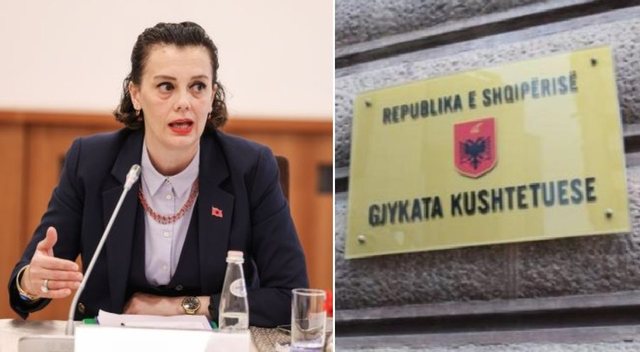
In Albania, it is no longer news that justice is a political battleground. News is when the masks fall and the bargain is revealed openly, without any attempt to hide it. The Constitutional Court's decision regarding the request for the suspension of Deputy Prime Minister Belinda Balluku from office is one of those moments when the questions weigh more than the decision itself.
Four judges voted against the government's request: Marsida Xhaferllari, Ilir Toska, Gent Ibrahimi and Asim Vokshi. Four others voted in favor of Edi Rama: Marjana Semini, Sandër Beci, Fjona Papajorgji and Sonila Bejtja.
This is where the paradox begins.
Sonila Bejtja is not a name that comes from some institutional abstraction. She comes from Albanian realpolitik, and it is a public fact that her entry into the Constitutional Court was made possible thanks to Ilir Meta, with the agreement and political influence of Sali Berisha. A typical product of the Meta–Berisha axis, at a time when they had their own political influence to appoint to the judiciary.
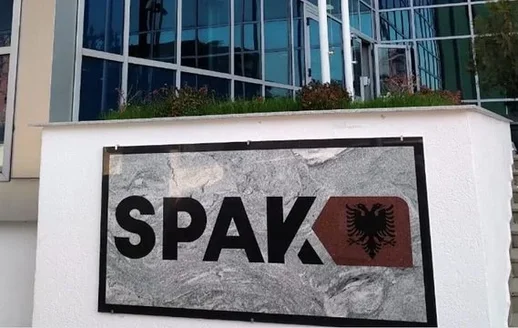
Today, the same judge votes in full line with the interests of the Rama government, supporting the retention of the most politically powerful deputy prime minister of the majority. She has previously voted in favor of Erion Veliaj! The question is not technical. The question is fundamentally political: why does this judge go against the spirit of SPAK and what is hidden behind this vote in favor of Rama?
At this point, it is worth remembering Hannah Arendt, who warned that: “Power does not lie in truth, but in the agreement between those who exercise it.” This is precisely what seems to be happening: not an isolated judicial act, but a decision-making that is fueled by invisible political balances.
Are we dealing with a moral break from those who appointed him? Or with something much more Albanian and darker: old debts, unpaid bills, and silent bargains between public political enemies and real partners?
Belinda Balluku is not a peripheral figure. She is part of the architecture of Edi Rama's power. Her name, with its well-known influences, also appears in the background of the Appeal decision for the Democratic Party seal, a decision that passed the party from Basha to Sali Berisha. Could it have been a legal coincidence? Or a node where the interests of Rama, Berisha and Meta silently intersected?
If Berisha regained the DP and Rama retained his power, then who lost? The Albanians. The only ones who still feed on the illusion that decisions are made in their interest and not in function of the balance of power.
In this context, Sonila Bejtja's vote is not an individual act. It is a signal, a clear message: beyond the rhetoric of total war, Albanian political elites know very well how to come to an agreement when danger becomes real, and this danger today has a name: SPAK.
In this context of political developments, Alexis de Tocqueville's warning makes more sense than ever: "When those who rule fear responsibility, they do not clash with each other; they come to an agreement."
In short, the fear of justice, i.e. accountability, does not produce clashes, but silent alliances; it does not bring conflict, but hidden compromise.
This is where Sonila Bejtja's vote makes sense. When a judge who came from the hands of Berisha and Meta lines up to defend one of Rama's pillars of power, we are not simply dealing with an individual act or a legal interpretation. We are dealing with a self-defense mechanism of the political class, which, in moments of danger, chooses agreement over confrontation.
Therefore, the question is not whether the decision is formally legal. The real question, the one that Tocqueville would call essential to the fate of democracy, is this: who owes whom, and how much is this debt costing Albanian accountability and democracy?
Happening now...












ideas



top



Alfa recipes



TRENDING 




services
- POLICE129
- STREET POLICE126
- AMBULANCE112
- FIREFIGHTER128