


FLASH NEWS
Why do bees leave their hives during this period? Here's how it's explained

2025-04-29 18:43:05 / MISTERE&KURIOZITETE
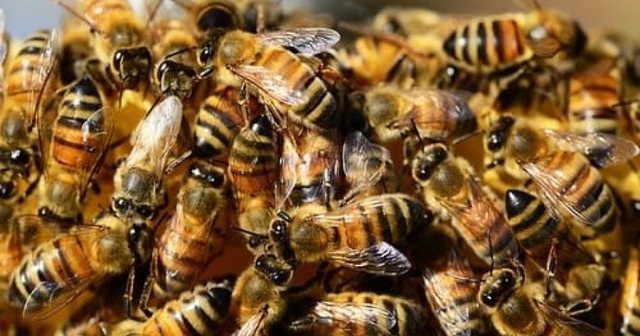
During the spring months, from April to June, it is common to see swarms of bees perched on tree branches or under roofs.
This phenomenon, known as swarming, is an essential part of the natural reproductive cycle of bee colonies.
This process occurs when the old queen leaves the hive, followed by about 40% of the colony, to make room for a new queen.
Young bees seek a safe place to set up a new hive and during this time they stay together in a swarm, often for several days.
Scout explorers travel to the area and return to discuss with the 'swarm' the most suitable location for the new nest. Once a consensus is reached, the bees fly to the new home, following their queen.
Although this phenomenon may seem scary, bees in a swarm are not usually aggressive.
However, to capture or relocate a swarm, the intervention of an experienced beekeeper is essential, to avoid danger to both humans and bees.
This practice helps beekeepers maintain or expand hives and at the same time helps protect a species that is facing serious threats, such as pesticides, habitat loss, and predators such as Varroa mites or Asian wasps.
For this reason, if you see a swarm of bees, don't be alarmed, just notify a local beekeeper.
In this way, you contribute to preserving biodiversity and protecting an irreplaceable part of our ecosystem.
-

-

Midfield revolution, Man.City asks for Galatasaray's Gabriel Sara...
April 29, 6:30 PM
Happening now...
















ideas

Renaissance is Disaster Capitalism
Nga Klodian Tomorri

Pse tifozeria e Kosovës ishte aq e vdekur dhe mungonin simbolet kuqezi?
Nga Kreshnik Spahiu

top



Alfa recipes



TRENDING 




services
- POLICE129
- STREET POLICE126
- AMBULANCE112
- FIREFIGHTER128