


FLASH NEWS
How the "Gold Rush" Started: The Race of Thousands of People to Get Rich Quickly

2025-06-01 15:48:09 / MISTERE&KURIOZITETE
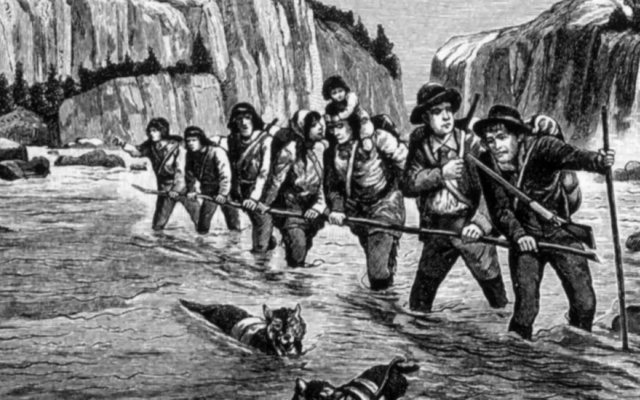
On August 16, 1896, three explorers, two Indians and one Californian, discovered a significant amount of gold in two Canadian rivers, the Yukon and the Klondike. The news spread quickly to the surrounding areas, but it did not reach the United States until July 1897, when the first gold miners returned to San Francisco and Seattle, having become wealthy from the gold they had found.
Thus began the “Gold Rush,” a period of mad rush for “easy” money that prompted over 100,000 people to try their luck in the Great North. At the end of the 19th century, over 400,000 kilograms of gold were found in the Klondike. Among the prospectors, mostly former freelancers and clerks, were also personalities, such as the former mayor of Seattle, who was also “infected” with the “gold rush.”
Due to the widespread racism against Native Americans at the time, newspapers of the time credited the discovery to Californian George Carmack, the only white man in the first group of explorers in the area. However, historians today generally credit Skokum Jim Mayson, of the Tagish people who inhabited the Yukon, with the discovery.
Douzen City, the symbolic gold rush town located on the banks of the Yukon River, was a quiet village before the arrival of thousands of prospectors. By 1898, it had 40,000 residents and numerous saloons where everything happened.
The influx of so many people also encouraged crime, which the government tried to curb by sending in Mounties, Canadian mounted police. By 1899, as the precious metal's reserves were depleted, the town's population had fallen to 8,000. In 2016, Douzen had just 1,375 residents.
Among the most famous prospectors we can mention the famous writer Jack London, who based on the Yukon experience wrote the novels “The Call of the Wild” (1904) and “The White Fairy” (1906). London’s adventure began in July 1897, together with his brother-in-law, but it was not very fruitful. Malnourished like many other prospectors, he fell seriously ill with scurvy, but managed to survive. In 1898 he returned home with a small bag of gold dust, from the sale of which he earned only a few dollars.
To many it seemed like something easy!
Although thousands of people flocked to the Yukon drawn by the dream of easy money, prospecting for gold was no easy feat. The law required prospectors to carry a year's worth of food supplies, and transporting them required 20 or 30 trips.
Along the Chilkat Trail, one of the main access routes to the Yukon gold fields, many prospectors died of hypothermia, were drowned by avalanches, and if they survived, were forced to climb steep slopes with heavy weights on their shoulders.
At the end of the 3 years of searching for gold, only a few hundred people became truly rich. Many others returned home with empty pockets, but with their heads full of adventures to tell their relatives./ Bota.al




Happening now...
















83 mandates are not immunity for Rama's friends
Nga Gentian Gaba
ideas



top



Alfa recipes




TRENDING 




services
- POLICE129
- STREET POLICE126
- AMBULANCE112
- FIREFIGHTER128