


FLASH NEWS
German compromise on the asylum process/ What the political parties agreed on

2026-01-31 14:34:59 / BOTA
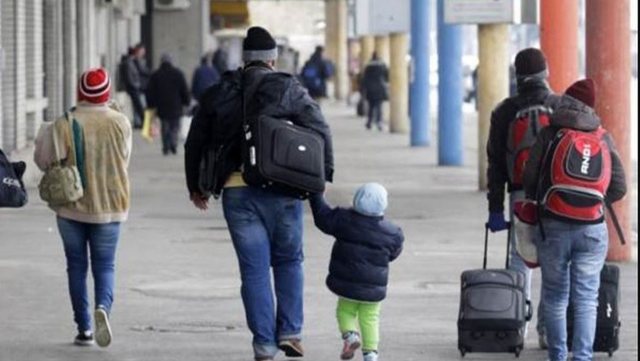
So-called "Dublin cases", meaning people who have registered in other European countries or who have already applied for asylum there, will be able to be held in special asylum centers for up to three months.
With stricter measures, the German government wants to facilitate returns and ensure that refugees do not disappear before deportation. The decision whether these asylum centers will be established, however, lies with the states. The new provisions must also be harmonized with them, and the Bundesrat must also give its consent to them.
Does this new regulation apply to all refugees?
No, complicated cases should be avoided as much as possible. Sebastian Fiedler, the SPD's expert on domestic policy, says: "It was particularly important for us not to create unnecessary difficulties for children and families and to ensure the protection of vulnerable groups." According to Fiedler, this means: no detention of children, adequate health services and a limitation on the obligation of families to stay in the centers. Thus, as a rule, minors and their families should be able to leave the institutions after six months.
Will refugees receive work permits faster in the future?
Yes, people in the asylum procedure and tolerated persons (people who have no basis to stay in Germany but cannot be deported for humanitarian reasons) should gain access to the job market much more quickly in the future. While in the past they had to wait six months, in the future this should only be possible after three months.
"Everyone who lives in Germany should be able to support themselves," says Fiedler. In addition, the coalition wants to improve healthcare for refugee children and offer examinations that are not limited to treating acute cases and preventive examinations in the first 36 months.
How do critics assess these new legal provisions?
Human rights organizations strongly condemn the new asylum agreement. Wiebke Judith, spokesperson for the legal policy organization PRO ASYL, calls on the representatives to remove from the law sensitive topics from a human rights perspective, such as restrictions on freedom and detention: “With their agreement on the implementation of the GEAS in Germany, the ruling parties are introducing new restrictive measures against asylum seekers.
In the future, refugees should be restricted from the start with bans on leaving the reception centres – first at night, later during the day. In addition, there is the threat of new bans in the asylum process. Neither children nor other vulnerable groups are exempt from this. On these points, German law goes far beyond what is required by EU law.”
What is the purpose of the Common European Asylum System (CEAS)?
The reform adopted by the European Union in the spring of 2024 should make the European asylum system more structured and effective, limit illegal migration more strongly and speed up the procedures for resolving asylum decisions. In future, these processes should mainly take place at the external borders of the European Union. The main problem so far: countries such as Italy, Bulgaria, Croatia or Greece, despite EU rules, actually do not accept migrants who have already stayed in these countries and then left for Germany.
For Interior Minister Alexander Dobrindt (CSU), the GEAS is nevertheless “the foundation for implementing a migration turnaround in Europe.” By June 2026, after a two-year transition period, the GEAS rules should be legally valid in all EU countries. In Germany, perhaps even earlier – the Bundestag could already approve the amended bill in February.
What role does the AfD play in the German asylum compromise?
The government wants to challenge the Alternative for Germany on their main election issue, migration, just before the elections in Baden-Württemberg on March 8 and in Rhineland-Palatinate on March 22. But above all, the Union and the SPD are hoping for a signaling effect in the state elections in eastern Germany: elections are held in Saxony-Anhalt on September 6 and in Mecklenburg-Vorpommern on September 20 – in both states the AfD is leading in the polls, while in Saxony-Anhalt it could even secure a new prime minister.
Will Germany deport asylum seekers to third countries?
Interior Minister Alexander Dobrindt considers the so-called "Return Centers", or return centers outside the European Union, at least "innovative models".
Five EU countries are currently promoting the creation of such facilities: in addition to Germany, these are Austria, Denmark, the Netherlands and Greece. Although critics doubt that such deportation centers comply with European law, the working group wants to house rejected asylum seekers outside the European Union if they cannot be deported to their countries of origin. Plans for asylum procedures in third countries also already exist./ DW
-
Should DP protests be peaceful?
January 31, 14:23 -

Happening now...














Rama dhe Berisha “rrëzohen” nga rasti Dodik
Nga Bato Kosova
ideas


The great loneliness of the West and liberal democracy
Nga The Economist

Corruption money is buying political time.
Nga Taulanda Jupi
top







TRENDING 




services
- POLICE129
- STREET POLICE126
- AMBULANCE112
- FIREFIGHTER128