


FLASH NEWS
3.8 billion euros for roads in 2014-2026, record funds but collapsing quality

2026-02-25 13:22:56 / EKONOMI&SOCIALE
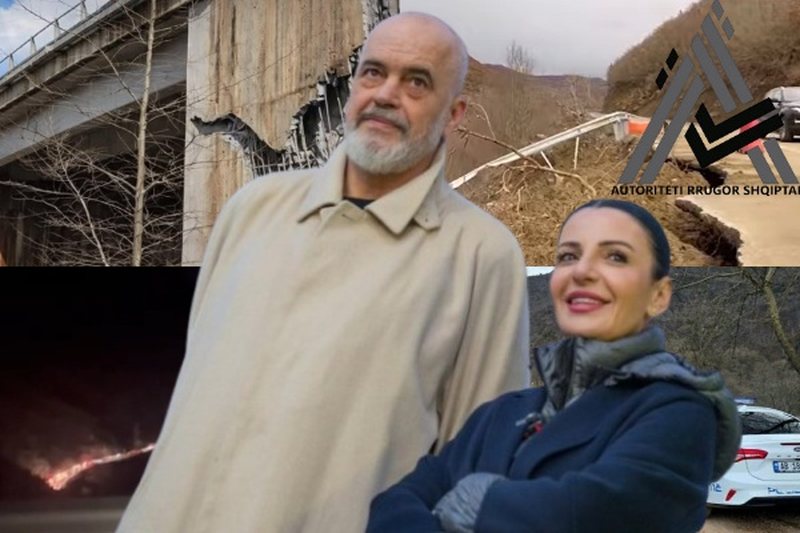
Albania has invested 370 billion lek, almost 3.8 billion euros, in road transport infrastructure, according to data from the Ministry of Finance, for the period 2014-2025 and the expected fund for 2026.
With this amount, about 350 kilometers of new type A highway could be built from scratch, spanning the entire length of the country, from Vermoshi to Konispol, taking as a reference the costs calculated by the EU for countries like Albania.
According to data from the Ministry of Finance, investments in road infrastructure have increased rapidly in recent years, starting from a level of 24.4 billion lek in 2014, to 44.5 billion lek in 2025.
What is striking is the extraordinary boost that budgeting has received after 2022, where the figures have almost doubled, reaching a historic peak in 2025 with 44.3 billion.
This massive increase in finances in recent years, with 2024 alone registering a value of 405 million euros, should have been a guarantee of a modern and sustainable infrastructure. But in fact, the country is now in total collapse, as all the new investments made in recent years are crumbling.
While public budget figures are hitting record highs, newly completed roads, paved with asphalt costing millions of euros, are showing structural damage before their first year of use. This discrepancy between record budgets and poor quality of work raises serious questions about the efficiency of technical supervision and the standards of materials used on these roads.
If we look at the forecast for 2026, we see a slight decrease in funds to 35.4 billion lek. The quality of construction has not kept up with the increase in the budget for road transport. Experts claim that the billions spent risk turning into another financial hole, where taxpayers' money will have to be redirected again to repair works that have just been inaugurated.
This trend shows that the real problem lies not in the lack of money, but in the lack of technical responsibility, which is allowing the highest investments in the last decade to melt away in the face of the first rain or normal vehicle traffic.
In addition to the extremely poor quality of the works, investment policies in road transport were sabotaged, leaving the center of the country without infrastructure. Investments in recent decades have avoided the priorities that were set in development strategies.
The political use of the investment fund left the Fushë-Krujë–Tirana–Durrës–Rinas region with deep deficits, as funds were concentrated on the edges such as the Arbri Road, the Llogora Tunnel, Qukës–Qafë Thanë or Korçë–Ersekë. The two-decade delay in projects in Corridor 8 and Corridor 10 has diminished the country's benefits and increased the costs for the population of the center and the north./ Monitor
Happening now...








ideas



top

Alfa recipes



TRENDING 




services
- POLICE129
- STREET POLICE126
- AMBULANCE112
- FIREFIGHTER128